Dive deep into some of the favorite pieces in Classical music!

From intimate music for solo piano to grand masterpieces for a symphony orchestra, discover your new favorite pieces, and the thrilling stories behind the music.

Listen to the episodes below and use the activity sheet to deepen your understanding.

Activity Sheet

Document icon

Let's Go to the Symphony!

As you listen to your chosen episode, take notes with the given questions in mind. When you are finished, write a review of the piece, as if you are a music critic for a newspaper!

Teachers/Parents:
The goal is for the student to listen to the episode critically, all the while thinking for themselves and considering what their personal takeaway is from learning about the piece. More than absorbing facts, the exercise encourages the student to relate to the piece in a personal way, forming their own opinions, and letting the music spark their creativity.

 

Episodes

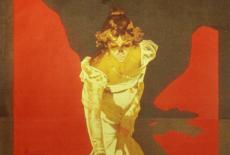
  • An image of the original premiere poster advertising Tosca. She is in a white dress with red background.

    Tosca! Puccini's tragic opera on love, lust, and brutality

    June 9, 2026

    Why watch a thriller on a Friday night when you can watch the dramatic and compact "blood and guts" opera by Puccini that is... Tosca! John Banther and Linda Carducci give you the historical and cultural context to the plot, show you specific themes hidden throughout, and highlight 4 show-stopping moments.
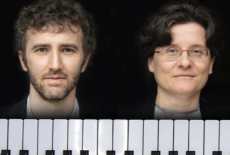
  • Sam and Ralitzas heads are peaking over a piano keyboard

    The Well-TAMPERED Clavier: A rhythmic reimagining of JS Bach by Sam Post

    March 17, 2026

    JS Bach was experimental, and that spirit has carried on into the 21st century with composers and pianists like Sam Post and Ralitza Patcheva. While Bach was experimenting with using all 12 major and minor keys at a single keyboard, Sam Post's rhythmic reimagining brings together elements that didn't exist in Bach's time.
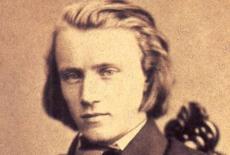
  • Sepia toned portrait picture of Johannes Brahms, young with no beard.

    Brahms Symphony No. 3: Perfection in Orchestration and Form

    March 3, 2026

    The first symphonies came from a place of insecurity, but his 3rd exudes confidence from the first note to the last. John Banther and Evan Keely show you what to listen for in Brahms' orchestration, how he uses compositional tools to create new melodies, sonata form basics, and the rivalry that took place the night of the premiere.
  • Sibelius in a white three piece suite, holding a cigar in his left hand and laughing

    Jean Sibelius' Violin Concerto, one of the most challenging works for violin!

    December 23, 2025

    This concerto is one of the most daunting in the repertoire, and almost every big soloist aims to lay down their interpretation. But what makes this work so difficult? Is it the written music or is it something else? John Banther and Evan Keely show you what to listen for, how Sibelius does things differently, a moment from a masterclass, and what went wrong in the premiere.
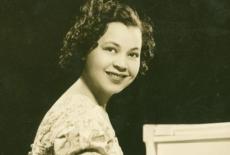
  • Clara Schumann: A story of stardom, passion, and courage

    Clara Wieck Schumann's Piano Concerto; a teenage work of genius

    November 25, 2025

    This, the only orchestral output from Clara Wieck, might be one of the few 19th-century concertos written by a teenager that still occupies the concert stage today, and its popularity is only increasing. Join hosts John Banther and Linda Carducci to explore its youthful origins, characteristics of her writing, the size of her hands, and her big concert premiere.
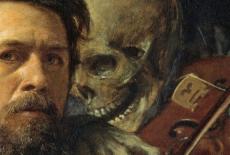
  • A close up image of a skeleton (death) playing a violin and whispering in Arnold Boecklin's ear.

    Death in music! 10 works that explore life’s final question

    Episode 139 October 28, 2025

    Death has been depicted in music to console, frighten, warn, and entertain for over 400 years. In fact, the most quoted motif about death is also the oldest, and you know it intimately whether you realize it or not! John Banther and Evan Keely take you on a deathly trip over 10 works and a bonus.

Support for arts and education programming on WETA comes from the Estate of Toni A. Ritzenberg.