There appears to be widespread acceptance of the idea that classical music is healthy for the human brain. When my first child was on the way in the early 2000s, a co-worker asked me if I intended to make use of a popular line of classical music applications intended for babies, because — of course! — everybody knows that Mozart is good for developing brains. Peer-reviewed scientific research has been conducted on this idea over the years, and just about anybody who loves classical music has personal stories of how it can enhance cognition and elevate mood.
While I continue to embrace what I hope is a healthy skepticism about labels and genres — I still can’t say with any certainty what “classical” music is or isn’t, and I’m often more inclined toward the familiar aphorism, variously attributed to Giachino Rossini, Duke Ellington and others, that there are only two kinds of music: good and bad — we certainly can enjoy the music we hear on WETA Classical and WETA VivaLaVoce, and the amazing variety and quality of music we can hear live at innumerable venues in the Washington area throughout the year. But as the summer draws to a close and a new academic year looms, a perennial question once again takes center stage: what’s the best classical music to listen to while studying?
I haven’t conducted peer-reviewed research on this topic, so please regard my highly subjective perspective on this accordingly, bearing in mind that I am a classical music radio host/producer who has been to school a fair bit over the years (including music school once upon a time). Here’s what I recommend.
Listen to what you enjoy. There are few things more tiresome, misguided and unhelpful than sanctimonious blathering about what music one “should” or “shouldn’t” enjoy or listen to. The right music for you is what’s right for you, and if someone else looks down their nose at your choices, that’s their lack of understanding, not yours. I’ve been as guilty of this as anyone, though I hope my conscious efforts to reform myself have borne some fruit: when I was younger, if I didn’t like something, I would wonder what about it wasn’t good; now, when I don’t like something, I wonder what I haven’t yet understood or sufficiently appreciated. Be curious, be open-minded, give things a chance: you may come to later love something you disliked at first. But say yes to what you love and embrace it unapologetically.
Experiment freely and adventurously. In my own experiments with listening while studying (or while, say, writing a blog post), I’ve come to realize that while I enjoy a very dramatic opera or a wild orchestral work as much as anyone, having such things playing while I’m trying to focus on something else is not always the most productive approach. And I love a great baroque opera, but especially in the Italian tradition of that era, there are always “talky” recitatives that are intended to mimic actual conversation; even if I’m not fluent in the language, it can be as distracting for me as actual speech. Try listening to various things, and pay attention to how well you’re able to study with each.
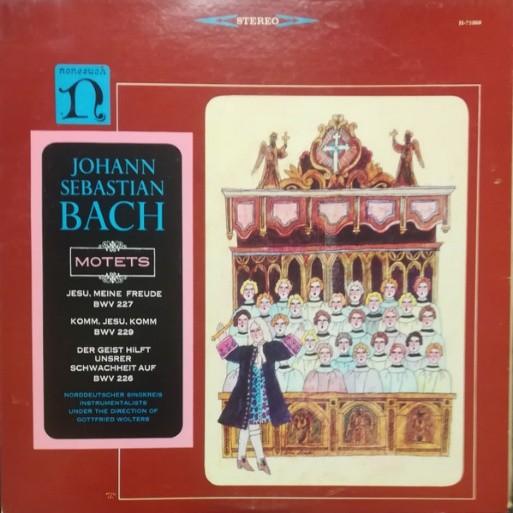
Remember that your brain will absorb things even when you’re not giving them your full attention. When I was a teenager, one of my favorite albums to listen to while doing homework was a recording of the motets of Johann Sebastian Bach. (I don’t think the album in question, which I acquired nearly twenty years after its 1965 release, was ever issued in any other format.) Years later, I sang one of those motets in college, and I discovered that I knew the piece far better than I realized. This surprised me at the time, because while it’s not true that I had never given it a really attentive hearing, most of my encounters with it were while I was focused on something else. Music heard repeatedly will become a part of you, even if that’s not your intention. Choose wisely what you want to enter your mind in that way; some of those impressions are likely to be enduring or even altogether indelible (I could probably sing that Bach motet from memory even now with very little prompting).
Here is a playlist of music of over two hours of music that I’ve enjoyed listening to while studying, working, or just doing something in addition to listening — though, of course, an attentive hearing of any of these selections is also of incomparable value.
- Piano Trio, Op. 29 by Croatian-Hungarian composer Dora Pejačević (1885–1923). Composed in 1910, the work is featured on this Brilliant Classics album by Trio RoVerde that came out just last year.
- Missa Papae Marcelli (Pope Marcellus Mass) by Giovanni Pierluigi da Palestrina (c. 1525 – 1594). A choral setting of the Roman Catholic Mass Ordinary in honor of Pope Marcellus, who died just 22 days into his papacy in 1555, this masterpiece of High Renaissance polyphony was probably composed in the early 1560s and is one of Palestrina’s best-known works. The Sixteen recorded it in 1989.
- String Quartet in C major, Op. 76 No. 3, “Emperor” by Joseph Haydn (1732–1809). It’s not really an oversimplification to call this composer “the father of the string quartet” (he is also, equally justly, known as “the father of the symphony”), given his stupendous contribution to a genre that has been a staple of classical music ever since. This quartet’s slow movement is a set of variations on an original theme, the “Kaiserhymne” (“Emperor’s hymn”), one of Haydn’s most familiar and most stately pieces (though he also knew how to crack a good joke). He wrote this quartet in 1797. These tracks are from the monumental recording of the complete Haydn string quartets that the Los Angeles String Quartet made between 1994 and 1999; they disbanded in 2001.
- Lute Sonata in G minor, Op. 1 No. 4, by German lutenist and composer Adam Falckenhagen (1697–1754), played by Andrew Maginley.
- I can’t share the aforementioned recording I enjoyed in high school on a playlist because I don’t think it was ever digitized, but the motet “Jesu, meine Freude” by Johann Sebastian Bach (1685–1750) is given a fine rendition by Pygmalion on this 2020 Harmonia Mundi album. No one knows for certain exactly when or for what purpose Bach composed this fascinating and complex piece, which alternates variations on a seventeenth-century Lutheran hymn tune with elaborate settings of verses from Martin Luther’s translation of Paul’s Epistle to the Romans.
PBS PASSPORT
Stream tens of thousands of hours of your PBS and local favorites with WETA+ and PBS Passport whenever and wherever you want. Catch up on a single episode or binge-watch full seasons before they air on TV.