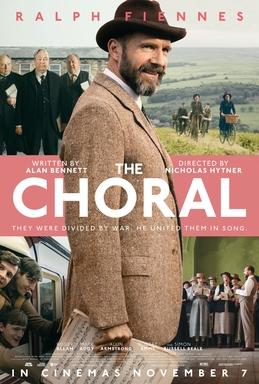
Seeing the recently-released movie “The Choral” reminded me of a two other Classical music-oriented films that are worth watching or re-watching and re-enjoying.
In “The Choral,” a small fictional English community in 1916 tries to establish a chorus amidst the anguish and pain of the ongoing First World War, which has maimed and taken the lives of many of town’s young men. Almost like whistling in the dark, trying to keep the fear away with beauty. In this drama, an English choirmaster, Guthrie, played with skill and understatement by Ralph Fiennes, returns to England to concoct a town choir from the townsfolk. Choir elders are skeptical, due to Guthrie’s association with Germany, but Guthrie forges on with both patience and exasperation. He recruits and auditions townsfolk, including residents of a military convalescence hospital, with a goal of performing “The Dream of Gerontius” by Sir Edward Elgar. But with many of the town’s men off at war, they’re faced with limited singers to fill certain roles of the oratorio. So the choir makes modifications to Elgar’s original, including mounting it with costumes, almost as a play. Around this activity spins small town life – young men fancying exciting experiences before being shipped off to an uncertain future on the battlefield, mothers and wives grieving over the loss of their sons at war – accented with gentle comedic touches (“Sopranos, do you have something against B-flat? Because you don’t go anywhere near it,” Guthrie laments). One of the most entertaining scenes is the arrival of Edward Elgar himself to hear rehearsals. He’s portrayed with an avuncular and cheerful manner, thrilled that this small choir is mounting his oratorio. He gives them hearty encouragement until he becomes incensed at their adaptations and leaves in a huff. The film is a sensitive balance between the choir’s efforts and the effects of war on this small English community, each given equal weight. The actors are expert, and the mission and music inspiring.
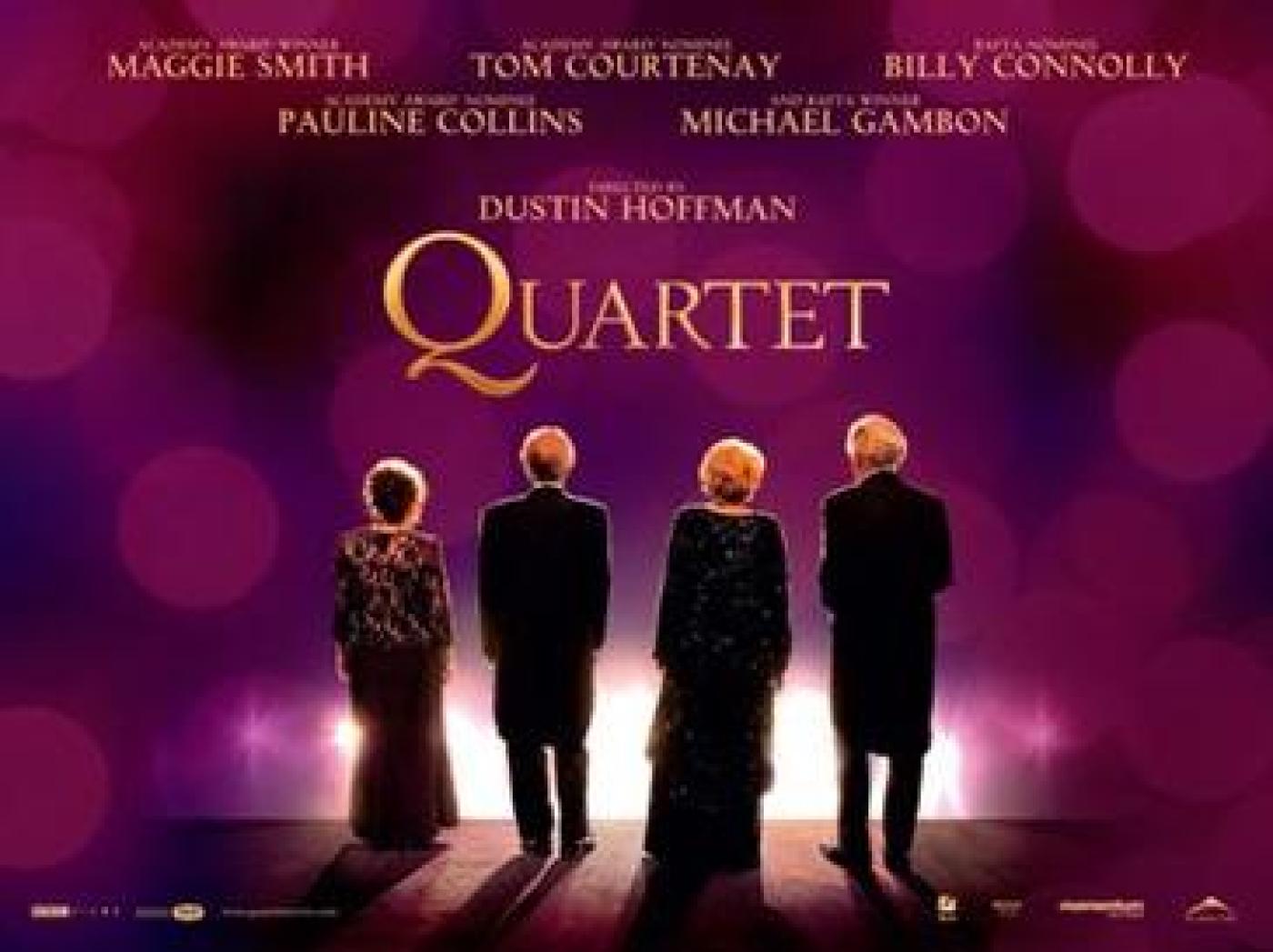
The 2012 British comedy-drama “Quartet” takes place in a retirement home for former professional musicians in modern day England where four former opera stars reunite. This splendid, enjoyable film was directed with obvious love by actor Dustin Hoffmann in his directorial debut. The quartet, magnificently portrayed by Dame Maggie Smith, Tom Courtenay, Pauline Collins and Billy Connolly, is comprised of former opera stars who had worked together during their heydays. Each character, with the exception of Smith’s diva, has contentedly settled into retired life in this genteel house – a gorgeous English estate with expansive grounds – and its environment of music and fellow musicians. Smith arrives to take residence, much to the consternation of her former husband, Courtenay. But the house needs funds to continue operation, so the musicians arrange for a fundraising concert to celebrate the birth anniversary of the great opera composer, Giuseppe Verdi. Through coercion and flattery, they convince a reluctant Smith to take part. Within a constant environment of music – clarinet, piano, violin, voice – and with tender comedy, the residents forge friendships, relive old grievances and eventually find mercy and fellowship in a common goal of celebrating music and protecting their home. Each character’s personality, with its unique quirks and peeves, is affectionately brought to life. Woven subtly throughout the film is a reflective clarinet rendition of “Bella figlia dell’amore”, the famous vocal quartet from Verdi’s opera Rigoletto. In the final scene of the movie, the veteran musicians take the stage for the benefit concert in a heartfelt ode to a lifetime of music and forgiveness within the context of Verdi’s music. And to ground the film even further in Verdi, the model for the fictional retirement home is the real Casa di Riposo per Musicisti (Rest Home for Musicians) that Verdi established in Milan in 1896 for retired musicians, an institution that remains in operation today.
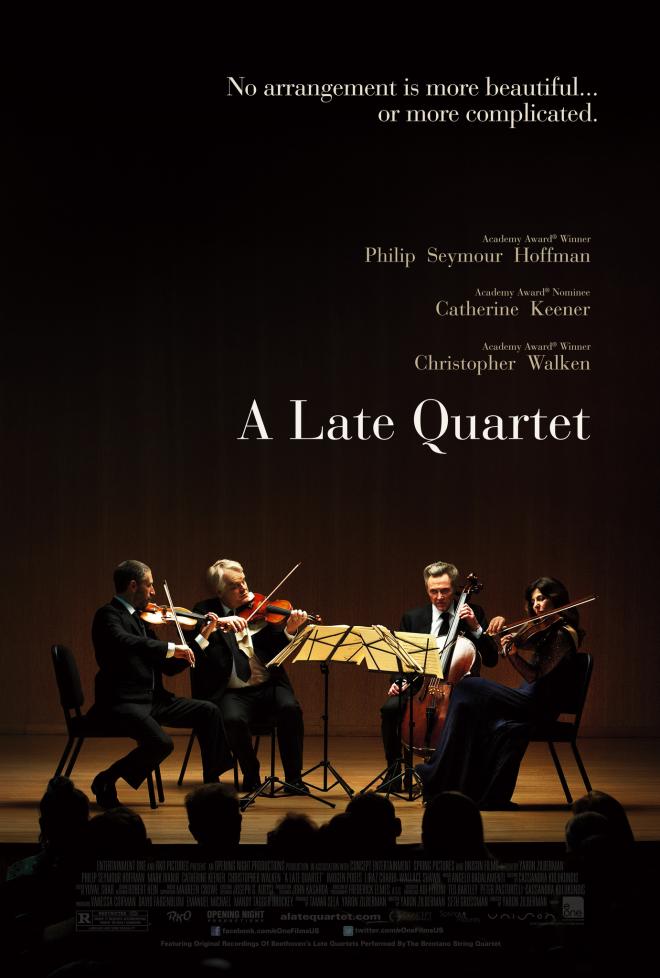
The year 2012 also saw the release of “A Late Quartet”, a drama that follows each member of the fictitious Fugue String Quartet, a respected American chamber ensemble, and the personal crises each member encounters while preparing for a performance of Beethoven’s String Quartet #14, op. 131, one of the late quartets within his set of 16. The Fugue’s cellist, who is the eldest and putative lead member, is diagnosed with a serious illness that forces the members to reconsider the fate of the Fugue and their interrelationships. Infidelity, marital discord, longstanding resentment and seduction bubble to the surface, and each scene conveys in realistic terms how the characters handle these unexpected events. The Fugue members are portrayed with depth and sensitivity by four skillful actors: Philip Seymour Hoffman, Catherine Keener, Christopher Walken (who won an Academy Award for his haunting characterization of a shellshocked solder in The Deer Hunter) and Mark Ivanir. The film takes us to rehearsals of Beethoven’s profound work, shows us how musicians think, the varying opinions of what to convey and emphasize, and how to go about creating that vision. The film’s final, touching scene is a montage of the Fugue’s concert performance of Beethoven’s op. 131. The work is comprised of seven movements, and Beethoven directed that they be performed attacca -- without break -- to create one tapestry of drama, struggle and joy. With this performance, the Fugue members reconnect and recognize the contours of life.
PBS PASSPORT
Stream tens of thousands of hours of your PBS and local favorites with WETA+ and PBS Passport whenever and wherever you want. Catch up on a single episode or binge-watch full seasons before they air on TV.