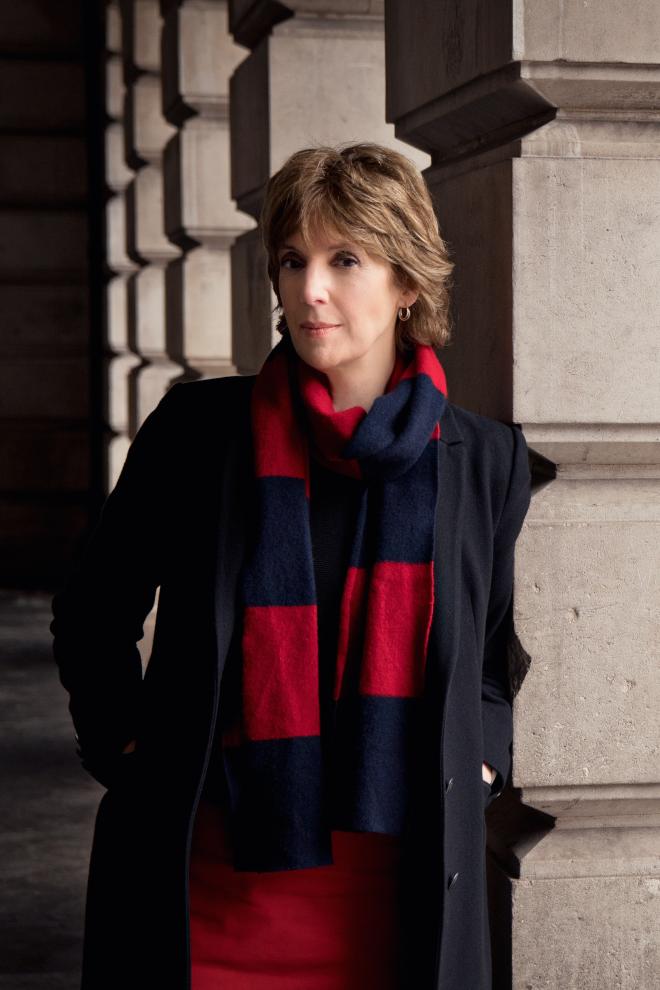
It’s Women’s History Month, and WETA Classical’s Choral Showcase honors the musical contributions of female composers and artists, some of whom are making history as we speak. One is British composer Cecilia McDowall, a London native who composes in all genres, but mostly vocal music. Inspiration and commissions come from a number of different places, depending upon her own interests; for example, the cantata 70 Degrees Below Zero came from the Scott Polar Research Center, with the text drawn from the diaries of Robert Falcon Scott’s ill-fated journey to the South Pole. Another comes from The Notebooks of Leonardo da Vinci, a book from her parents’ library that she remembered poring over as a child. Composed for the 500th anniversary of Leonardo’s death, the Da Vinci Requiem combines the text of the Latin Mass for the Dead with Leonardo’s musings on religion, death, and immorality. Commissioned by Wimbledon Choral and recorded in 2023, we’ll hear Cecilia McDowall’s Da Vinci Requiem, along with some of her motets on March 1.
We’ll head back in time with “Medieval Voices” on March 8, beginning with the powerful liturgical songs of 12th-century polymath and visionary St. Hildegard of Bingen. Her Symphoniae are some of the oldest surviving musical texts in western music, and listening to them can be an immersive experience. Barbara Thornton, Margriet Tindemans, and Benjamin Bagby lead the ensemble Sequentia. During their four-decade career together, Anonymous 4 produced a number of award-winning and best-selling albums, one highlighting the captivating music of Francesco Landini. This 14th-century poet and musician composed numerous ballate, or love songs for which he wrote both the words and the music. One all-female group still working today is Trio Mediaeval; their collection called Aquilonis is a varied program of Italian sacred songs from the 12th century, Icelandic chant, and folk melodies from their native Norway.

“Baltic Voices” on March 15 celebrates contemporary women composers from Estonia and Lithuania. The choral works of Žibuoklé Martinaityté (say “zhih-BWAH-kleh Mar-tin-ay-TEE-tay”), largely wordless and a cappella, are both beautiful and haunting. Chant des Voyelles, or “Incantation of Vowels” is a kind of prolonged chant, reflecting the healing power of vowel sounds in ancient cultures. Aletheia, which translates roughly from Greek as “unconcealed-ness” or “revealing” was written shortly after the Russian invasion of Ukraine in 2022. She calls it “an uncovering of truth … truth that can only be expressed directly though pre-verbal communication. How do you find words for the horrors of the war, for all unimaginable global atrocities? How do you even allow yourself to feel it out?” Aletheia is her attempt, and we’ll hear both pieces performed by the Latvian Radio Choir. From Estonia, we’ll take in Evelin Seppar’s reflection on nature and solitude called Sirelite aegu, “At the lilacs hour;” and from Maria Kõrvits (KUR-vitz), a setting of Francesco Landini’s love song, Gran piant agli ochi, “Great tears in my eyes.” Although born in Ukraine, Galina Grigorjeva resides in Tallinn, Estonia. On Leaving is a work from 1999 steeped in the sacred Orthodox poetry and song, but not in the strictest sense; she subtly augments the voices with recorder and three triangles.
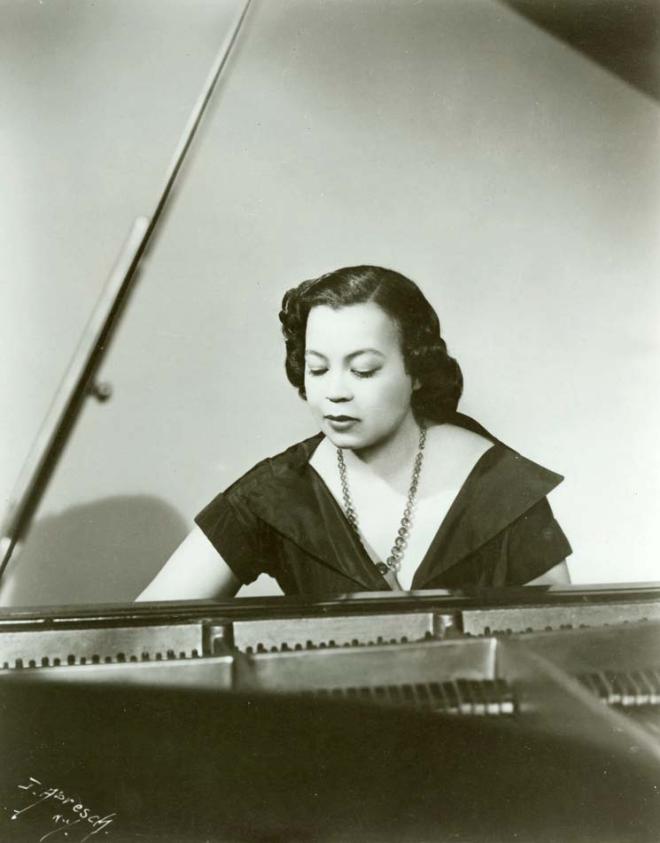
We’ll present “Other Voices” on March 22: Florence Price composed both the words and the music for her prayerful cantata, Song of Hope; Elizabeth Poston, an English composer, pianist, and one-time broadcaster with the BBC put together An English Day-Book for 2, 3, and 4-part female chorus and harp. Penelope Thwaites, a London-based composer who grew up in Australia reveals her love for The Bard with Five Shakespeare Songs for voices and piano. And we’ll round out the program with two musically-adventurous ensembles: from Connecticut, Voices of Concinnity; and from the UK, Papagena, including their clever arrangement of the song “Sweet Child O’ Mine” by the heavy metal band, Guns N’ Roses.
Our Women’s History Month celebration on Choral Showcase concludes March 29, Palm Sunday, with the cantata Simon Bore the Cross by American composer Margaret Bonds. This collaboration with poet Langston Hughes invites African Americans to find in Christ’s passion and death a kind of kinship and solidarity with their own human trial. We’ll pair it with Ludwig van Beethoven’s own personal struggle conveyed in his sole oratorio, Christ on the Mount of Olives.
PBS PASSPORT
Stream tens of thousands of hours of your PBS and local favorites with WETA+ and PBS Passport whenever and wherever you want. Catch up on a single episode or binge-watch full seasons before they air on TV.