Vocal Arts DC, a Washington DC performing arts treasure, has been celebrating this season with the moto “35 Years of Song”, offering in this 35th season a roster of lauded international singers in recital. The group’s upcoming recital on March 1, 2026 is a special one, featuring world-renowned baritone Quinn Kelsey, known for his rich, human performances on world-class opera stages, and collaborative pianist Craig Ketter.
Quinn has quickly gained an international reputation in important opera productions, including those of the Metropolitan Opera, Lyric Opera of Chicago and Opéra National de Paris, to name only a few. He’s been hailed for his “fine and fluid voice” (The Washington Post) and has mastered substantial opera roles, especially of Verdi, and recently received critical acclaim for his performance in the demanding title role of Verdi’s Rigoletto at the Met. This Vocal Arts DC program presents Kelsey and Ketter in a personal and intimate setting; they present a thematic program of nostalgia, adventure, yearning and dreams through 20th century song. Included are songs by Americans Aaron Copland, Florence Price, Margaret Bonds and John Alden Carpenter and Englishmen Ralph Vaughan Williams and a charming work by Gerald Finzi, set to a verse by Shakespeare. I recently spoke with Quinn Kelsey about this program, how his Hawaiian heritage shaped his career and the thrill of performing Verdi.
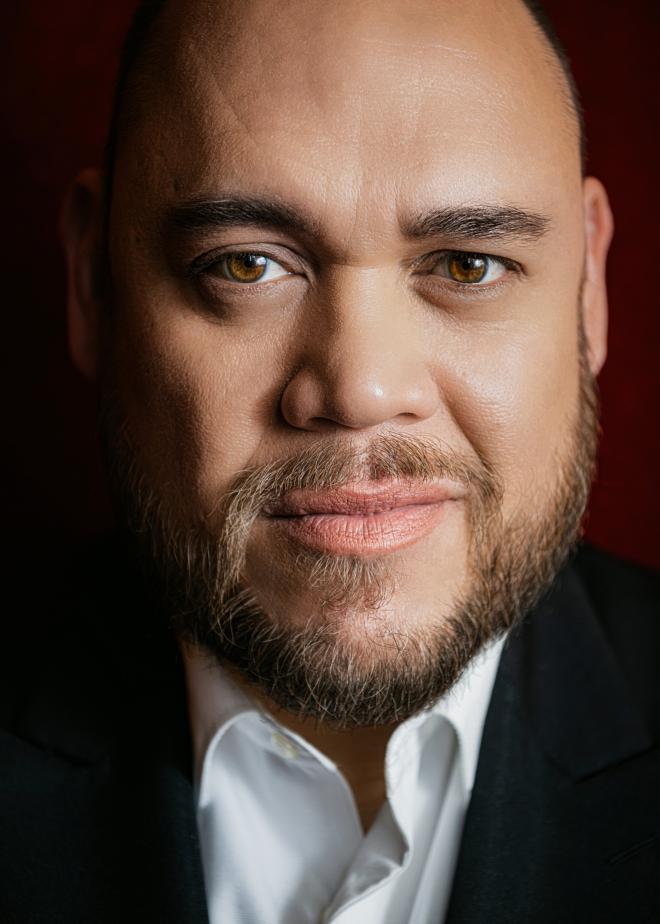
Linda Carducci: Your program features Vaughan Williams’ song cycle, Songs of Travel, a setting of the poems of Robert Louis Stevenson, himself a world traveler. The verse and music speak to the yearnings of a wandering soul. And, fitting for this year’s historic 250th anniversary of the birth of our nation, you’ll also perform Aaron Copland’s Old American Songs cycle that goes to the core of the American folk tradition. How do these cycles appeal to the human soul?
Quinn Kelsey: I think they focus on the simple things all human beings have experienced or will experience in their lives. Fear. Pain. Loneliness. But also longing. Hope. Pride. Wonder. Excitement. And very much love. The Finzi: Let Us Garlands Bring text might be the most fantastical of the whole program, if I may. But everything else, I feel, comes from a very real place. Brings the audience into a setting that they are able to step into and relate to as if they were walking out their front doors. My work is to be a storyteller. To build a world around the audience. But this program, in a way, allows me to pull back the shades of a more fairytale world and use the real one around us all to take us on the ride.
LC: As we celebrate the 250th anniversary of the birth of our nation, we reflect on who we have become as a people – our philosophies, our hopes, our ethics and morals. You’ll perform settings of poems by noted American writer and social activist Langston Hughes in songs by Margaret Bonds (who often collaborated with Hughes), Florence Price and John Alden Carpenter. Hughes’s poems speak to personal fulfillment as well as a yearning for a brighter future for all people, and they present the joy of music rooted in Black American culture. Can you give examples of how some of these songs convey Hughes’s spirit?
QK: I’m in NO way a scholar of Mr. Hughes. And I DEFINITELY need to do more homework on his life and work. But there’s SO much energy in these pieces, thanks to his texts. The last piece of the set most quickly comes to mind. “I, Too” depicts a person who’s sent “to eat in the kitchen when company comes.” Their attitude quickly changes as their sense of defiance and self-worth grows, exclaiming how they won’t be hidden away anymore. That they’ve discovered their own inner/outer beauty. And it’s the OTHERS who will “be ashamed.”
The text for “My Dream” is repeated in “Dream Variations” where Hughes, it seems to me, paints the life of an individual who finds strength and satisfaction from within and is then able decide for themselves all the ways they will live. All the parts of life they’ll enjoy. And with this comes a healthy sense of pride for who they are.
Drawing from African-American culture through music, “The Cryin Blues” and “Jazz-boys” are rich with details depicting Hughes’ love for his roots. In the former, it’s full-on blues. Sadness for lost love. The fatigue of loneliness. And a hope for a better day tomorrow. In the latter, you can’t help but want to keep time with the rhythm. And urgency to do all you can in the moment because who knows what tomorrow brings. And the text grows somewhat spicy along the way, eluding to social interactions as often happens where there’s good music. So much electricity. It’s the type of piece that leads THIS singer at times to wish that the composer had written a page or two more!
LC: You’re American, having been born, raised and educated in Hawaii. You’ve spoken about the strong tradition of vocal music in Hawaiian heritage and the cultures of Pacific Island peoples. Was that tradition rooted in native indigenous cultures and was Western Classical music, including opera and choral music, a part of that tradition?
QK: Because of my mother’s professional life as a singer, educator, and native Hawaiian and my father’s love and appreciation for many musical genres, my sister’s and my background in music are quite complex. Mom was a classically trained singer who enjoyed many years as the premier soprano soloist in the state. But she was also a career choral director with community, high school, and church ensembles. Within my immediate family, ours was a household of sacred, Hawaiian and other Pacific islands, and classical music, as well as the genres of American folk, rock, jazz, and blues. I often say that my sister and I cheated for how we were born right into the thick of musical expression thanks to the heavy focus of the art form from our parents.
LC: You’ve received critical praise for your performances, not only for your rich voice but also your talent for embodying characters and interpreting the roles as relatable human beings. You’re especially known for Verdi baritone roles – you’ve been called “the premiere Verdi baritone of his generation”. Last season, you appeared in a widely-hailed performance as Rigoletto in the Metropolitan Opera’s production of Rigoletto. That’s a quite a strenuous and multi-faceted role; the character goes through trying circumstances and evolves through a wide range of emotions, from cynicism to tenderness to fear to grief. Please briefly tell us how Verdi’s music fit that character’s evolving narrative.
QK: For all his roles I’ve been fortunate enough to perform, I’ve found myself in recent years wishing I could sit down with Verdi and chat with him in order to see through his eyes how he decided on the directions he took with his baritones. And because I’ve now sung Rigoletto over 150 times, I’m dying to speak with him about the hunchback. Verdi’s orchestration almost behaves at times like an extra character in the story. Definitely a narrator of sorts. One whose tone, timbre, and timing become a wonderful cushion underneath the cursed father's progression from wretched beginning to disastrous end. Driving the momentum when we reach the climax of Act II’s Cortigiani. But also slowing it down to maximize the sincerity of the Act I Veglia, o donna section in the duet with Gilda. Or creating a dead stop either in Act I when a stunned Rigoletto repeats the curse of Count Monterone, or in Act III when he comes to grips with the finality of his decision to order a hit on the Duke…and the tragic conclusion thereafter. Verdi’s brilliance has bowled me over with every new role I’ve added to my repertoire.
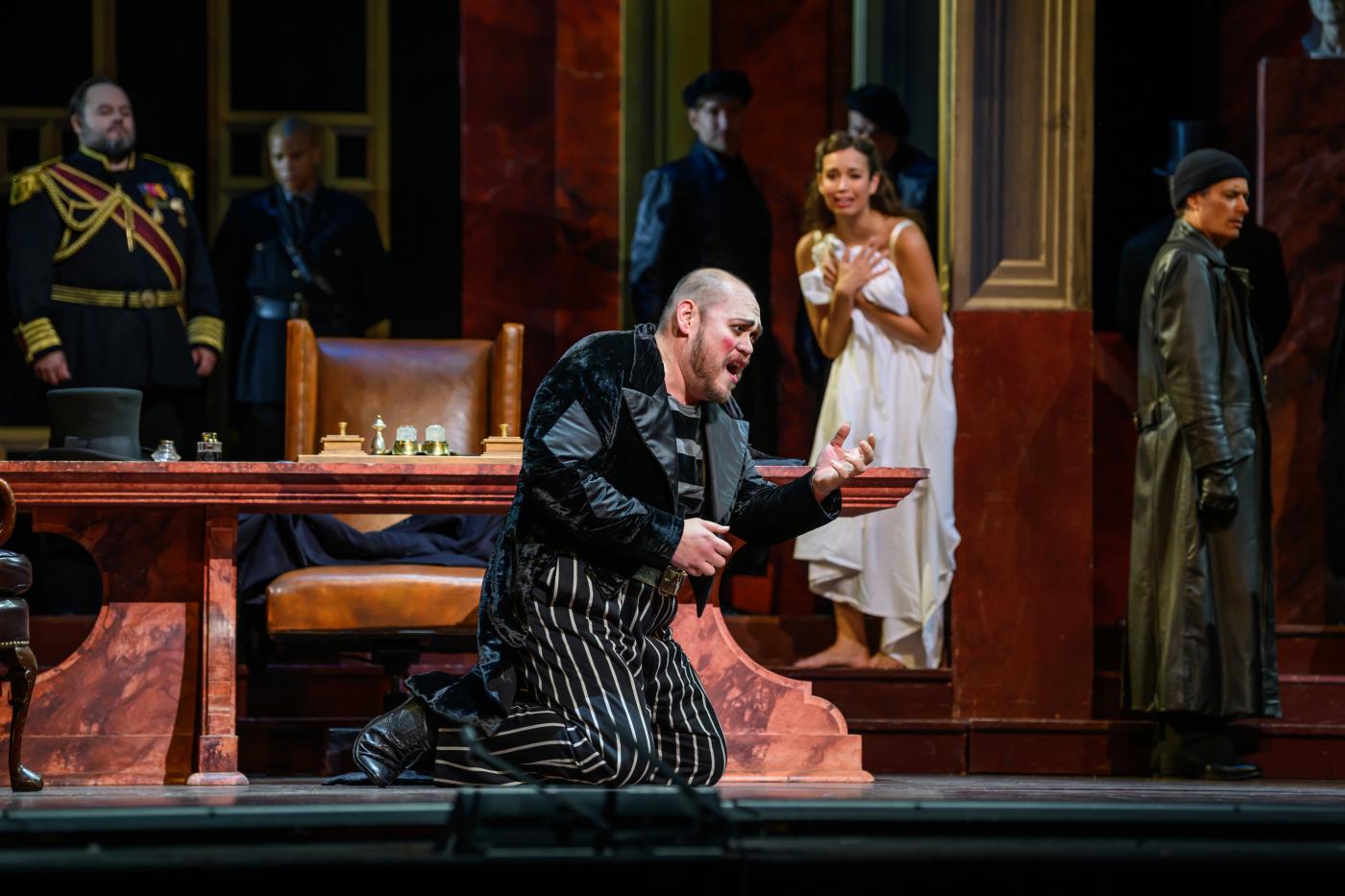
Baritone Quinn Kelsey and pianist Craig Ketter perform in recital, a production of Vocal Arts DC, on March 1 at Live at 10th and G. Details are available here.
PBS PASSPORT
Stream tens of thousands of hours of your PBS and local favorites with WETA+ and PBS Passport whenever and wherever you want. Catch up on a single episode or binge-watch full seasons before they air on TV.