In this blog, I continue my conversation series with opera scholar Saul Lilienstein, who has studied and admired Wagner’s music throughout his life. He shares the experience of being introduced as a teenager to the music of Richard Wagner and how that sparked his lifelong interest in Wagner’s works.
**********
Linda Carducci: Those of us affected by Wagner’s music may come to it from different points in their lives, from different perspectives and for individual reasons. You’ve spent decades researching his music. When did you first experience it and what brought you to it?
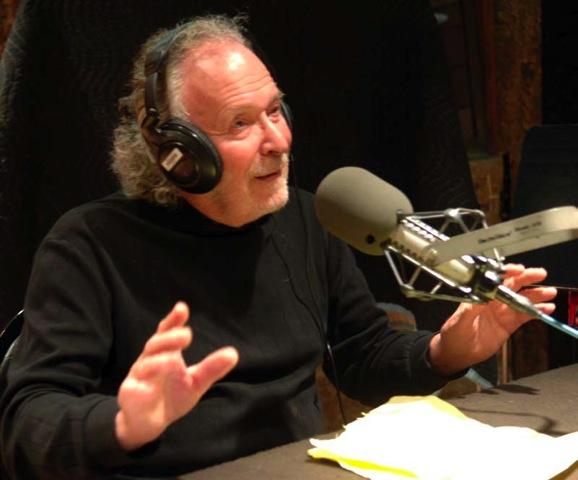
Saul Lilienstein: Linda, you know that there is a moment in our adolescent lives when the emotional windows are open and as yet unguarded by wariness or cynicism. If Richard Wagner finds his way in, he can fill the empty spaces and will never leave you alone after that. For me it was June of 1947, when I was a teenager and my family was staying at a bungalow that my grandfather at the beach in Long Island, New York. The residents of the neighboring bungalow were removing old 78 records. They knew I was a music student and offered them to me – a complete third act of Die Meistersinger von Nurnberg. The name of that opera was familiar because our high school traditionally used the Prelude to Act One as a graduation march, but I had never heard it performed. That’s how it all began for me. I spent most of that summer at the phonograph.
LC: What was it about Die Meistersinger that captured you?
SL: It was a pure music that reached me. By the time each stringed instrument had entered I was stunned with the sensations of sorrow and yet also of a warming consolation. My mother, a wonderful and sympathetic musician, found a score to the opera and gave it to me the next week as a birthday present. I was 15 years old, stamping my name with an ink printer on every other page, proudly making the glorious music my own. By the time the summer was over, every note was memorized and cherished. I went back to high school in September as pale as I had left it in the month of July.
LC: Maybe as pale, but transformed in another way.
SL: You can bet on it. This was the High School of Music and Art in New York, an extraordinary place to spend four years. There were six symphony orchestras, two symphonic bands and departments of painting and sculpture which rivaled conservatory training. I am not making this up! Our school theme song was set to a melody from Brahms’s Symphony #1. Attending this school was like living in Hollywood’s “Fame” but without the dancers and the rock ‘n’ roll. The year before, when I was a freshman and still just one step from carrying a frog around in my pocket, the young sensation Leonard Bernstein led our senior orchestra in a rehearsal of Beethoven’s Leonore Overture # 3 before the entire school just before the semester was over. It was an astonishing experience for me. Was this the meaning of a life in music? This excitement? This life-fulfilling dream? A world parallel to the real world , in which all moment seems divinely ordered , where the good lives on and evil dies? Now nothing mattered but immersion in music, with some occasional time-out for the New York Yankees and the unsuccessful pursuit of the opposite sex. And then came the summer, that summer.
LC: I imagine in that environment you had the opportunity to explore more of Wagner.
SL: . . . and of all music from Bach to jazz. But what kind of a school played Wagner instead of Elgar at graduation? High school life was climaxed by a competition in which I was chosen as the most promising conducting student. The prize was a chance to conduct the senior orchestra in a concert to be broadcast on radio, the choice of music to be my own. I chose the closing scene from Wagner’s Tristan und Isolde, the Liebestod. I sank into a study of the score. Now nothing else mattered, truly nothing. Once again it was the purely musical experience that gripped me. From the clarinets that sang Isolde’s first lines over continuous modulations in the lower strings, so tremulous and sensual, to the ‘ resounding echoes’ and ‘surging waves’ of the great crescendo , it wasn’t her transformation but my own that was at stake. There has never been a more thrilling discovery of the self and the greater world beyond the self than in those weeks of total immersion.
But the school principal, a noted Wagnerian scholar, told my mother and me that it would be “improper for a seventeen year-old boy to conduct music with such highly sexual implications.” He suggested I choose something else, but I refused; I had won the competition fair and square. The second place contestant took over, with a rattling good rendition of Bizet’s “Farandole.”
In the years that have gone by, I’ve been very fortunate to have conducted that final act of Die Meistersinger and other Wagner as well, but the Tristan experience has always eluded me. The understanding of that vanishing moment in my own life has only increased my love of the opera, for did not Wagner tell us that sensucht itself, a yearning desire, is at the heart of Tristan und Isolde and that we are promised no more than “ a glimmer of the highest bliss?”
PBS PASSPORT
Stream tens of thousands of hours of your PBS and local favorites with WETA+ and PBS Passport whenever and wherever you want. Catch up on a single episode or binge-watch full seasons before they air on TV.