Judy Meschel is Producer of WETA Arts, including the popular seasonal program Songs of the Season which showcases the diverse and thriving choral culture in the DMV with performances of music for the holidays. She shared the story behind Songs of the Season in this previous blog, and below, she shares her thoughts on what she's looking for in submissions from local choirs, her decision process, and recommendations on what makes a successful submission.
On selection criteria
When your team reviews submissions, what are you evaluating first: musicality, production quality, or something else?
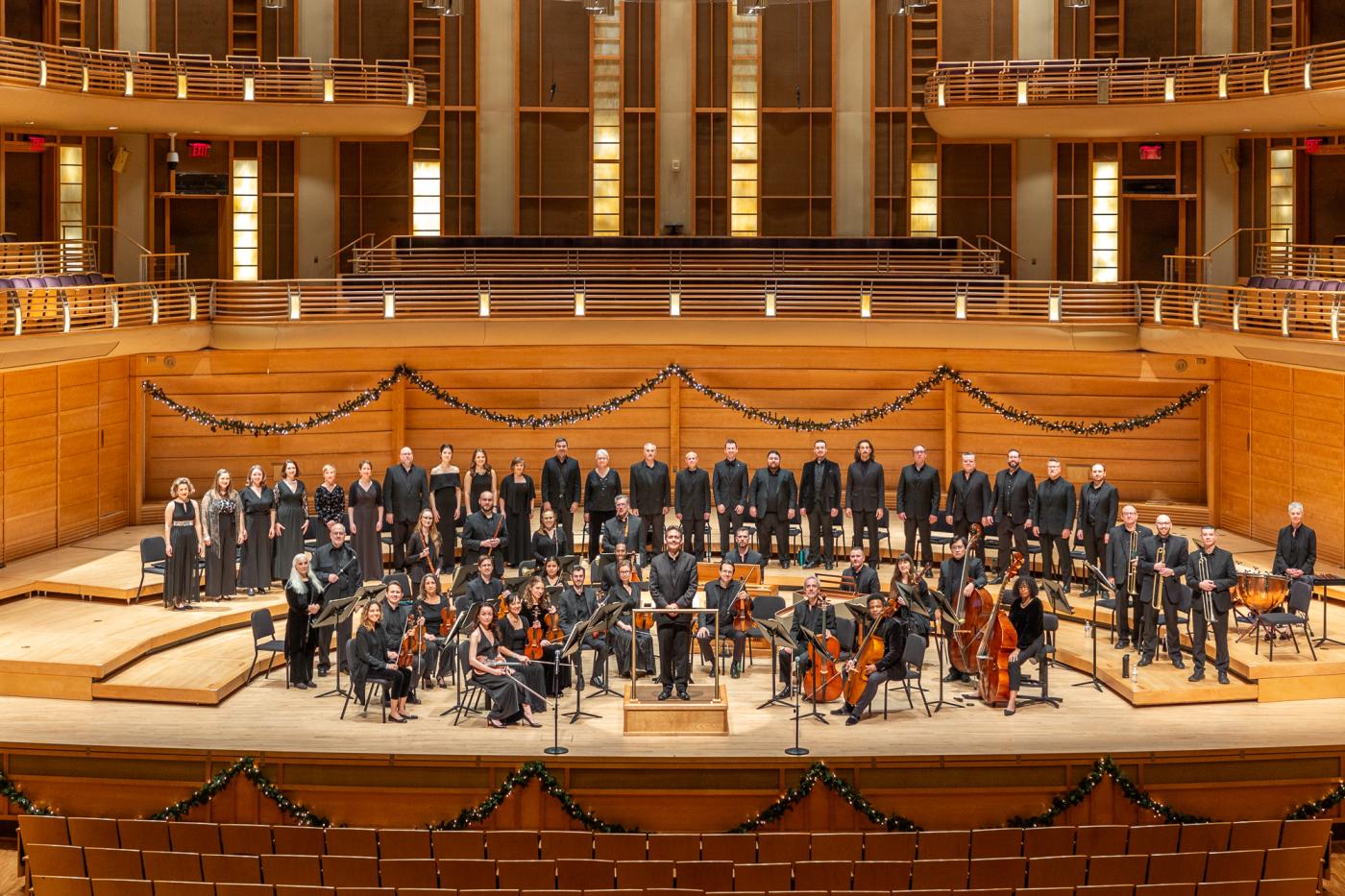
Judy Meschel: We have a volunteer team of local musicians – choir directors all – and they evaluate performances as they might in a choral music competition. So think musicianship, musicality, all the attributes that make an outstanding performance of a work.
At the same time as the musicians are auditing the music, the WETA team is evaluating production quality from a technical standpoint. "Technical" includes not only the quality of the footage and the edit, but title clearance, absence of on-screen text, completion of submission materials, even duplicate song entries.
A note on video and audio quality – we bring some pretty great tools to the effort! We know some choirs have lots of resources and others don't. Entries don't need to be perfect; we're looking for entries that we can buff up in color-correct and sound-sweetening to make successful pieces match each other. We're glad to chat with any group in advance of their taping and editing to offer our thoughts on how to maximize the potential of a video from the Songs of the Season submission perspective.
The Artistic Committee assesses submissions across a range of musicality and performance criteria. Can you walk us through what those criteria actually look like in practice?
JM: Sure! This is what our panel of musicians tells us - For choir directors considering submitting a performance, key factors include:
- Musical & Technical Execution – that’s musical balance, vocal blend, intonation, diction, and performance standards. Because it is a recording, they also evaluate microphone placement and audio clarity (for example, minimizing distracting audience noise).
- Presentation & Appeal – The overall visual presentation and broad appeal outside the local choral community. (What may be endearing or a highlight to a chorus's local base or family audience does not always translate well to a general television audience or meet the standard of a high-level artistic broadcast.)
What separates a submission that gets picked from one that's technically solid but doesn't make the cut?
JM: We have a number of goals to achieve that can affect which submissions are chosen.
Let's say that there are two musically excellent submissions from a single choir, and they are also technically good enough for broadcast in terms of visual and audio quality, and we are able to rights-clear the song, the releases are in place, it's untexted, all the things. One of our goals is to represent as many choirs as possible in the hour format we have, so we will only choose one entry. Which one?
We work to keep the viewer watching, even if they tune in during the middle of a broadcast. Throughout the show, we want to vary the tempo, the genre, and contrast a well-known piece with one likely to be new to a general viewer. So if one choir sends two excellent entries we ask, which fits best in terms of our need to keep intriguing the viewer in relation to all the entries that are meeting the "technically and musically good enough" bars? For variety could we use another downtempo number, do we need more pieces in another language, would another liturgical entry help round out the show, does one of the two entries have some quality that increases the range we can showcase?
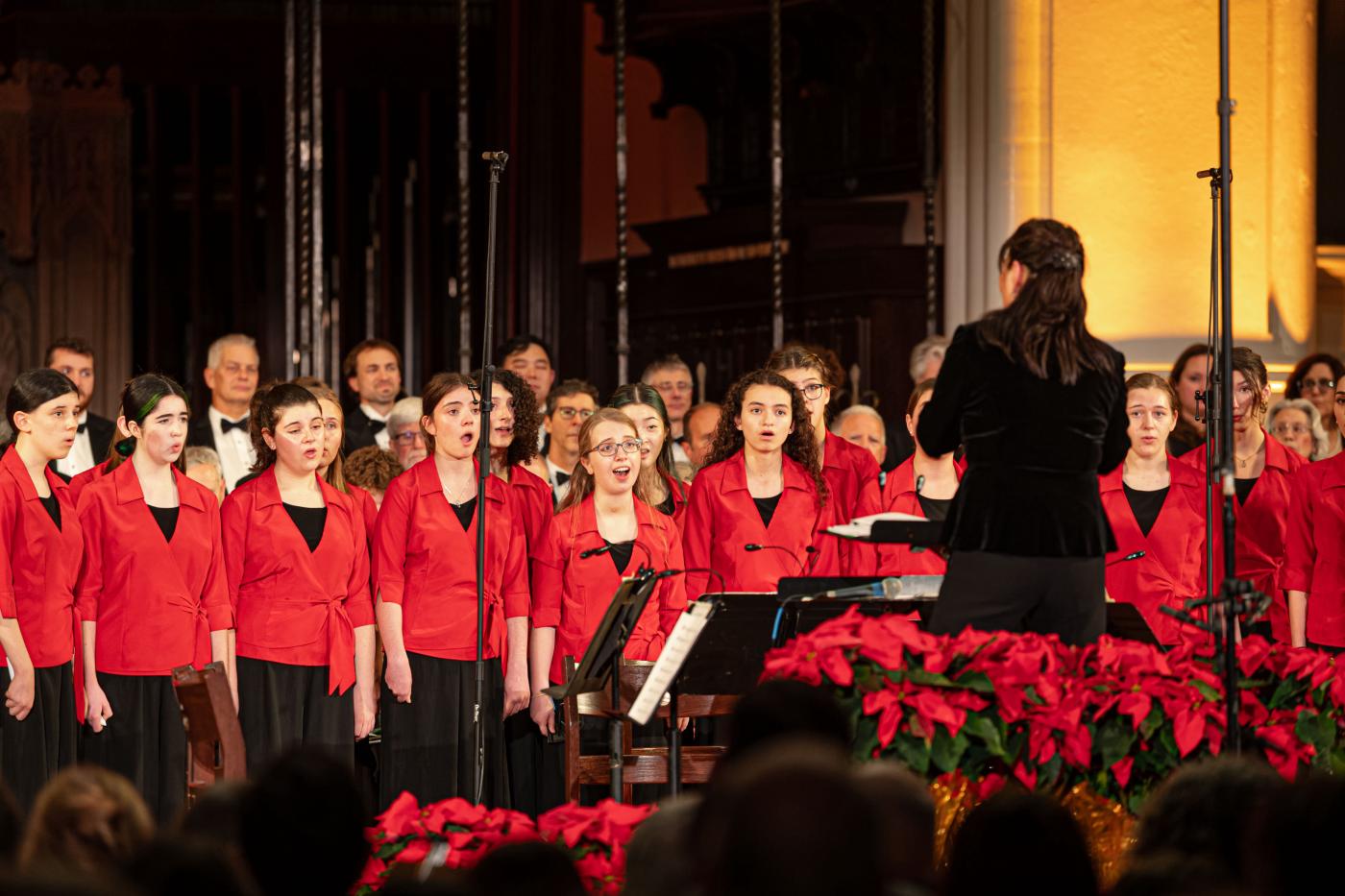
So, you ask, what about two musically excellent submissions that meet broadcast technical aspects that are from two different choirs? In addition to other considerations, we try to vary the types of choirs, too! So we might like to follow a very big chorus with a small choir in an intimate setting, a children's choir after an adult-only choir, or contrast different choral styles.
Once we get the results from the music committee, we use these other characteristics to help create a balanced whole show with a variety that will captivate the viewer!
Do you know within the first minute of watching a submission whether it's a strong contender, or does it usually take a full viewing?
JM: I can't speak for the musician panel on this besides knowing they watch each entry in full and are thoughtful in their evaluations.
From the technical evaluation side, I can say it takes a full viewing to be sure a submission is a strong contender, because so many things can go wrong! Things are fine for the first two minutes and then oops! the rest of the song is cut off. (It’s happened that the sound suddenly cut out starting at minute two and to the end!) Or suddenly in the middle of the piece there is an insert with someone signing the work in ASL. Or while the camera was locked down for the first four minutes, suddenly it started to swoosh around. Video is a hard thing to do, and we are so glad so many choirs have taken it on, creating an opportunity for us to celebrate our amazing choir scene!
On programming the show as a whole
How do you balance variety, genre, size of ensemble, style of arrangement, against just picking the "best" performances?
JM: Variety is key! No viewer expects a community choir's rendition to equal that of a professional ensemble's rendition, if that is how you define "best performance". So there is a lot of latitude.
We start with the music panel's high scorers and fold in the technical criteria which results in a "potentials" list. Then we make selects that create as great a variety as we can manage given the entries submitted. That's every possible characteristic – size, style, type of work, type of choir, language, any way of categorizing an entry that can add an extra dimension. As a choir patron, you go to one holiday show, perhaps two, in a season. You're likely to go to your favorite choir as part of your holiday tradition. What our show can give you is window into the range and variety of artists and traditions right here in the Greater Washington area. That's why we mix it up as much as we can!
If two choirs submit strong versions of the same song, how do you decide between them?
JM: Assuming both choirs' versions are equally strong (musically and technically), if one choir has only submitted a single entry, and the other choir has submitted three that do well both musically and meet the technical requirements, we might select the one that only has the single entry, to enable us to include as many choirs as possible. It's not recommended to only submit a single entry, though, since if it's a duplicate and the other choir's entry is stronger, or there's a technical reason like a rights problem that disqualifies an entry, there are no other entries to consider. Choirs can submit up to four entries, and we recommend taking advantage of that opportunity!
On what choirs get wrong
What's the most common reason a submission doesn't make it, beyond just "wasn't good enough"?
JM: We get very specific rather than "just wasn't good enough", both on the music evaluation and on the technical evaluation.
I can only speak from the technical side. When we started, in the depths of COVID restrictions, the most common reasons for disqualification were basic technical details like "video cannot have text on it", "video must be in HD or better" and "song must be seasonally appropriate".
The reasons for disqualification now are more varied, but the most common reason is that we are unable to clear the legal rights to show a particular song. This is why we have set up an optional pre-clearance opportunity, where choirs can submit titles they are planning on submitting, and we can review in advance if we can clear them for our broadcast purposes. That way, if a title can't be cleared, a choir can select a different piece to submit and not lose one of its entry opportunities.
The second most common reason (on the technical side) is video capture and edit quality, and we offer technical consultation and coaching to assist choirs planning on taping their upcoming performances.
We also have lots of uncommon reasons! We have had great entries from a musical and technical standpoint that did not contain a choir – one was an orchestral number, another one was a soloist with orchestra. We had a performance by a choir that was not from the Greater Washington region. We had a performance in the dark. But, we are heartened that we have a lot of talent in the area, and look forward to guiding choirs toward improving their entries!
Are there production or technical mistakes like audio, lighting, camera setup that sink an otherwise great performance?
JM: Absolutely! Put cameras on a solid tripod. Unless you're a pro with pro gear, we recommend you don't move the camera around. It takes a very heavy-duty tripod and a lot of skill to do a move that is smooth and not jerky. If you watch TV you'll notice not a lot of programs use jerky camera movement.
We recommend you use three such cameras on nice tripods, but if you can only have a single camera, shoot a whole-choir establishing shot in 4K with no movement; then you can do moves in edit. Or we can do it for you.
Know your camera – you want to get at least HD, and you want your footage to be the highest quality possible. Ask us if the quality you plan to shoot will work for broadcast. Sometimes the camera specs seem to indicate it will work but it's only going to look good on a small monitor, not on the big television the size of a fireplace (and you know you want your choristers to look great on that giant screen!)
On the audio side, we recommend recording audio on separate microphones rather than using the camera mic, and keeping audio mics far away from the audience. We don't want to hear that program rustling or someone sneezing (true story). And mic placement matters - if the choir sound is balanced but the mic is only on one side of the choir, the result will sound as if it isn't.
Any advice for smaller or newer choirs on how to compete against larger or more established choirs?
JM: Shooting a single camera in 4K has worked great for such choirs, as has choosing a venue where folks have experience taping such a performance. Ideally the venue is already rigged and ready to go!
Also – what a smaller or newer choir has is less tradition, and fewer obligations, and these create opportunities to make an entry that stands out. A small choir may have few enough people that it's easier to get 100% memorization -- lose those folders! Few enough people may also mean having time to get the sound really tight. A new choir without a history could mean a group of musicians focusing a lot of time on just a few pieces instead of having to prepare a whole-evening performance. Not doing a whole-evening performance also means being able to get creative with your taping location. These are advantages a smaller or newer choir might have that a large established choir doesn't.
On repertoire choices
How important is it that a choir submits something audiences will recognize, versus something more unusual or ambitious?
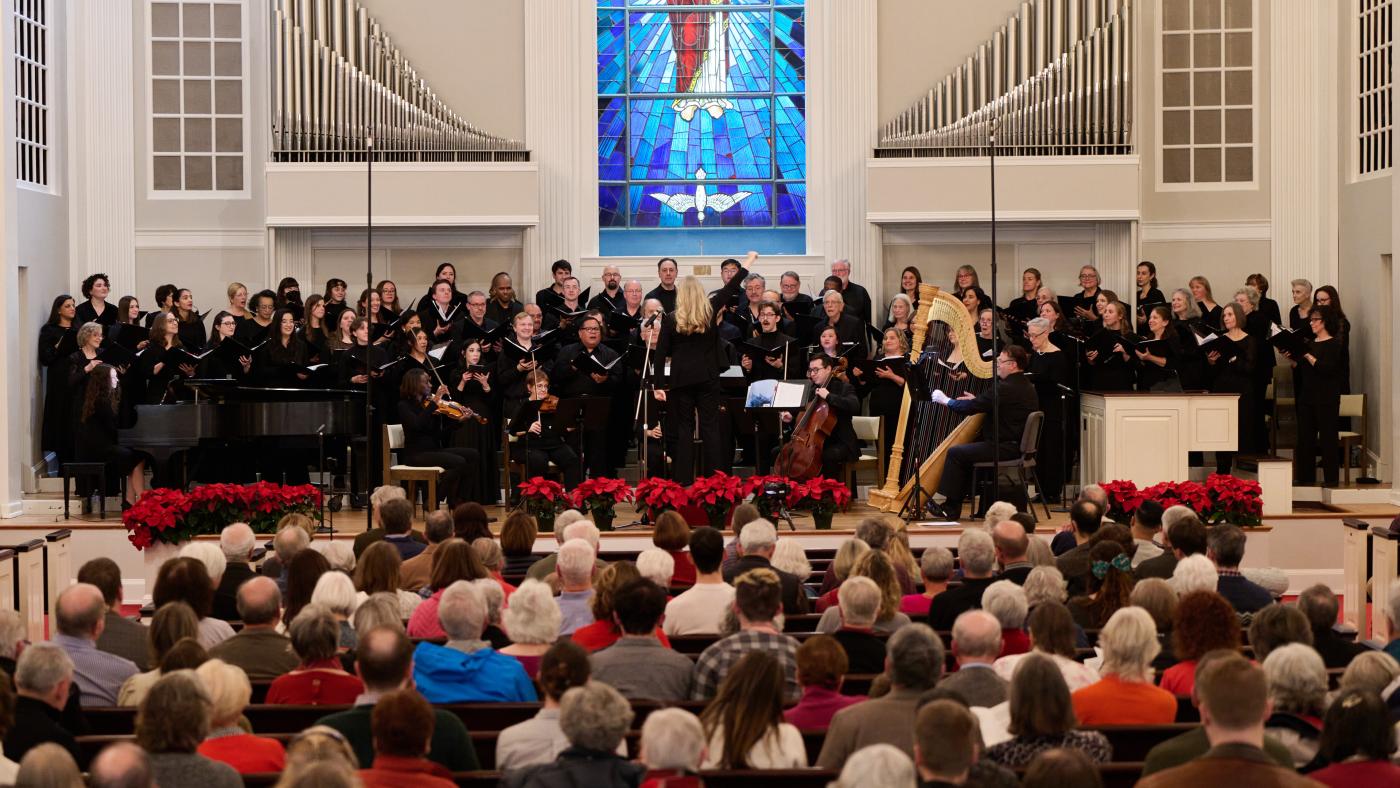
JM: We showcase both familiar and "unusual/ambitious" works. We have more slots for familiar works than we have for unusual-ambitious ones, because we need to think of the viewer who pops-in mid-broadcast, and we need them to know they're watching a holiday special. If you tune in during an ambitious number, we need the next number you hear to be familiar. And we need to start and end the show with something familiar.
We encourage choirs to submit unusual/ambitious entries but not only unusual/ambitious entries. (You can submit up to 4 entries, maximum 6 minutes each.)
On the bigger picture
How has the caliber or diversity of submissions changed since the show started?
JM: From the technical standpoint, the caliber of submissions has improved because before COVID, few choirs committed much if any budget toward videography. Most choirs, if they spent money on recording themselves, spent it on audio recording. Since then more choirs have dedicated budget toward improving their online visual presence.
Diversity varies every year, and while we make a concerted effort to get the message out to the entire region about this opportunity to get seen by the community, we would always like to receive submissions from a broader range of choruses and choirs.
What would you love to see more of in future submission rounds that you rarely get?
JM: I'd love to get college groups. Or an a cappella singing group. How about a collegiate a cappella singing group? I can't be the only person who has watched Pitch Perfect 100+ times. I'd like to see more Spanish-language submissions that are not Feliz Navidad. Multigenerational groups. Hannukah repertoire. I don't believe we've had a madrigal choir before. Let's show ourselves the huge range of talent we have right here in the DMV!
PBS PASSPORT
Stream tens of thousands of hours of your PBS and local favorites with WETA+ and PBS Passport whenever and wherever you want. Catch up on a single episode or binge-watch full seasons before they air on TV.