The nation’s capital will soon be getting a new opera house.
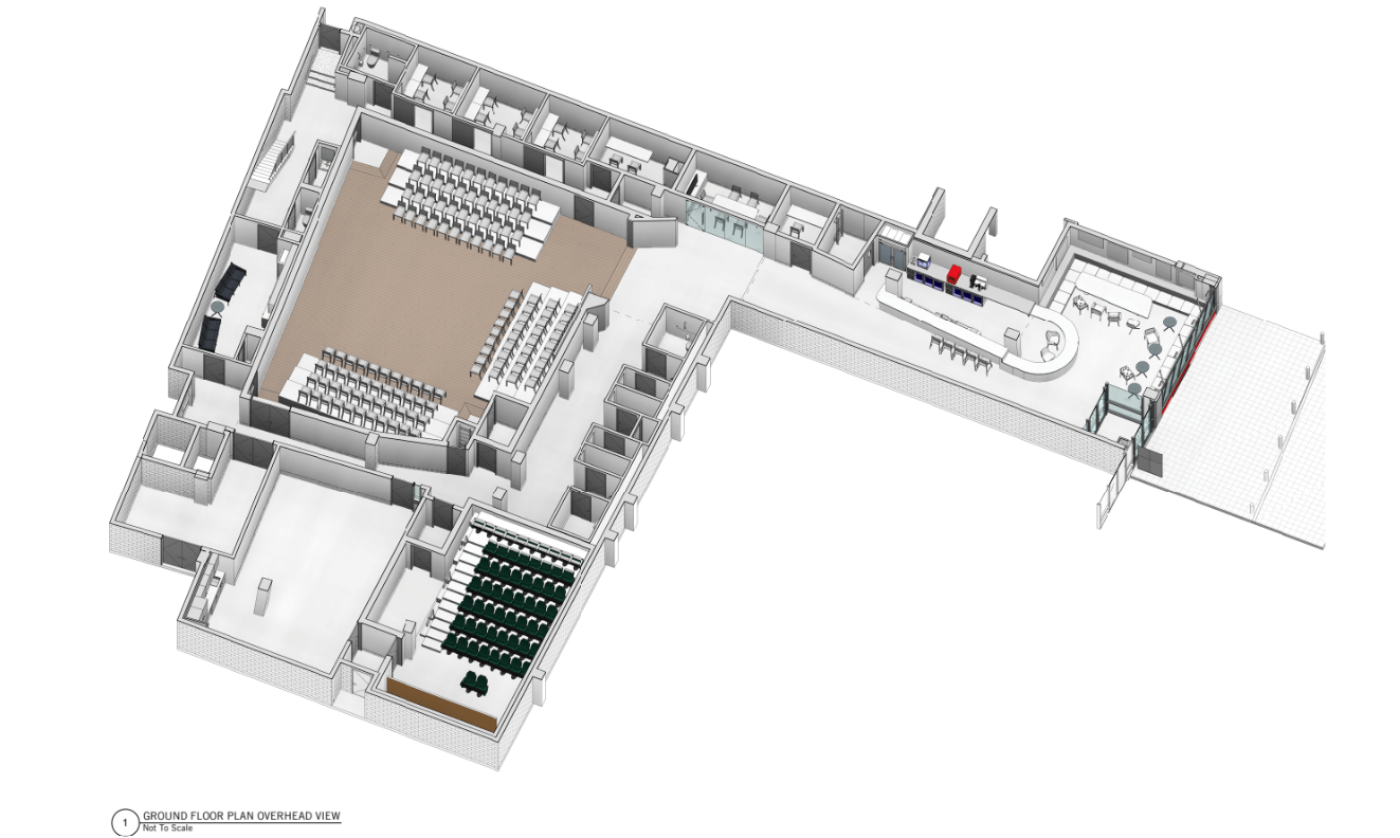
That’s a short version of what’s coming as a result of a new partnership between opera company IN Series and Theater Alliance. The latter has not only signed a 15-year lease in its new space a short walk from the Waterfront Metro stop, but is also nearing completion of a $4.5 million capital campaign to transform its new home into an arts hub — “a permanent home that’s far more than a theater.” Theater Alliance, in addition to continuing to stage its own productions, will also be the new home for IN Series and 4EYE Film Center, as well as other local arts organizations.
I spoke with Timothy Nelson, Artistic Director of IN Series, about this new development.
Evan Keely: This is a very exciting development for both IN Series and Theater Alliance. Both organizations have had to be creative over the years in terms of finding and utilizing physical space, but it appears a new chapter is beginning for both companies. It also seems like an affiliation between IN Series and Theater Alliance would be a natural choice, given how the missions of the two harmonize. Tell us about how this partnership came to be.
Timothy Nelson: Like all the most solid partnerships, this really began with personal friendship and mutual respect. IN Series has collaborated in less direct ways over the years with Theater Alliance, and we even won a Helen Hayes Award together a few years ago for our co-development and production of “Poetry for the People: The June Jordan Experience”. With their appointment of Shanara Gabrielle as Producing Artistic Director, things fell into a certain place because of my own admiration of Shanara and synergistic friendship. And, you’re right of course, that we share organizational similarities in terms of values and mission, without competing in genre or repertoire, and we are, I think, similarly placed in a moment in each organization’s history. Really, however, it started with laughter and affection.
EK: IN Series prides itself on presenting new works and lesser-known creations, and in lifting up voices and experiences that have been historically marginalized. It seems to me there has also been an embodied dimension to how this exceptional opera company exists in its community: the physical distance between audiences and performers has often looked different from the “traditional” stage with an orchestra pit, proscenium arch, and curtain — for instance, many IN Series productions have appeared at the Dupont Underground; when I saw Las Místicas de México at the Mexican Cultural Institute, the audience encircled the performers in a small room where we were all almost touching: this struck me as intentional, and it was part of what made the experience memorable. I saw The Delta King’s Blues at the yet-to-be-renovated Theater Alliance in an intimate performance space. Do you anticipate this changing as the physical space at Theater Alliance takes on its new, capital-campaign-funded form? Will IN Series continue to mount performances in places like Dupont Underground?
TN: What a fantastic observation and question. You are absolutely correct! The physical experience of the performance, both how it places the audience in space in relation to the performance, and also, important for what we do, the sonic impact of the human voice in that spatial relationship, is key to the experiences we take joy and pride in offering. It is a tangible manifestation, as you say, of how we see opera or music-theater in relation to community, to audience, to artists’ lives, and to large social questions, or at least conversations. I absolutely love creating site-specific work for just this reason, the incredible opportunity for surprising and meaningful engagement that it creates. That said, it is a hard work, and doing four or more site-specific productions a year limits our ability to build on our successes, almost creating the need to reinvent the wheel for each show. At this moment in IN Series’ history, a central goal of mine is to move us from being a DC company into a DC and DMV institution, and having a home is central to that. However, this home has to allow us to keep the things that make us us, and one of those is a totally flexible space that, while intimate, can be reimagined for each production in specific and impactful ways. Importantly, we still intend at least one production each season to be site-specific, in some found space in the District and then again in Baltimore, and to allow audiences to become excited in new ways about the work, and allow IN Series to do the important lift of going INTO community with our work and not always expecting the community to come to us. That is in our DNA and we must never lose or even shy away from that.
EK: How might this alliance (pardon the pun) between the two organizations change either of them? Does this make new things possible for IN Series that were less feasible before this partnership came to fruition?
TN: The vision for this partnership goes far beyond just sharing space. The idea is to coordinate programming thematically as possible, to share ideas, expertise, production staff and other resources that would be otherwise doubled. All organizations in the space, and we can’t forget the new 4EYE Film Center that brings in a whole new audience for all of us and presents surprising and cool ways to partner, have strengths, places we can learn, gifts we can offer, a whole banquet of partnership opportunities that aren’t usually apparent in the more siloed approach to most “space” partnerships. I would say this vision of organizational friendship is even more central to the vision for the partnership than the space itself.
EK: What do you want audiences in Washington (and beyond!) to know about future seasons for IN Series? And do you have aspirations for new initiatives — say, along the lines of the Cardwell Dawson Residency Program?
TN: Very soon we will announce our 2026-2027 season, our first in the new SW home. I can’t give it away yet, but will say that in a moment like the one we are living through, it is the privilege, but also the responsibility, of organizations like ours — small, nimble, independent, unaffiliated — to stand up and say and do something. We get this, and we get that the place we stand up and call a spade a spade is in our work, and how we make that work. So look for a season that is about this, that is directly connected to the conversation of the body politic, but is based on living out our values in the work we make. Beyond that, big big things in the coming season. Sometimes, I can’t believe how lucky I am that so much of my job is to sit and dream about the impossible and to make it possible. There are things in the coming two seasons, where IN Series turns 45 and I celebrate my tenth year with the organization, that are audacious and shocking, but which most importantly continue in surprising ways to realize our mission of transforming the lives of artists, audiences, and communities.
PBS PASSPORT
Stream tens of thousands of hours of your PBS and local favorites with WETA+ and PBS Passport whenever and wherever you want. Catch up on a single episode or binge-watch full seasons before they air on TV.