Pianist Alice Sara Ott had an auspicious introduction to international fame when she won first prize in the prestigious Bach Competition in Köthen in 2003, and has since gathered prizes in several international competitions. Ott burst onto the recording scene with a recording contract with the Deutsche Grammophon label, which included acclaimed recordings of Franz Liszt’s virtuosic Transcendental Etudes in 2009. She’s recorded a vast range of works by Mussorgsky, Ravel, Stravinsky and Chopin, along with Beethoven’s piano sonatas, concerti and Bagatelles. During the recent pandemic, Ott became acquainted with the piano nocturnes of John Field, those expressive character pieces greatly admired by Liszt and served as inspiration to Frederic Chopin. Ott recorded the entire collection of Field’s nocturnes in 2025. Of this recording, The Classic Review wrote: “It is Ott’s sound quality that proves most captivating . . . [her] consistency provides the ideal backdrop for the composer’s inviting vocal lines, and she treats them with charm, elegance and expressiveness.”
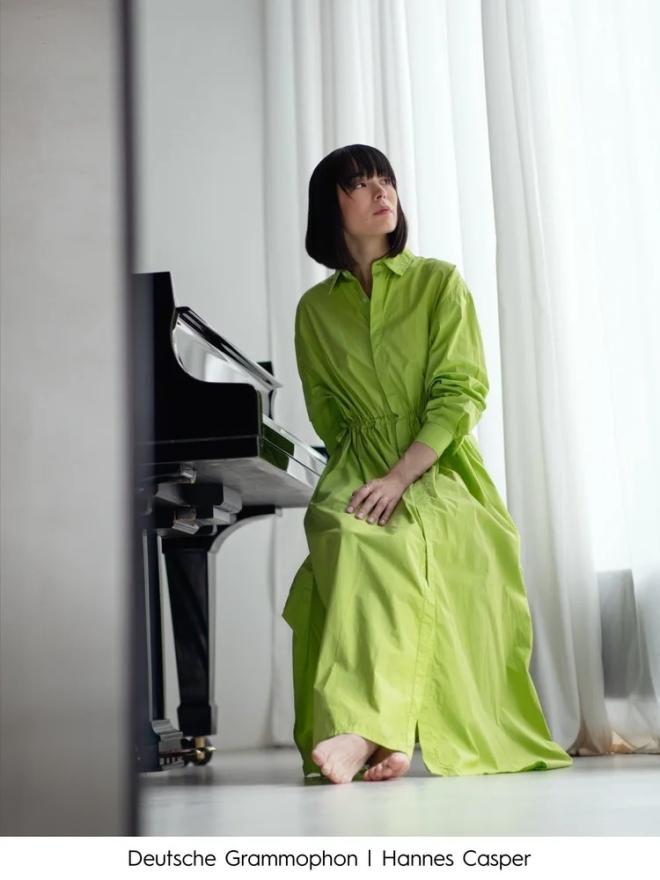
Of course, artistry blossoms with continuous growth, exploration, and openness to new ideas and sounds. It’s something that Ott has embraced in her career that started as a child and has grown to international status. This year, Ott expanded her repertoire to include piano transcriptions of film music by 21st century Icelandic composer Jóhann Jóhannsson, who composed a large body of work for various visual art forms. These small, quiet mood pieces effectively support a film narrative, although can pose a challenge to pianists who strive to maintain musical momentum and tension. I asked Ott if performing this type of music requires a different technique from what’s used for traditional piano works. “Not really,” she answered, then genially explained that she first envisions the sound she wants to convey with each mood piece, then analyzes how to achieve that -- hand micromovements, shifts of weight on the key, the depth of key placement in its bed, attention to silence and space between notes and nuanced pedal. Ott recorded this Jóhannsson collection on an old upright piano to render a more felted, intimate sound.
It’s an example of Ott’s ongoing exploration of new sounds, although she continues to perform traditional Classical music – in fact, she will perform Beethoven sonatas and Piano Concerto #4 along with John Field’s nocturnes in her upcoming European tour. In 2027, she is scheduled to present the world premiere of the Piano Concerto by Joe Hisaishi with the Philadelphia Orchestra, its composer-in-residence.
Ott explains further in my conversion below that her choices of repertoire are based on her connection to the music, with an interpretative approach rooted in what she’s learned from past performances rather than determined by era of composition. Perceptions can evolve; past experiences inform the future, and personal ideas can shape interpretations and the contours of a concert.
You can listen to my entire conversation with pianist Alice Sara Ott here:
PBS PASSPORT
Stream tens of thousands of hours of your PBS and local favorites with WETA+ and PBS Passport whenever and wherever you want. Catch up on a single episode or binge-watch full seasons before they air on TV.