Playlist
| Name | Download |
|---|---|
| Playlist for America 250 Episode 2 |
The first documented piece of classical music by an American-born composer in what would become the United States is a song called “My Days Have Been So Wondrous Free”, and it was written in 1759 by one of the signers of the Declaration of Independence, then 22 years old: Francis Hopkinson.
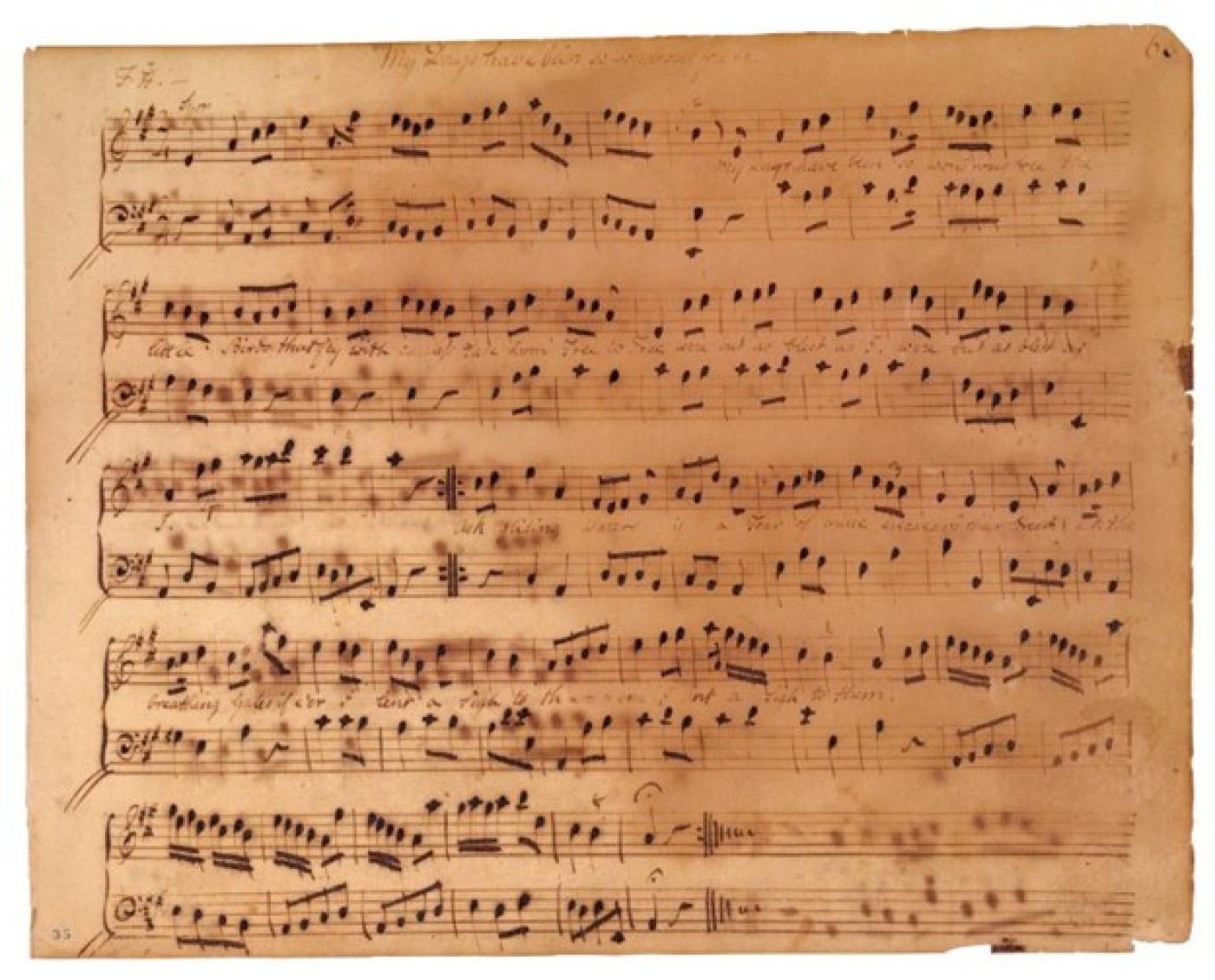
Francis Hopkinson, was, like many of the signers of the Declaration of Independence, a polymath. He was born and died in Philadelphia, but he attended the Second Continental Congress as a delegate of New Jersey. He was an accomplished harpsichordist, lawyer and an 18th-century version of graphic designer who created the Great Seal of New Jersey and helped design the Great Seal of the United States, the U.S. flag, and the one-dollar bill (the pyramid with the eye was his idea.)
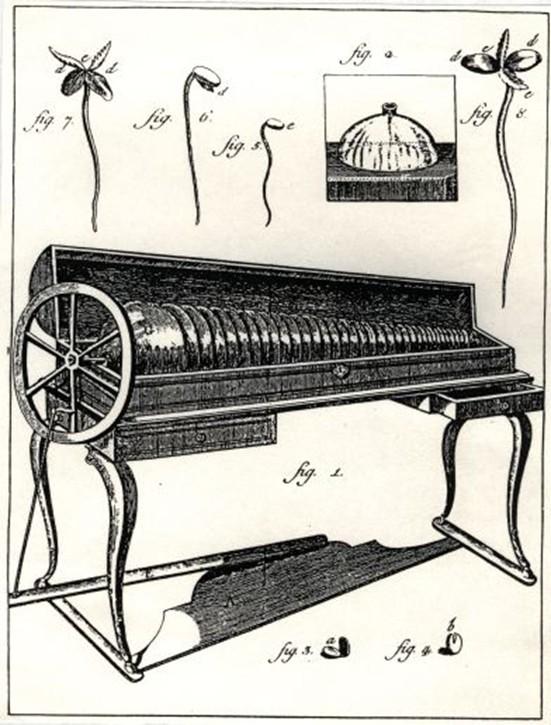
But there was an even more versatile polymath among the signers of the Declaration: Benjamin Franklin. Listing all of his accomplishments would take up all the pixels, so we'll stick to what he did in the realm of music. He played violin, guitar and harp, and in 1761, while he was based in London, Benjamin Franklin worked with a local glass blower to develop the Glass Harmonica, a highly sophisticated instrument based on the dinner-table activity of rubbing the rim of a glass to produce an otherworldly shimmering sound. It immediately became a popular instrument, particularly among women musicians who were prevented from playing standard orchestral instruments professionally. One of the first virtuosi of the glass harmonica was an English woman named Marianne Davies, who had a successful career touring the continent and introducing Europe to the instrument. She even taught the young Marie Antoinette how to play it, and she regularly kept in touch with Benjamin Franklin. Another great early virtuoso was a blind German woman named Marianne Kirchgessner (a lot of Marie/Mariannes in this story) who learned to play it when she was 11, and ten years later she played for Wolfgang Amadeus Mozart, who wrote two pieces for her just a few months before he died. The instrument has gone on to a long illustrious history that lasts to this day: Beethoven, Donizetti, Saint-Saens, and Richard Strauss all wrote for the glass harmonica, and it has been used by contemporary classical composers, pop artists, and included in several film soundtracks. One notable recent use was in George Benjamin’s highly acclaimed 2012 opera Written on Skin, which seems to indicate that Franklin’s musical invention will continue to live on.
Another musical innovation Franklin attempted, however, did not catch on. While living in Paris as the United States Minister to France, Franklin devised a way to compose for a string quartet that wouldn't require the players to use their left hands. Instead of the usual combination of two violins, viola and cello, Franklin's quartet is for three violins and cello. Each of the violins is tuned differently so among them they covered all the notes of the scale. This made it possible for the piece to be played by beginners who had mastered bowing and rhythm but hadn't yet learned fingering. There are some conceptual problems here. First of all, I can attest as a cello player that by the time one has learned bowing and rhythm well enough to play this piece, one has at least learned first position on the left hand, enabling the playing of a complete scale. But the bigger problem is simple physics: it’s impossible to play this piece in tune as written. It’s kind of astonishing that Franklin didn’t take into account that one would have to temper the tuning of the strings, as using pure intervals as one usually does when tuning string instruments would not work for a piece in all open strings. It was a noble attempt though, and it’s nice that he was thinking of providing something for the beginners.
But someone who was no beginner was the accomplished violinist Thomas Jefferson, another Founding Father with a wide range of interests. His home Monticello was frequently filled with the sound of music, and Jefferson was particularly fond of the work of Carlo Antonio Campioni, a composer born in France but who settled in Florence, and whose work combines French and Italian styles. Jefferson owned the sheet music for all of Campioni’s work, which he carefully catalogued.
But the revolution that Jefferson, Hopkinson, Franklin and the other founders spearheaded wasn't being fought to the sound of violins and glass harmonicas. Many people involved in the war might have lived and died having only heard two instruments: the fife and the drum.
Fifes and drums were not on the battlefield for fun. They were an essential part of the Revolutionary Army. Instructions to the troops were encoded into the drum beats and certain fife tunes. These musicians could be as young as ten years old as they played in the midst of war. While the Founders played their elegant music in the European tradition, those fighting to realize their vision played much simpler instruments.
(Meanwhile in Europe the fervor inspired by the American Revolution inspired the cultural movement Sturm und Drang.)
PBS PASSPORT
Stream tens of thousands of hours of your PBS and local favorites with WETA+ and PBS Passport whenever and wherever you want. Catch up on a single episode or binge-watch full seasons before they air on TV.