An Asylum for Mankind (May 1775 – July 1776)
New Englanders rush to surround the British Army in Boston, but as war begins Americans find themselves sharply divided. After the Battle of Bunker’s Hill, George Washington of Virginia arrives to command the newly created Continental Army. In July 1776, the Continental Congress issues the Declaration of Independence, insisting on the people’s right to resist tyranny and govern themselves.
Previews + Extras
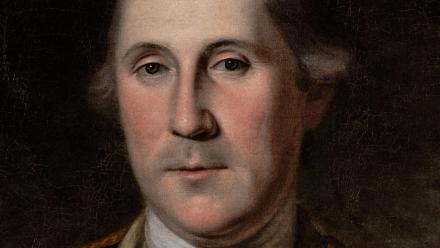
George Washington: Farmer, Patriot, Commander
S1 E2 - 4m 56s
In the spring of 1775, George Washington accepts the role as the Commander-in-Chief of the Continental Army. Washington is 43 years old, one of the richest men in America and the enslaver of over 300 people. He is an imposing figure with an adhesive memory and the ability to instill confidence in his subordinates. His first task is to turn a ragtag group of Patriots into a fighting army.
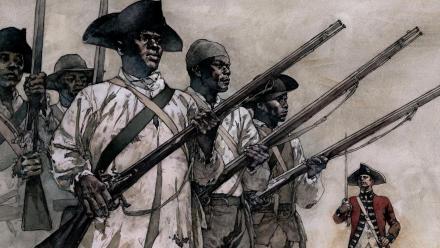
Dunmore's Proclamation & Black Americans in the Revolution
S1 E2 - 9m 20s
Forty percent of white Virginians owned enslaved people, and farmers like George Washington lived in fear of a revolt. These fears come to reality when Virginia's royal governor, Lord Dunmore, issues a proclamation offering freedom to any enslaved individual who joins his fight against their Patriot masters. Some 800 men would join Dunmore, including some of George Washington's own slaves.

The Battle of Quebec
S1 E2 - 8m 18s
Benedict Arnold leads his army north up the Kennebec River as part of the American invasion of Canada. His forces lose much of their provisions and face terrible winter weather, causing many to turn back. Benedict Arnold's force launches an assault on their target, Quebec City, on New Year's Eve that turns disastrous for the Patriots.
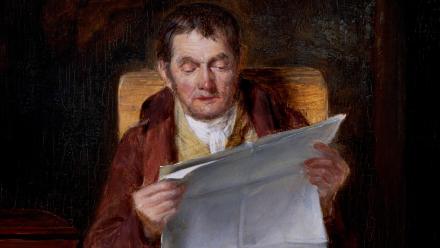
"Common Sense" and the Birth of a New World
S1 E2 - 6m 36s
On January 9th, 1776, the pamphlet "Common Sense" is published in Philadelphia. The pamphlet immediately becomes a bestseller, selling tens of thousands of copies across America. In "Common Sense," Thomas Paine, the author and violent foe of aristocracy and monarchy, attacks the King and Parliament and offers Americans an alternative to British rule: true independence.

One of the Most Extraordinary Expeditions in American History
S1 E2 - 6m 57s
George Washington has Boston surrounded but lacks the artillery to threaten the British-held city. He dispatches Henry Knox to Fort Ticonderoga to retrieve guns he can use to capture the city. Knox leads a daring expedition to haul 55 guns weighing more than 64 tons across rivers, lakes and mountains and deliver them to Washington, spelling doom for the British in Boston.
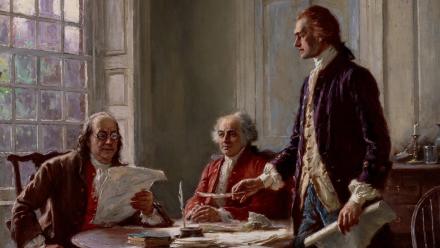
The Declaration of Independence & Birth of the United States
S1 E2 - 11m 47s
Thomas Jefferson is tasked with writing a first draft of what will become the Declaration of Independence. In it, Jefferson writes that all men are created equal with inalienable rights to life, liberty and the pursuit of happiness. While proclaiming that all men are created equal is a revolutionary idea, it does not extend to Native Americans, women, or African Americans.
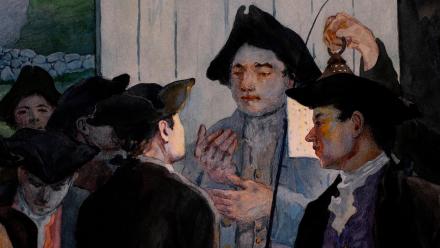
John Peters... an enemy to Congress?
S1 E2 - 2m 5s
John Peters was the most respected man in his small settlement. In 1774, his neighbors picked him to represent them in the First Continental Congress. But when Peters sensed other delegates in Philadelphia “meant to have a serious rebellion,” he refused. From then on, he would face suspicious Patriots, threats of execution, and even pressure from his own father to become “a friend to America.”
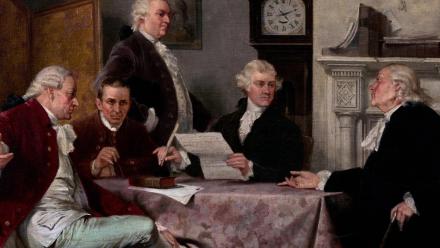
Preview: An Asylum for Mankind
S1 E2 - 30s
New Englanders rush to surround the British Army in Boston, but as war begins Americans find themselves sharply divided. After the Battle of Bunker’s Hill, George Washington of Virginia arrives to command the newly created Continental Army. In July 1776, the Continental Congress issues the Declaration of Independence, insisting on the people’s right to resist tyranny and govern themselves.
Similar Shows

First Civilizations
History


Secrets of Sacred Architecture
History

Leonardo da Vinci
History

Coronation Girls
History

The Dictator's Playbook
History

When Music Makes History
History

Miss Springmaid
History
PBS PASSPORT
Stream tens of thousands of hours of your PBS and local favorites with WETA+ and PBS Passport whenever and wherever you want. Catch up on a single episode or binge-watch full seasons before they air on TV.