This month we celebrate women's contributions to American history, and we’ve been doing so since 1980 when President Jimmy Carter proclaimed the first week of March to be National Women’s History Week.
“I ask my fellow Americans to recognize this heritage with appropriate activities during National Women’s History Week, March 2-8, 1980.
I urge libraries, schools, and community organizations to focus their observances on the leaders who struggled for equality – – Susan B. Anthony, Sojourner Truth, Lucy Stone, Lucretia Mott, Elizabeth Cady Stanton, Harriet Tubman, and Alice Paul.
Understanding the true history of our country will help us to comprehend the need for full equality under the law for all our people.
This goal can be achieved by ratifying the 27th Amendment to the United States Constitution, which states that “Equality of Rights under the Law shall not be denied or abridged by the United States or by any state on account of sex.” - Jimmy Carter
To celebrate on WETA Virtuoso, I’m putting together 3 special programs (Wednesdays at 2pm starting March 11) that highlight 3 American women from 3 different backgrounds.
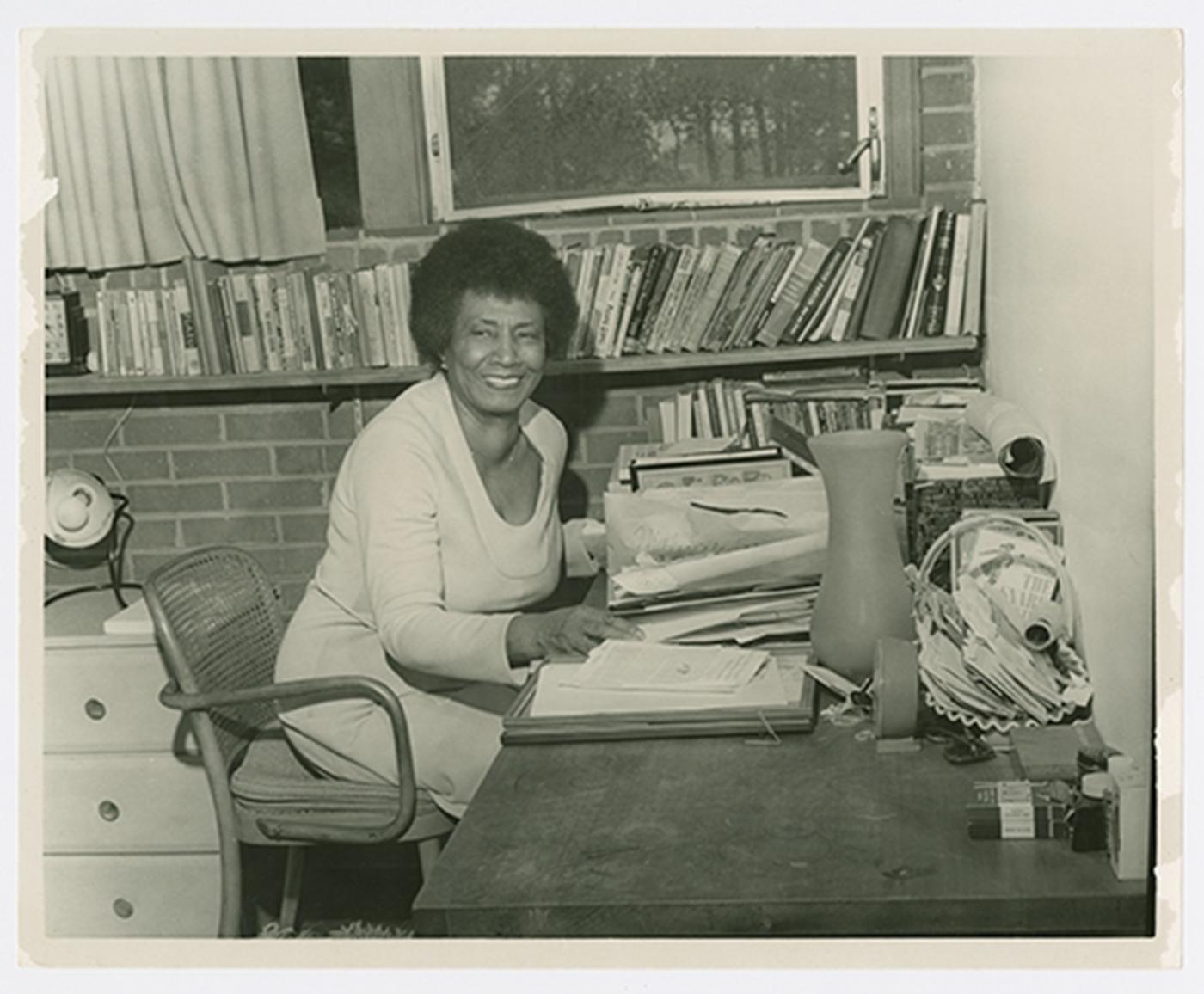
My first subject will be American composer and pianist, Undine Smith Moore. She has been celebrated in Black spaces for decades, having received a Pulitzer Prize nomination, and many awards. But her music has been largely ignored in mainstream concert halls and media.
She was born in 1904 and spent much of her time growing up in Petersburg, Virginia. Her father was a brakeman for Norfolk and Western Railroad, and maybe she got her passion for music from her mother who was an avid reader and music lover. Her composing career came later in life, and I’ll talk about that in the program on March 11. But perhaps her biggest passion was teaching others about music; she considered one of her biggest accomplishments the creation of the Black Music Center at Virginia State College (VSC) in 1969. While it only lasted until 1972, it was influential and brought leading Black composers, musicians, and lecturers to the college. Even after retiring from teaching at VSC after nearly 5 decades, she traveled to give lectures and run composer workshops.
I’ll be sharing with you 4 different works of Moore's and in between each one I’ll share with you stories about her life and accomplishments.
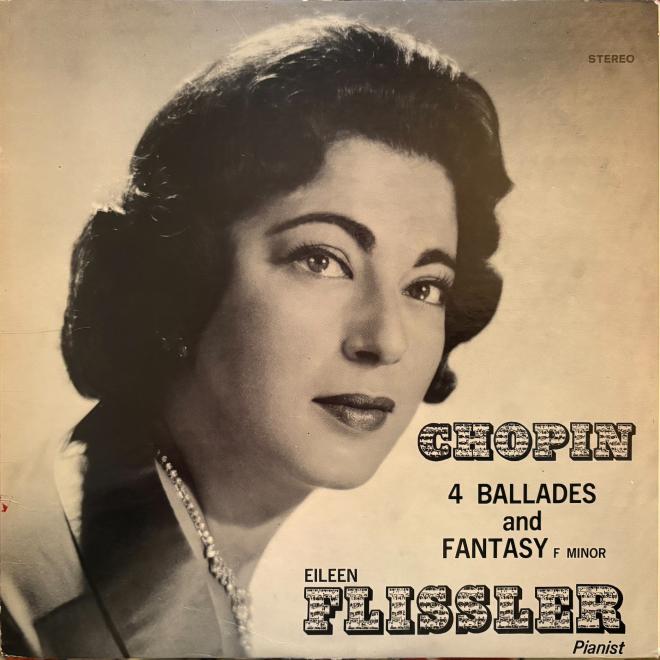
The second special, March 18th at 2pm, will be on a pianist and recording you haven’t heard before. And it all stems from a record I found in a dollar bin outside when crate digging in the summer of 2025. The pianist’s name is Eileen Flissler, and the record I found is a kind of promotional record from the Vox label. It includes all Chopin Ballades and the Fantasie in F minor, challenging works for the piano that showcases a young talent. But in every description of her, they use her gender to put her in a box and for their commercial benefit. One hype quote on the back says “Eileen Flissler is well on her way to becoming THE American woman pianist, a role that until now has been vacant...”
Despite graduating from one of our greatest conservatories, the Curtis Institute of Music, a successful international tour, and performing an album of Chopin, they place more qualifiers in front of her name than I thought possible. She is merely on her way.... to becoming...the American WOMAN pianist...
You’ll have to listen on March 18th to learn the whole story, and you’ll never guess where it leads too. But I can tell you now how this started with a few things that grabbed my attention and stopped me in my tracks last summer when I found this flipping through records.
The album cover features a large portrait picture of her face in black and white, and to me it seemed typical of the 1950s Hollywood influence. What grabbed me was seeing an American woman on a cover of a classical album from the 1950s, and she isn’t a singer or a model used for some kind of sex appeal. In my experience that is unusual, compared to seeing Russian women who were already concertmasters in orchestras during WW2, and pianists like Maria Yudina and Tatiana Nikolayeva (Shostakovich dedicated his 24 Preludes and Fugues, Op. 86 in 1951, which she premiered) were making recordings.
It’s also a budget recording, and that becomes noticeable after looking at the album cover for a minute. Some things to note, it’s in black and white, there is no record label name above “stereo,” there is no printing on the spine, the back is only text, and worst of all the recording itself wasn’t done with much care and you will hear deficiencies completely unrelated to her playing.
I figured I would find more online, like the actual recording and then all of the other releases she made. But this recording does not exist online, it’s not in the catalogue of Vox/Naxos and I can’t find a single reference to it. What I learned was that she married Aaron Rosand, a violinist, around this time, made a few recordings with him over the years as an accompanist, and then died of cancer 10-20 years later. Details are extremely limited, there are very few references of her existence online, and they are mostly in comment sections (some decades old) with someone who saw her play, remarking at how great she was playing Beethoven violin sonatas, or Mendelssohn.
This is distressing, here was this woman used by a record label to promote their next big thing, but it seemed like she was cast aside and her work forgotten for no artistic reason of hers. Had she been born somewhere else, would she have been able to make more solo recordings before her death? She did however appear in some other recordings with Aaron Rosand, which were used to sell budget releases (similar to the “relaxing classical hits!” playlists you see today)
I don’t have all the answers, or even many answers, very few of my questions have been answered at all. But I felt that her single solo recording should exist in the public, and that we should enjoy her artistry for what it was, and not what it might sell. I also believe this record in my possession was a personal copy of Flissler’s, there’s more to this story, but you will need to join me to find out.
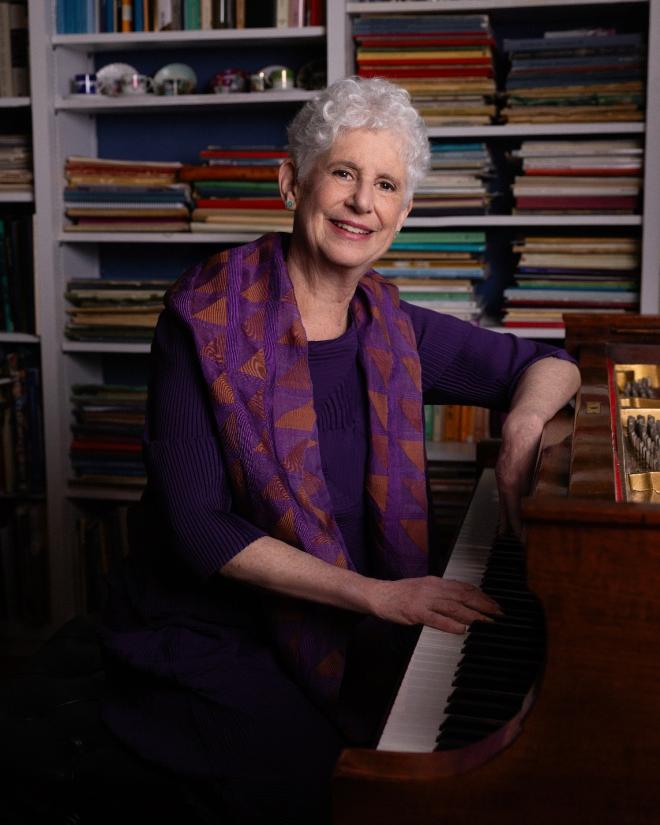
The last program looks at a living composer and her music, Jessica Krash. She will join me on March 25th at 2pm to talk about and listen to 3 specific works; Be Seeing You, The Cantigas de amigo of Martin Codax, and 5 Bagatelles. Krash is a native of Washington DC and besides composing and teaching has given lectures at the Kennedy Center, the Library of Congress, and the National Institutes of Health. After heading to Harvard College, she made her way back to the DMV after getting a Masters at Juilliard, and then a Doctorate from the University of Maryland. Her music is varied, each piece is for a different type of ensemble, and one of them includes creative and inventive writing for the piano to pair with poetry written 700 years ago.
I hope you use these composers and musicians as a jumping off point for other artists and works you might be overlooking, and join me Wednesday’s at 2pm on WETA Virtuoso.
PBS PASSPORT
Stream tens of thousands of hours of your PBS and local favorites with WETA+ and PBS Passport whenever and wherever you want. Catch up on a single episode or binge-watch full seasons before they air on TV.