Playlist
| Name | Download |
|---|---|
| Playlist for America 250 Episode 11 |
As the roaring 20s gave way to the traumatic midcentury era the good news for American composers is that their place in the global music scene was now well established; they no longer had to feel inferior to European composers or anyone else. Perhaps part of this was due to the fact that Europe was destabilizing at the same time that the U.S was becoming increasingly dominant, including in the realm of music, when Europe’s best musicians were going to America and the quality of American orchestras had caught up with European ones. In this environment American composers were no longer obligated to conform to a particular style in order to get their pieces played. Not all of them wanted to explore folk idioms or delve into experimentation with Charles Ives and John Cage, so they forged a new path. They embraced lyricism and emotion while continuing to explore unexpected harmonies and textures. This has been called the neoromantic movement, but that implies that it's a return to something, a look backwards, which it's not at all. What is interesting is that it shows that even composers who didn't align themselves with a particular American tradition can still end up sounding...American.
We're going to explore this phenomenon through the lens of the violin concerto, which does seem like a particularly Romantic musical form: Romantic not only in the sense of romance and the violin's sensual nature, but also in the original meaning of romantic, which means adventurous or heroic, the idea of an individual asserting itself and overcoming challenges in the context of a large ensemble that could easily dwarf it. And there's also something American about the idea that one person should stand out against thirty people playing the same instrument and sixty other people playing other instruments, that we should applaud the nonconformist challenging the overwhelming dominance of the numerical majority.
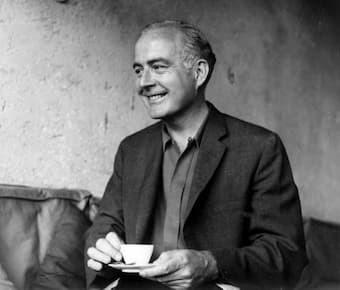
Samuel Barber was born in Pennsylvania in 1910. His family had roots in America dating back to the 18th century. He was a child prodigy whose rise to success came quite smoothly. By the time he started to become known as a composer he had already found success as a singer. He was 28 when he wrote what would become his most famous work, the Adagio for Strings, which was originally a movement in a string quartet; it was conductor Arturo Toscanini's idea to turn it into a standalone work for String Orchestra. (Fun fact: It received its world premiere in a radio broadcast from Studio 8H conducted by Toscanini with the NBC Orchestra in Rockefeller Center, the same studio that has hosted Saturday Night Live for over fifty years.) It's been played for many funerals, but Barber never intended for this piece to convey sorrow or mourning. He drew his inspiration from an ancient Greek text describing a barren winter landscape with no humans at all.
The following year he wrote his violin concerto. It's in three movements.
I played this piece as a cellist in youth orchestra as a teen, accompanying the winner of the orchestra’s concerto competition, and during rehearsal she told us what her teacher said about the piece, which is that it tells a specific story. She insisted that her teacher heard it from someone who heard it from Barber, and I have not been able to confirm the truth of that assertion, but it helped a bunch of kids deepen their sense of the work, so I will share it with you:
It’s 1942. A young man from a rural Pennsylvania town receives a draft notice. It’s two days before he has to report for duty. The first movement depicts him hiking through the hills behind his hometown, trying to breathe deep and appreciate the beauty despite his intrusive thoughts about what lies ahead. The second movement is his last night with his lover, depicting not only their intimacy but their highly emotional conversation; again, it’s a meditation on the beauty of the moment interrupted by anxiety and dread. The short, fast third movement depicts his rushing through the big city, which he is experiencing for the first time as he takes in all the new sights and sounds, as he makes his way to his post to report for duty, to which he arrives on the final note.
Stories like this can be helpful for young musicians as they find a way to take the listener on a journey through a piece. For listeners they can be helpful but they can also be a trap. I decided to share it with you not because I think you need it in order to appreciate the work, but because the story does reflect the mood of the time it was written at the dawn of WWII, which Barber himself participated in as a member of the Army Air Corps. Perhaps the most important takeaway is the idea of being defiantly beautiful, insisting on beauty even in the face of war.
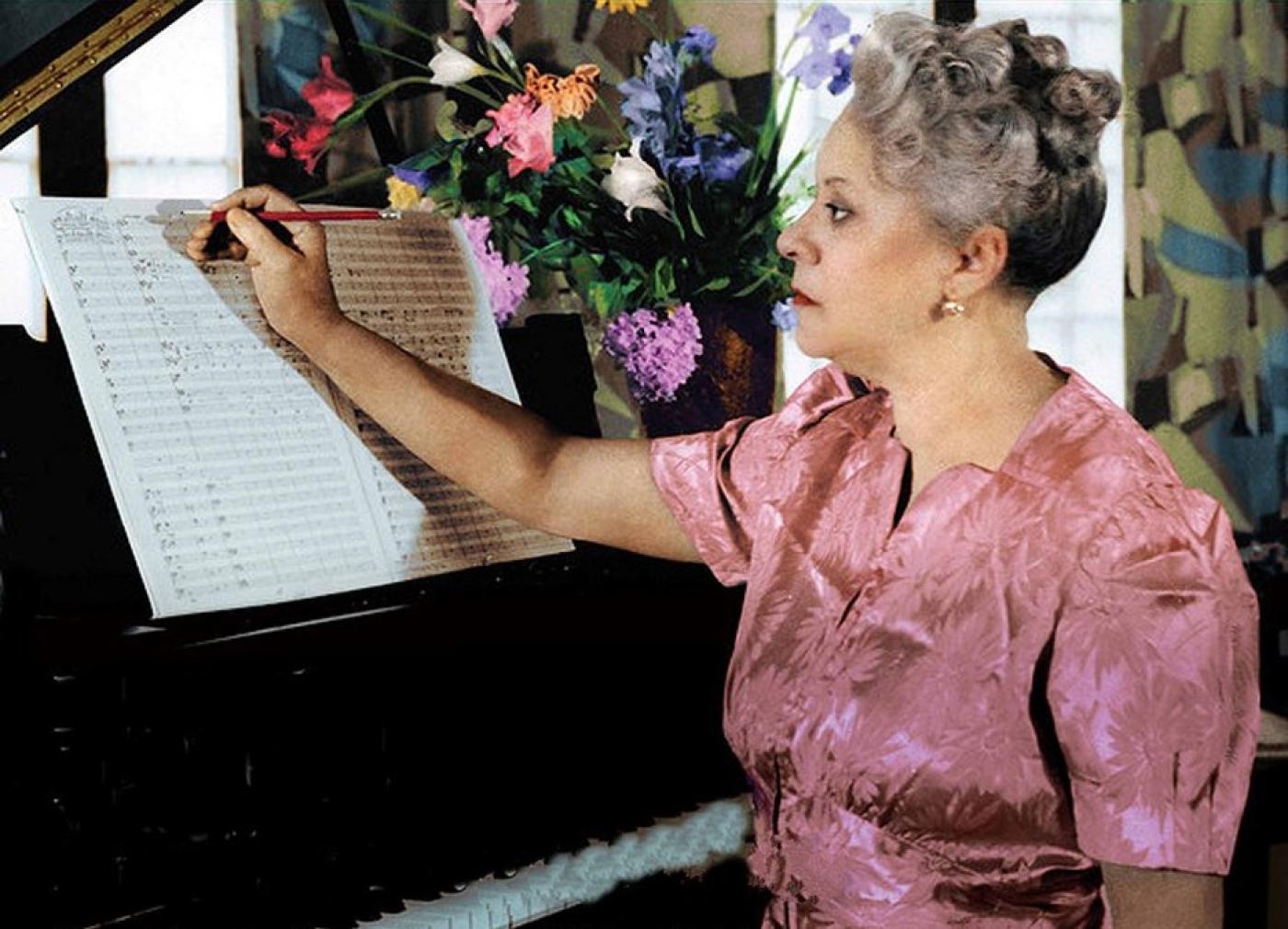
Florence Price was born in Little Rock, Arkansas, in 1887, studied at the New England Conservatory, and then settled in Chicago. She was 45 when she wrote her Symphony no. 1, which was premiered by the Chicago Symphony Orchestra in 1933, the first work by a Black woman to be performed by a major American orchestra. She wrote her second violin concerto in 1952, shortly after telling a conductor friend of hers that she “recently decided to give more time to writing the kind of music which lies closest to my heart.” While it's not clear what she meant by that, compared to her previous work this is much more lyrical, and it also adopts a more concentrated, cyclical format, where contrasting ideas come and go throughout the work instead of conforming to the traditional three-movement structure. It turned out to be one of her final works before her unexpected death at age 66.
After a dramatic introduction and a cadenza-like entrance by the soloist which almost sounds improvised we hear a rather jaunty first theme, followed, a few minutes later, by a more lyrical second theme. The piece is in one continuous fifteen-minute movement with distinct episodes marked by changes in tempo developed from those two main themes. It really does seem like a departure from her earlier work, and sadly we can only speculate about her further developments in this direction that she never got to write.
It’s alarming to think how close we came to never hearing that work at all. If it seems like there’s something of a Price renaissance going on, it’s because the bulk of her compositions were only discovered in 2009 in an abandoned house in Illinois. Fortunately there’s now a concerted effort to make this material available and place Florence Price in the canon of great American composers.
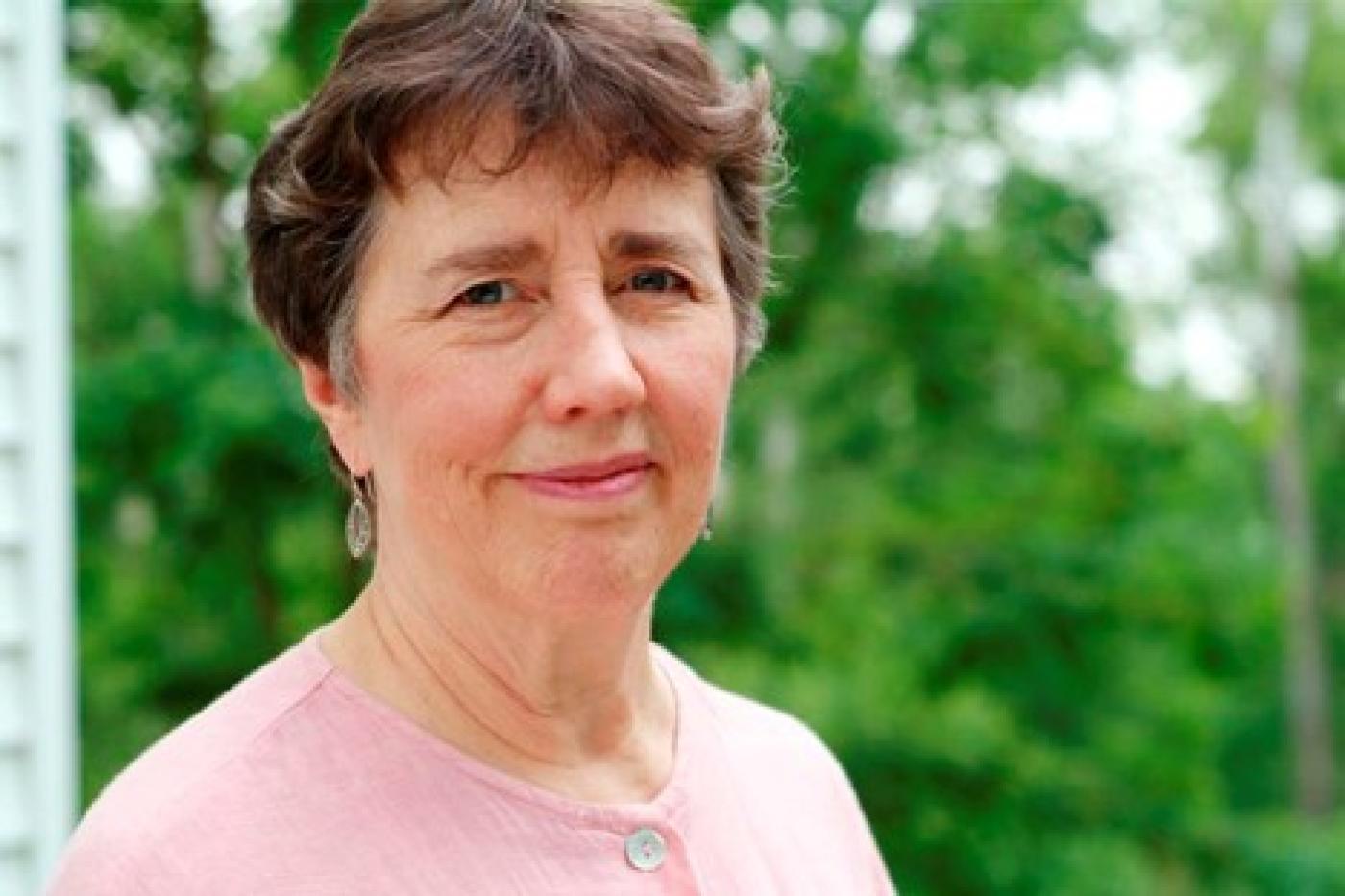
Joan Tower is safely in that canon and has been for a while. She is 87 years old and is still with us! She wrote her violin concerto in 1991 for the Portuguese-American violinist Elmar Oliviera. Like the Price concerto, this is in one episodic movement. This is Tower’s own description of the work:
It is really a fantasy for violin and orchestra exploring different kinds of feelings that range from a robust Romantic tune for orchestra to sharply etched rhythmic punctuations to a very soft passage that descends from the highest celestial reaches of the violin. There are two violin duets for soloist and concertmaster that were written as a tribute to Elmar’s brother, also a violinist and one of Elmar's teachers, who died in the fall of 1991. The last section is fast, and takes as its thematic basis a motive by Bela Bartok.
In these three concertos we hear that American symphonic music had come a long way since the symphonies of John Knowles Paine. Barber, Price, Tower and several others demonstrated that a unique voice and style had emerged that did not need to abandon tonality or traditional classical forms in order to sound fresh, moving and distinctly American.
PBS PASSPORT
Stream tens of thousands of hours of your PBS and local favorites with WETA+ and PBS Passport whenever and wherever you want. Catch up on a single episode or binge-watch full seasons before they air on TV.