Playlist
| Name | Download |
|---|---|
| Playlist for America 250 Episode 5 |
Antonín Dvořák was born in a Bohemian village in 1841. He was steeped in Bohemian folk music as a boy; his father was a professional zither player, which meant he played for weddings and other community affairs in a village band. By age nine, young Antonin was playing violin alongside his father in that band and was also playing for church services. His original goal was to be a church organist but when he began his career as a 17-year-old, setting out on his own in the big city of Prague, it was as a viola player in theater and dance orchestras. By age 20 he had decided he was going to be a composer and spent most of his spare time composing, but it wasn't until he was 29 that a work of his was performed publicly. By age 33 he had gained a good reputation as a composer in Prague, which emboldened him to apply for the Austrian State Prize, a stipend for promising but struggling composers, and he won, thanks to the enthusiasm for his work shown by one of the jury members, Johannes Brahms. Brahms was only eight years older than Dvořák, but he realized that he was now in a position to pay it forward; Brahms owed much of his success to the support he received at the beginning of his career from Robert and Clara Schumann. Brahms introduced Dvořák to some of the most influential musicians of the time including violinist Joseph Joachim and conductor Hans Richter; he convinced his own publisher Simrock to purchase Dvořák's works, and he was on the jury when Dvořák won the Austria Prize two more times. But the one thing Brahms could not do for Dvořák was rid the German-speaking musical establishment of its prejudice against Czech culture.
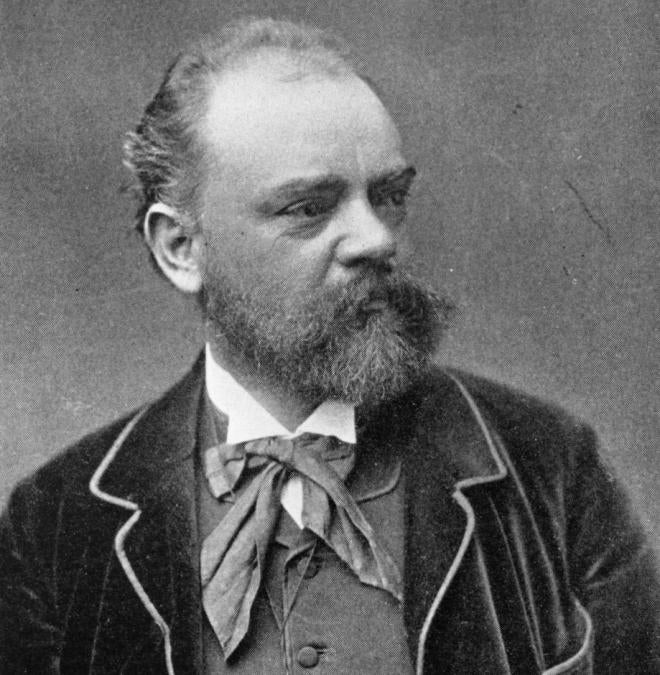
Dvořák's deep knowledge of his native folk music naturally seeped into his classical concert music, but Dvořák was able to, in today's parlance, "code-switch", as he was also fully fluent in the mainstream German-dominated musical style of the time. But Brahms felt that Dvořák would make more of an impression by letting his Czech flag fly, as it were, and so his first published works were a set of vocal duets based on Moravian songs and a set of Slavonic Dances, that, like Brahms's own Hungarian Dances, were published both as piano duets and orchestral pieces. Brahms was right; they were immediately successful. Dvořák was off to a promising start, especially when Joachim became enthusiastic about Dvořák's chamber music. But when Hans Richter brought Dvořák's Sixth Symphony to the Vienna Philharmonic the musicians flat-out refused to play it, and, then as now, they're one of the few orchestras whose members have that kind of veto power. They made no secret of their anti-Czech bias. This created a problem for Simrock, who profited from Dvořák's folk-inspired works but, as he gained popularity for his works in traditional classical forms, wanted to market him as a basically German composer with an interesting name. This didn't work, predictably, especially as Dvořák gained more confidence in his compositional voice and the line between his folk side and his German side began to disappear. He was rapturously received in London, where orchestras enthusiastically programmed his work and he was becoming more popular than Brahms. He was warmly embraced by audiences in St. Petersburg and Moscow, and by now he was a major celebrity hometown hero in Prague. But Vienna and Berlin were the undisputed musical capitals of Europe, and they were still chilly towards him, despite the best efforts of his champions. Brahms took it upon himself to personally proofread Dvořák's submissions to Simrock and negotiate with them on his behalf, an extraordinary act of generosity from a major composer at the peak of his career. Hans Richter continued to put Dvořák's music in front of German and Austrian musicians and eventually wore down the Vienna Philharmonic into performing his work. But by the time Dvořák was approaching fifty none of this effort was quite enough. He now had a wife and six children to feed, so he was feeling the financial strain, but he resisted taking any position that would interfere with his precious composing time. That changed when he got into a serious dispute with Simrock over the publication of his eighth symphony. At this point Dvořák realized that he was never going to win with the Germans and decided to stop trying, but that meant he would have to get serious about money. He accepted a position he had long resisted taking with the Prague Conservatory, but soon after he got a much more lucrative offer from a wealthy American woman named Jeannette Thurber: to move to New York and direct the National Conservatory of Music.
Dvořák was understandably hesitant. The lavish salary they were offering sounded too good to be true - and as it turned out it was; after the first year a sudden market crisis caused his salary to be abruptly cut in half and the school's services severely cut. But no one had any way of knowing that would happen before he left. In the end it was his wife who insisted he accept the offer, and while it was a bumpy ride in many ways, it was worth it. Due to that financial crisis they ended up going back to Prague halfway through their third year, but in that short time, Dvořák secured his legacy, left a lasting impression upon American culture, and, well, changed the history of music.
Writing to a friend in Prague shortly after arriving in America in 1892, Dvořák asserted that "the Americans expect great things of me, and the main thing is, so they say, to show them to the promised land and kingdom of a new and independent art, in short, to create a national music.''
Dvořák knew something about constantly trying to conform to the accepted German style in the hope of getting a sense of approval that never came, and he saw that American symphonic composers like John Knowles Paine and George Chadwick doing the same thing, and even worse, they were also teachers who were telling their American students to keep on going back to the same well because that's what seemed the most legitimate approach. But Dvořák wasn't having it. In an extraordinary interview for the New York Herald, he declared: "I did not come to America to interpret Beethoven or Wagner for the public. That is not my work and I would not waste any time on it. I came to discover what young Americans had in them and to help them to express it."
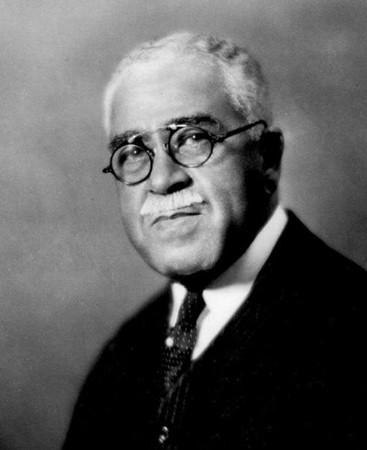
The National Conservatory had at this point only existed for a few years, and it was truly groundbreaking in many ways. They accepted students of both sexes and any race or nationality, and even accommodated those with disabilities such as blindness. In 1892, shortly before Dvořák's arrival, the conservatory accepted a student named Harry Thacker Burleigh. At this point he was 25 years old, and had already gained a reputation in his hometown of Erie, Pennsylvania as an exceptionally fine singer, and was frequently hired as a soloist for church services and community events. When he was a boy his grandfather, a freed slave, would sing to him spirituals and slave songs. This began Harry's lifelong career as a repository of knowledge of these songs, which he later taught to others and published; he is credited for almost single-handedly keeping this musical legacy alive and passing it on to future generations. He worked a variety of odd jobs, and he helped work off his scholarship at the National Conservatory by doing various maintenance tasks for the school, and while he worked he would sing the songs his grandfather taught him. He quickly caught the attention of the school's new director – Dvořák -who asked Burleigh to sing for him, and it was soon evident that Burleigh had taken on yet another job: teaching African American music to one of the greatest living composers. This was when Dvořák realized that the key to developing a true American music was to draw upon this material the same way he drew upon Czech folk music, and both types of music had in common the pentatonic scale.
Pentatonic literally means five tones, and there's music all around the world that's based on a five-tone scale. The black keys on the piano form a pentatonic scale. In the development of music theory it far predated the diatonic scale, which is the scale we know from The Sound of Music: do re mi fa sol la ti do. The pentatonic scale is a much more primal derivation of the overtone series than the diatonic or chromatic scales used in Western music, so you hear it throughout Asia and Africa, in Eastern Europe where Dvořák came from, in the indigenous music of the Americas, and in the spirituals and field work songs Harry Burleigh learned from his grandfather.
Dvořák soon got an opportunity to put his newfound knowledge and his theory about developing a true national music to the test. The New York Philharmonic commissioned him for a new symphony. Burleigh was by Dvořák's side the whole way as he wrote what he determined would be a recognizably American symphony, filled with the inflections of African American music. Burleigh even helped copy out parts for the symphony. About Dvořák's use of the material he taught him, Burleigh wrote: "I sang our Negro songs for him very often, and before he wrote his own themes, he filled himself with the spirit of the old Spirituals." Dvořák expressed how he felt about Burleigh in that same New York Herald interview: "There is one young man upon whom I am building strong expectations. His compositions are based upon negro melodies, and I have encouraged him in this direction. The other members of the composition class seem to think that it is not in good taste to get ideas from the old plantation songs, but they are wrong, and I have tried to impress upon their minds the fact that the greatest composers have not considered it beneath their dignity to go to the humble folk songs for motifs." He went on to rhapsodize about the music he was learning from Burleigh: "In the negro melodies of America I discover all that is needed for a great and noble school of music. They are pathetic, tender, passionate, melancholy, solemn, religious, bold, merry, gay or what you will. It is music that suits itself to any mood or any purpose. There is nothing in the whole range of composition that cannot be supplied with themes from this source." It was Dvořák's boss, Jeannette Thurber, the idealistic heiress who founded the Conservatory, who suggested that Dvořák title his symphony From the New World. The symphony was a tremendous success, garnering rave reviews, and was premiered in London six months later. Many scholars have called it Dvořák's greatest professional triumph, and it wouldn't have happened if he hadn't listened to his wife, come to America, and followed the school's handyman around as he sang the songs his grandfather taught him.
But to those skeptics who constantly point out that Dvořák's "American" works are those in which he sounds the most Czech – because it’s all based on pentatonic scales - I would point out that what Dvořák is actually bringing to this musical conversation isn’t about rigorous ethnomusicology. It's about empathy. Dvořák knew firsthand what it was like to be discriminated against, to be judged for his name and his looks, to be never allowed to forget his outsider status no matter how successful he became, and to never forget or disown where he came from. In another letter he wrote near the beginning of his stay in New York, he wrote: ''It is to the poor that I turn for musical greatness. The poor work hard; they study seriously…If in my own career I have achieved a measure of success and reward, it is to some extent due to the fact that I was the son of poor parents and was reared in an atmosphere of struggle and endeavor.'' Not only does this sum up Dvořák's values, it illustrates how his values coincide with American values. That second sentence sounds like it could come from any American political stump speech from either party. Dvořák understood America on a gut level shared by few other Europeans of his stature. And it is that understanding, and not just a fondness for pentatonic scales, that makes his American-inspired works so resonant and his impact of American culture so profound.
Dvořák's sojourn in America was productive in several other ways as well. He also got a chance to meet Native Americans and hear their music. He visited a Czech enclave in Spillville, Iowa, where he wrote his most famous chamber work, the American String Quartet, inspired not only by the music of America's native peoples but also the unique calls of its native birds. Toward the end of his stay he wrote another masterpiece equal to the New World symphony in stature: the Cello Concerto, a very Czech work, fueled by his intense homesickness for Bohemia, his grief for loved ones who had passed, and the sense that between the old world and the new he was witnessing the passing of one and the ominously violent rise of the other. Which also must have been on his mind as he went to Chicago in 1893 to conduct his Eighth Symphony at the World's Columbian Exposition, a massive celebration of the 400th anniversary of the Christopher Columbus adventure that also seemed designed to usher in the American century, the industrial age, and a new integrated world.
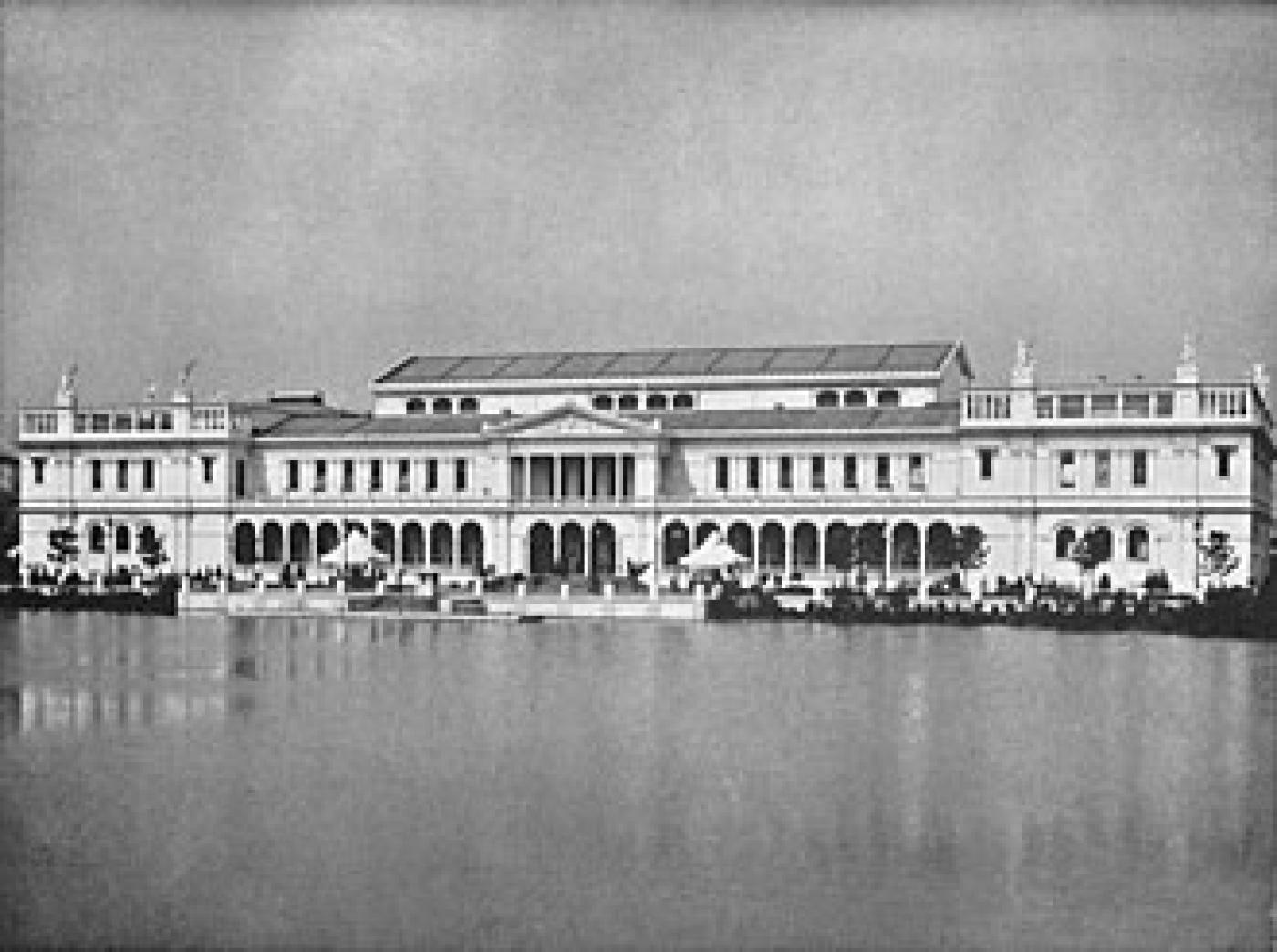
The scope, significance and lasting impact of the exposition was huge, including in the realm of music. John Philip Sousa was there, performing with his own Concert Band; Amy Beach was there, having written a piece for the opening of the Women's Building, a very forward-looking project for the time that showcased the work of women in a building designed by a woman architect; Americans heard their first Indonesian gamelan orchestra; The Mormon Tabernacle Choir performed for the first time outside Utah; and the Stoughton Musical Society, founded in 1786 by students of William Billings and still going strong, performed a concert of Colonial music, one of the first times American musicians looked backwards at their own history. But the music heard at the exposition that had the most lasting impact wasn't featured on any of its official stages; it was played in the saloons and cafes surrounding the fair and most Americans hadn't heard it before. A 24-year-old Black man from Texas, who had managed to get a thorough musical training in folk and classical music as a child and had already traveled all over the U.S. playing piano, guitar and trumpet and forming bands with local musicians playing his arrangements, showed up in Chicago confident that he could find an audience for his music among the millions who had traveled from all over the world for the exposition. He was right, because he was exposing them to their first taste of Ragtime, and his name was Scott Joplin. And his calculation was correct: within four years, as a direct result of its introduction in Chicago, ragtime had become a national craze, and the publication of Joplin's Maple Leaf Rag set a new standard for success in the sheet music industry.
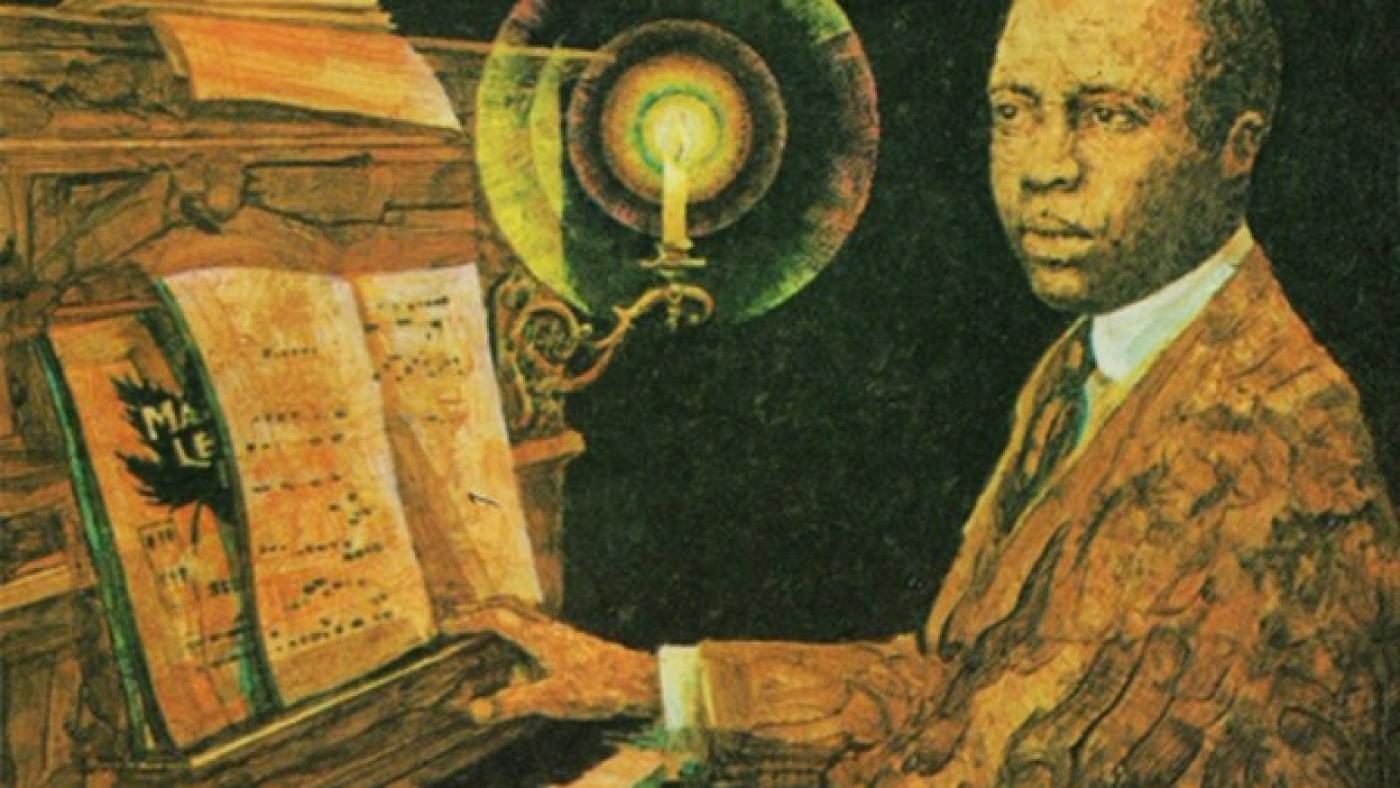
Ragtime was itself a kind of demonstration of Dvořák's idea to mix folk and popular dance styles within a European classical framework. It got its listeners' feet tapping and bodies moving while treating them to sophisticated melodic development and rhythmic complexity. Joplin continued to produce a steady stream of popular rags for fifteen years, during which time he constantly traveled, settling for a while in St. Louis and then in New York, got married three times, and wrote and produced two full-length operas. The performance materials for the first, A Guest of Honor, have been completely lost, while the second, Treemonisha, have survived in fragmentary but just-complete-enough form that it has been staged several times and even won Joplin a posthumous Pulitzer Prize. (It was recently performed by the Washington National Opera to great acclaim in a new production directed by Denyce Graves.) Sadly, Joplin's later life was darkened by steady physical and mental decline - he had already largely abandoned performing by the time he was 35 - and he died in poverty and dementia at age 48.
Harry Burleigh, about two years older than Joplin, had a much happier fate. He dramatically broke a color barrier at St. George's Episcopal Church in Manhattan (close to the original site of the National Conservatory and where Dvořák lived) and was their baritone soloist for 52 years; for 25 of those years he also sang in the synagogue choir for Temple Emanu-El. During that time he published several volumes of his arrangements of traditional spirituals as well as hundreds of original art songs, and other compositions including piano and chamber music. He also coached many of the great voices of the succeeding generation of African-American singers, including Paul Robeson, Marion Anderson and Roland Hayes.
Both ragtime and spirituals have taken their place in the realm of classical music. Many renowned classical pianists have treated Joplin's rags as serious compositions that they perform on their recitals. Many classical composers have incorporated elements of ragtime into their compositions, including Debussy, Ravel, Satie, Ives, Milhaud, and Stravinsky. Some have even continued the tradition by composing their own rags that are meant to be considered as such - perhaps most notably the Pulitzer Prize-winning composer William Bolcom (who as of this writing is still with us at age 87!), who has written many rags including what is possibly the best-known rag not by Joplin, The Graceful Ghost.
Spirituals, too, are considered worthy of inclusion on classical programs, whether by a vocal soloist or a chorus, and many continue to use Burleigh's arrangements. Classical composers who have written spirituals include Charles Ives, whose song In the Mornin' is completely free of his characteristic distortion and is a sincere, gorgeous work firmly within the spiritual tradition, while the British composer Michael Tippett included actual African American spirituals in his oratorio A Child of our Time, fulfilling the function chorales do in Bach's Passions. Olly Wilson incorporated Sometimes I Feel Like a Motherless Child into a haunting and moving work for tenor voice and electronic tape. And one of the most popular spirituals is Goin’ Home, which was composed by another one of Dvořák’s students, William Arms Fisher, who used the famous melody from the slow movement of the New World Symphony.
There were also several African American composers from the early to middle 20th century - like William Dawson, William Grant Still and Florence Price - who were consciously following the example Dvořák set in his New World Symphony by incorporating elements of both ragtime and spirituals in their symphonic works. Perhaps the best-known example of this is Dawson's Negro Folk Symphony written in 1934, which was premiered by the Philadelphia Orchestra under Leopold Stokowski and has been recorded by the Detroit Symphony and the Vienna Radio Symphony.
And then there's the distinct American musical form that draws on ragtime, spirituals, field songs, as well as the blues and the convergence of several other traditions from the worlds of dance, folk and instrumental improvisation from all corners of the world. I am speaking of America's most significant contribution to the global musical conversation: jazz. Jazz uses the notation and harmonic system of classical music, and they share the use of many of the same instruments, but ultimately they are different forms of music with completely different senses of time and structure. But that doesn't mean you can't combine the two forms in myriad ways, which musicians from both camps have been doing for over a century, from Stravinsky's Soldier's Tale to Milhaud's The Creation of the World to Gershwin's Rhapsody in Blue to Duke Ellington's big band version of The Nutcracker or Miles Davis's Sketches of Spain. But none of these fusion experiments contradicts the fact that jazz and classical are two separate genres. What is interesting is how this relates to Dvořák's idea of American music. Remember, he said: "I came to discover what young Americans had in them and to help them to express it." And he also said: "In the negro melodies of America I discover all that is needed for a great and noble school of music." Well, jazz turned out to be what young Americans had in them, and it uses musical material from the African American tradition to produce a great and noble school of music. The one thing that never occurred to Dvořák was to simply abandon European structures altogether and come up with a new type of musical expression, and by doing so Americans can now engage with the global musical conversation as peers, since it has something to exchange with the European classical music tradition. They can borrow our jazz, we can borrow their symphonic form. And Dvořák showed how we can do that with his New World Symphony, with his welcoming of diverse voices into the academy, with his recognizing that, even with his lofty reputation, when he came here he had as much to learn as he had to teach. So, like every other aspect of his American sojourn, things didn't quite work out the way he envisioned, but he got the job done anyway.
PBS PASSPORT
Stream tens of thousands of hours of your PBS and local favorites with WETA+ and PBS Passport whenever and wherever you want. Catch up on a single episode or binge-watch full seasons before they air on TV.