"Now that we have more or less recovered from our prejudices over the state of music in England, I believe we are also going to have to rectify our opinions on America’s musical institutions."
That was a quotation from Hector Berlioz in 1854. He goes on to praise the "large-scale and very careful performances of the serious works of ancient and modern music" that could be heard in New York, as well as the high quality of opera in New Orleans. However, this praise was entirely based on reports he heard from other musicians - as it turned out, despite repeated offers throughout his career, Berlioz never went to either North or South America (Brazil and Mexico were also countries he repeatedly expressed interest in.) It's not entirely clear why he never went. He always complained about his life in Paris and the problems with its musical scene. He traveled frequently throughout Europe. He was always searching for new opportunities and complaining about money (even while feigning indifference to it), and several offers he received from America were quite lucrative.
But as much as Berlioz admired America and recognized its ever-increasing significance, he also didn't really trust it. In his correspondence he mentioned not accepting offers to go to America because he was afraid of being defrauded by dishonest or incompetent promoters or having to endure bad performances of his compositions over which he would have no control. These concerns are somewhat puzzling, since by his own admission those things were just as likely to happen to him in Europe, and they did. But he also frequently expressed his disdain for what he perceived to be uniquely American attitudes.
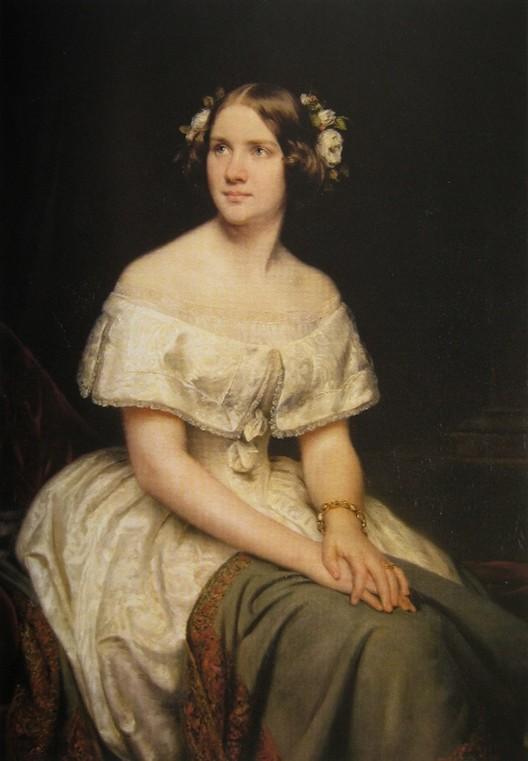
For example: when he read a report about the American tour of the Swedish opera singer Jenny Lind, he wrote in 1850: ‘Whatever we do in Europe we will always be outclassed by the enthusiasts of the New World." He was being ironic. When Jenny Lind arrived in New York and disembarked from her ship, there were about 40,000 people ready to greet her on the dock, and the crowd got so unruly that there were many injuries and the impresario of the tour, none other than P.T. Barnum, told his coachman to clear a path through the crowd with his whip. She sold out theaters from Boston to New Orleans to Louisville to Pittsburgh singing Rossini, Handel, Bellini and a song written for her by Meyerbeer, raising hundreds of thousands of dollars for charity (the equivalent of tens of millions of dollars today), proving that there was indeed an enthusiastic audience in America for classical music as long as it was performed by a compelling personality. Emily Dickinson attended a Jenny Lind concert in Northampton, Massachusetts, and reported: "how we all loved Jennie Lind, but not accustomed oft to her manner of singing didn't fancy that so well as we did her."
One would think that Berlioz, who was himself more than a bit of a showman, would have appreciated this. But he made it clear that he was turned off by what he called the "utilitarianism" of America, what he saw as its obsession with money. When, in 1849, Berlioz heard that Franz Liszt was planning to tour North America, he wrote to him and said: "This seems to me a violent project. To cross the Atlantic in order to play music for the Yankees, whose sole concern at the moment are the mines of California!" If it seems somewhat jarring to discover that Berlioz talked to Liszt about the California gold rush, then you need to understand that the main appeal of America to Europeans was indeed money. For many musicians of Europe who were finding that its musical institutions were becoming less generous and reliable as political winds were shifting, America itself was seen as a kind of gold rush, a place to start fresh and take advantage of their new upper class, eager to claim cultural cachet in the New World.
But money wasn't the only concern. When Gustav Mahler came to New York in 1907, he was escaping both the increasingly virulent anti-Semitism and stifling conservatism of Vienna's musical establishment, finding a much more welcome environment for his approach to music, and much less ethnic prejudice, at the Metropolitan Opera and the New York Philharmonic. Sadly his untimely death at age 50 meant that he only had three years in New York, but he accomplished a great deal in that time that forever changed both institutions, and he also blazed a trail for other European conductors to follow, like Arturo Toscanini and Bruno Walter. They also came to America not out of greed but out of survival, escaping the turbulence of rising authoritarianism in Europe - which in Toscanini's case included physical assault at the hands of the Blackshirts for refusing to conduct the Fascist anthem, while Walter was personally denounced by Hitler, his concerts were canceled without warning, and his daughter was arrested. They both came to New York, where their significance was recognized and they were allowed to live out their lives while continuing to practice their art at the highest level, without political or artistic restraint.
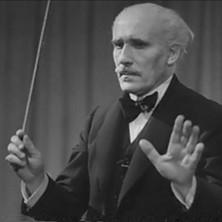
Many other musicians also came to America because Europe's political instability gave them no choice, among them the composers Arnold Schoenberg, Erich Wolfgang Korngold, Kurt Weill, and Bela Bartok, and performers such as Gregor Piatigorsky and the Budapest String Quartet. And there were also those who had a choice but came to seek success and found it, like Sergei Rachmaninoff, Jascha Heifetz, and Igor Stravinsky. Even after World War II musicians continued to come to the United States: Pablo Casals, honoring a vow he made to not play his cello in any country that recognized the Franco regime in Spain, spent much of his final years divided between Puerto Rico, where he established a festival in his name as well as an orchestra and a conservatory, and Vermont, where he spent his summers teaching and conducting at the Marlboro Festival. Mstislav Rostropovich defected from the Soviet Union in 1974 and became the music director of the National Symphony Orchestra for seventeen years.
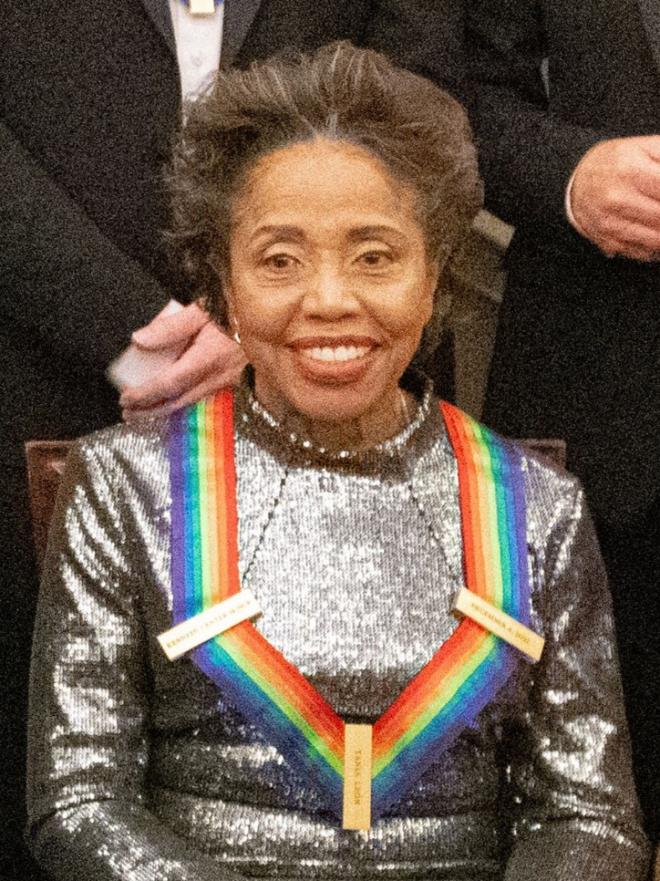
Tania Leon left her native Cuba as a refugee while in her twenties and established a very successful career in the United States, and, like Rostropovich, is a Kennedy Center honoree.
It is astonishing to consider the speed in which America transformed from being a follower in the classical music world, in the shadow of Europe, to be a leader that became a safe haven for European culture as it was going through the violent upheavals of the twentieth century.
PBS PASSPORT
Stream tens of thousands of hours of your PBS and local favorites with WETA+ and PBS Passport whenever and wherever you want. Catch up on a single episode or binge-watch full seasons before they air on TV.