Louis Kaufman was born in Portland, Oregon, in 1905. Soon after he began violin lessons it was evident that he was a prodigy. At age 13 he was accepted as a student at the Institute of Musical Art, now known as the Juilliard School. Upon graduating at age twenty and winning several awards, he had many career options open to him, but he chose to move to Los Angeles where he became one of the most in-demand studio musicians, playing on the soundtracks of hundreds of films including Gone with the Wind, Rebecca, Casablanca and The Sound of Music, while maintaining a parallel career as a chamber musician and champion of new music, including making the first recording of Samuel Barber's Violin Concerto. And he also made the first recording of an even more famous work, which is why his place in the history books is secure.
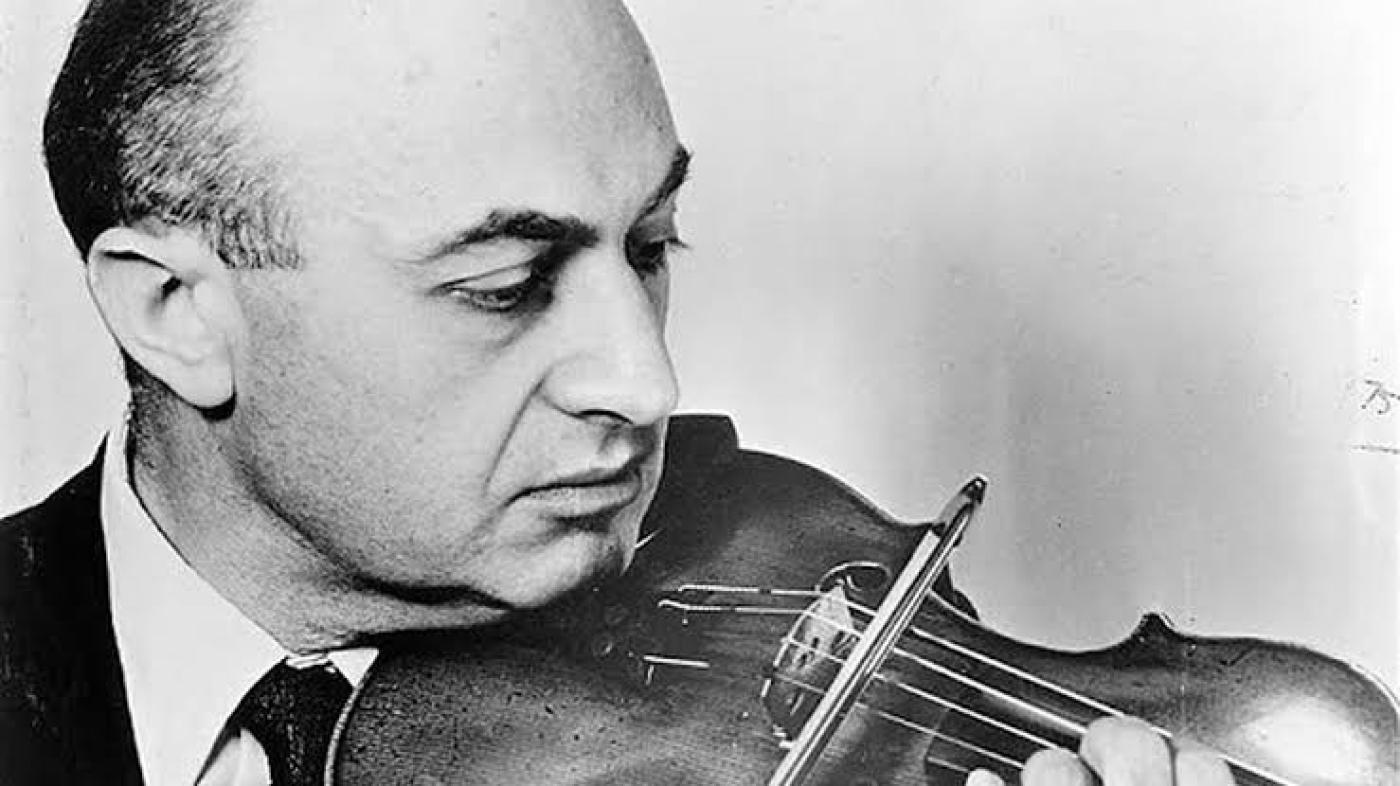
In the last week of 1947, Kaufman assembled a group of freelance musicians on the stage of Carnegie Hall for a series of recording sessions that began at midnight. That was the only way to avoid conflicts with the many other recordings taking place in New York that week in anticipation of a strike scheduled for January 1. The music they recorded was a set of four Baroque concertos that were unfamiliar to most listeners at the time: The Four Seasons by Antonio Vivaldi.
Antonio Vivaldi was little known among most classical musicians and listeners, for whom Baroque music meant a handful of works by Bach and Handel, mostly played in a very weighty, pompous style. There had been two previous Italian recordings of The Four Seasons, but they distorted the music both sonically and interpretatively, adding instruments Vivaldi didn’t call for and taking a very un-Baroque approach to sonorities and tempi. Kaufman’s recording was revelatory not only because the music was practically unknown in the United States, but because of the vitality with which it was played, resulting in a recording that holds up surprisingly well even for those accustomed to historically informed performances. The sonics, too, had a clarity and depth that was impressive for the time. The result was a sensation.
The timing could not have been better. The United States was emerging from a very dark period of economic depression and world war to find itself a dominant force in the global order. GIs returning from Europe had developed a taste for the café society, and now they had a soundtrack for it. The Four Seasons could be playing on the phonograph in American homes on leisurely weekend mornings while the family enjoyed eating pancakes made from one of the new brands of pancake mix increasingly available at their local grocery store. And when these families had children, they were inspired by this recording to study violin in public school music programs that were receiving fresh government support as part of the cultural Cold War, a competition the United States was determined not to lose to the Soviets or anyone else. With its vibrant rhythms and imaginative flights of fancy, The Four Seasons suggested the possibilities of an America on the move. And, unlike those long, dreary symphonies, these concertos came in short doses, with many movements lasting only three or four minutes - the length of a popular song, or one side of a 78-rpm record, which helped convert impatient young people to classical music. It was cool to like Vivaldi. And it also changed our relationship to recorded music. In the 1920s and 30s, when you heard a recording of an orchestra or a jazz band it felt like a substitute for the real thing that you hoped to be able to hear live at some point - but this recording of Vivaldi felt like the real thing in and of itself. As technology improved and listening habits changed, recordings were no longer a substitute for anything; they became a legitimate way to fully experience the music.
And it can’t be emphasized enough how American this phenomenon was. In the aftermath of World War II, while Europe was licking its wounds, the United States helped restore an aspect of European culture the Europeans themselves had almost forgotten. With the development of new formats like the long-playing record, the United States helped export this new way of relating to classical music to the rest of the world. Kaufman’s Vivaldi helped shape not only America’s postwar culture, but the way the entire industrialized world would experience music in daily life. And since the music told a primal, secular story - the turning of the seasons – it helped expand its audience all over the world. It wasn't associated with a particular religion, and it didn't require familiarity with the development of Western symphonic music. This recording brought Vivaldi and classical music to a global audience. And it also helped create a new paradigm for a certain medium called the classical radio station.
And so, when we enumerate the many contributions the United States has made to the art of music, we can't just confine ourselves to jazz and country and Broadway and rock 'n roll. With this recording of Vivaldi’s Four Seasons, Americans transformed the entire world's relationship to classical music. Last year marked the 300th anniversary of the publication of the Four Seasons, so as we celebrate our own birthday, we can celebrate Vivaldi as well.
PBS PASSPORT
Stream tens of thousands of hours of your PBS and local favorites with WETA+ and PBS Passport whenever and wherever you want. Catch up on a single episode or binge-watch full seasons before they air on TV.