Diane Coburn Bruning is celebrating her final season with the Chamber Dance Project, a company she founded in 2000 in New York, and moved to Washington DC in 2014. Diane has always insisted on live music for performances, which are intentionally in smaller and more intimate venues. I was able to ask her a few questions about her upcoming finale performances which will take place at the Woolly Mammoth Theater on June 24-27. More information is available here.
Scott Tucker: Hello Diane! First of all, congratulations on your inspiring career as Artistic Director of the Chamber Dance Project. Tell us how this company came to be. I remember you telling me a story about watching something you choreographed in a big performance space, an important venue as I recall, and you were so far away, you had to watch it through opera glasses, and you thought "this is not how I want people to experience my dances" which led to your creation of the Chamber Dance Project. Am I remembering that correctly?
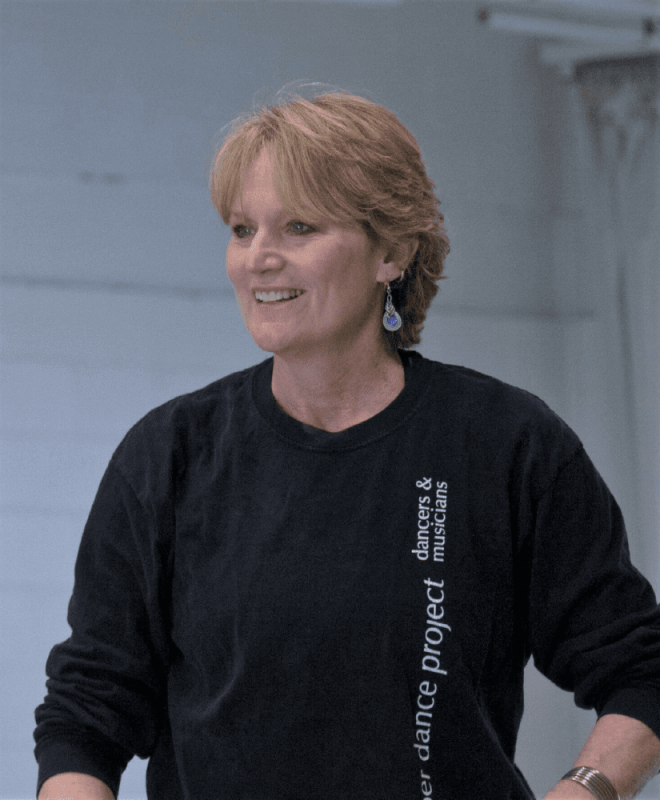
Diane Coburn Bruning: Yes, you are Scott! It was my Symphony of Psalms with Stravinsky’s powerful score performed live at the Seattle Opera House with Pacific Northwest Ballet. At the premiere I look up the audience behind me and saw people watching my ballet with opera glasses! It felt wrong. I fell in love with ballet as a four year old in a small studio in Rocky River, Ohio - I didn’t want people to see my ballets or anyone’s from a football field away. It was the moment I vowed to commit to more intimate theaters - though I had not yet conceived of Chamber Dance Project.
In the summer of 2000 there a confluence of factors lead me to found in New York. Ater the birth of our second son that I felt a swell of both gratitude and a responsibility to do more for others and the art form I loved – it no longer seemed enough to focus only on my work. I wanted to give opportunities to other choreographers and their new works while having a home for my work.
In my freelance work with ballet companies throughout the country I was being asked more and more to work with recorded music. Not a performing art I say! And it doesn’t make for much spontaneity when dancers have rehearsed with the same recording 92 times…. And I realized just how long most professional ballet company’s lay-offs were- 16-18 weeks a year (mostly in the summer). It is so hard for dancers to be out of work so long in such a short profession, so it presented an opportunity.
It was after the birth of our second son that I felt a swell of both gratitude and a responsibility to do more for others and the art form I loved – it no longer seemed enough to focus only on my work. I wanted to give opportunities to other choreographers and their new works while having a home for my work.
Early in my career I was convinced of the impact of sharing the creative process. Sharing the process was important to me having been convinced early in my career that inviting people in to watch rehearsal was transformational. So we do a lot of that.
It’s funny-I read a New York Times article on us from 2000 and I was stunned at how everything I said about the company and my beliefs then could have been said yesterday! I guess I am stubborn - at least artistically!
ST: This coming performance marks your last with the company, after founding it in 2000. No doubt this is a bittersweet moment. Tell us about the program you have selected as your final one. I understand it features four pieces from the company's repertoire, plus a world premiere. Why these particular pieces?
DCB: We were actually in New York for only 8 years before the big financial demise forcing us to go on hiatus and I went back to freelance work. After 6 years I saw the opportunity to restart it in Washington and jumped in and never looked back.
I think the programming was a combination of design, opportunity and intuition- as I think all good work is. The first work, Murmur, is a choreographic commission (we have commissioned music scores as well) from William Moore working with three works for our string quartet from Kronos Quartet’s Fifty for the Future (a generous project of new works royalty-free to the world) . Then a truly iconic work for me – a duet I create on two graduating Juilliard students which went on to be my most performed work on many companies. They chose the score, Benjamín Godard’s Berceuse from his opera Jocelyn. So that was from my very early years as a young choreographer.
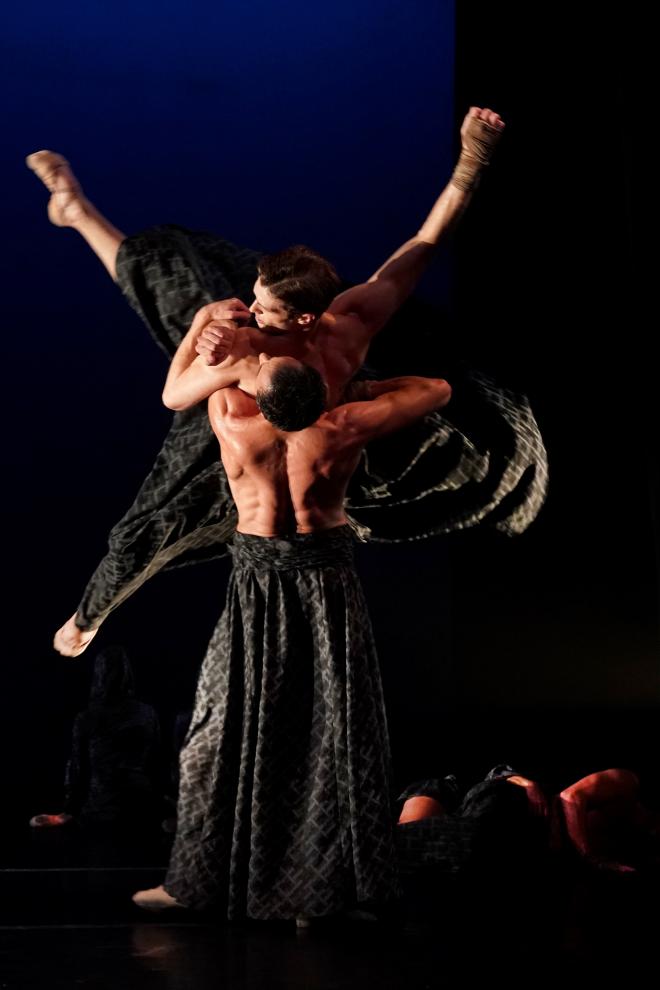
This is followed by Chant working with Gregorian Chant– a work, Scott, that you and I were to collaborate on and then your demanding conducting work came in the way! I am so glad after all these years that we finally get to work on it. Well, I was raised Catholic so listened for years in Mass to priests chanting badly and facing away from the congregation (the latter may have been a good thing). So when I heard really fine singers chanting it was a revelation! I first did a work of Chant with Boston Ballet and Jonathan McPhee conducting. I didn’t get it out of my system and so in 2017, I revisited it and commissioned the second of three movements to our dancer and budding choreographer Andile Ndlovu. It seems to move people deeply but we hadn’t done it in many years. This is from our early years in Washington. And Book of Stones follows – a work I conceiving of with Tony- Award winning blue grass string band, The Red Clay Ramblers ,years ago and finally had the opportunity to commission both the score from band leaders Jack Herrick and Bland Simpson with choreographer Christian Denice.
Then a collaboration of a different sort- I put together the band and our string quartet together and said now play – literally! They do a tune from the Ramblers rep, Way Down Yonder, and have a blast.
When I decided to retire, I thought I would like nothing more than to finish with a work I did 25 years ago with The Red Clay Ramblers commissioned by Atlanta Ballet. Ramblin’ Suite is the best of their rousing and poignant music for 12 dancers ending in a grand right and left curtain call. I thought I would like nothing more than to finish my career with a grand right and left onstage with the company. The Rambler agreed.
ST: Besides creating a more intimate atmosphere to experience your dances, you have always prioritized having live music, something I am sure our WETA listeners will appreciate. Can you share why that has been such a high priority for you?
DCB: We are a performing art form – it lives it breathes, it is different a little or a lot each time with the freedom this collaboration brings to those collaborating live onstage. I have also always have our musician share the stage- not relegated to a pit. You want good musician, bring them on stage and also let them have a work or two alone no dancers with us focusing on them. I guess in a way I have wanted a contemporary salon.
So imagine how stunned I am to hear (more than once) oh Diane you have created a new art form. I pause and say, well no, it is actually a very old art form that we are just returning to. Dancers and musicians collaborating live as performing artists.
ST: Let's talk a little about the piece entitled CHANT. I am honored to be directing the music and have assembled a quintet from the Washington Men's Camerata for the coming production. We will be singing a score put together by Mike McCarthy when he did the music for the premiere in 2018. The score consists largely of Gregorian chant, early polyphony, and an interesting, primal sounding chant with percussive effects. Vocal music of this type is an unusual choice for dance. What inspired you to create this particular piece?
DCB: Oh I had a grand time working with Michael – he listened a lot to my ideas and then we worked first off of the Mass. Michael then brilliantly made three suggestions: in a nod to Andile’s South African roots, he added in percussion in the second movement, in the third movement we chose to include William Byrd’s Ah Robin! as well as to add in our string quartet. The latter two were generous and effective serving to kind of stretch the ear from the initial impact of pure chant into a deeper expansion .
ST: There will be a big party on closing night. You always celebrate the Summer Solstice, but this time it will be a little different, as it will be also your farewell. Any thoughts you'd like to share as you say goodbye?
DCB:
Gratitude.
For so much and for so many - for my life in dance.
Gratitude.
ST: Thanks Diane, and congratulations again on all you have done for dance and the arts here in DC. Your clear vision has been an inspiration. We look forward to your next adventure!
PBS PASSPORT
Stream tens of thousands of hours of your PBS and local favorites with WETA+ and PBS Passport whenever and wherever you want. Catch up on a single episode or binge-watch full seasons before they air on TV.