On Saturday, January 10th, at 7pm, the Anna H. Wang Concert Series will present “An Evening of Opera & Gospel,” co-presented by the Coalition for African Americans in the Performing Arts (CAAPA). Back by popular demand this year, it’s going to be another exciting concert of transcendent and spiritual singing, curated and performed by Morris Robinson and friends. WETA Classical is proud to be a media sponsor for this event, and I had the chance to ask the concert’s Music Director Brandon Waddles a few questions about his career and his approach to making music in the different styles and genres that this show puts together.
Dr. Brandon Waddles is a remarkably wide-ranging musician; he is a highly acclaimed choral composer, conductor, and transcriber of worship music in gospel and classical styles; he is music director for immensely popular Gospel, R&B, and Jazz artists and Broadway shows, and he has served as a professor of teaching and choral director at Wayne State University.
Matthew Dayton: Could you tell us about some of the most important lessons you’ve learned from being part of all these different music environments in your career?
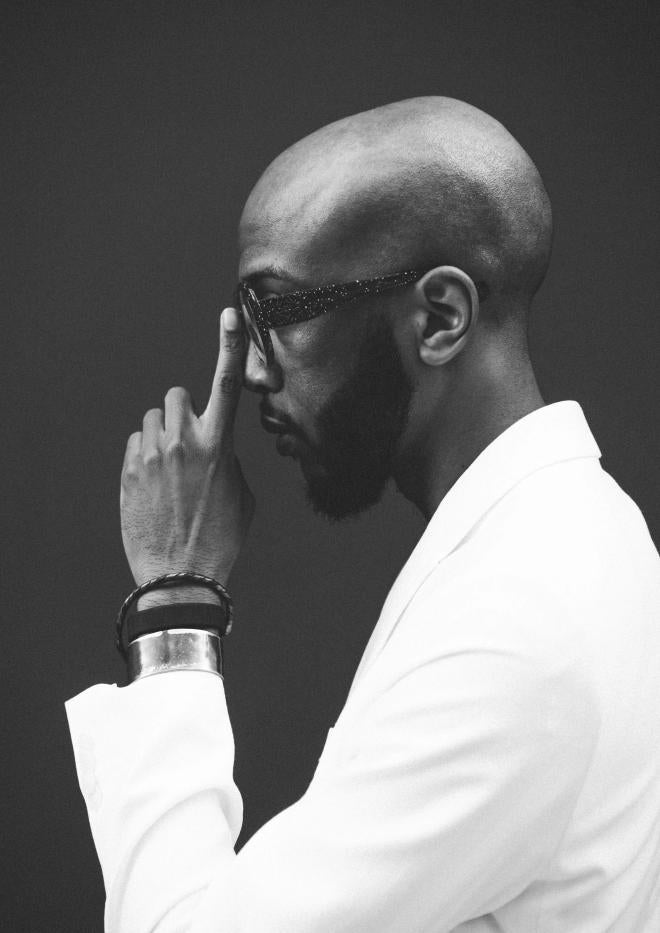
Brandon Waddles: It is crucial to be of open ear, mind, heart and soul when entering any and all of these varied musical environments. We must realize when we enter any environment that we are not coming into an empty space…rather it is a community full of people with their respective experiences. Each experience is necessary to the fulfillment of the mission of the environment.
MD: Is there anything that you feel ties all these musical environments together in your experience?
BW: Humanity is the beautiful tie between all of them. There are humans represented in every piece of music we approach, and it is our job as interpreters to connect our personal sense of humanity to that of those embedded in the score.
MD: I’d love to learn about your approach to composing and arranging. What first made you want to write music?
BW: In high school, I was almost immediately enraptured by the world of choral music…particularly the compositions and arrangements of monumental figures such as Adolphus Hailstork and Stacey Gibbs, both of whom wrote music specifically for my high school choir. As a classically trained pianist, I often found myself at the piano reading these octavos during rehearsals (at my high school and later at Morehouse College) and gaining insight to the sounds that would help form my own sonic language.
MD: How do you choose texts when writing your choral music, and what do you look for in choosing songs to make new arrangements for?
BW: All my original music for choir is scripturally based, and I’ve yet to find another book so beautifully wound in poetry. Many of the texts I’ve chosen to set to music are scriptures I recall reading as a youth in church. So there’s a sense of nostalgia that connects me to them, as well.
As for my arrangements, I have found a home in the Negro spiritual. There are so many texts and melodies crafted by that invisible church of enslaved African Americans that are housed now in several collections, such as those by compiled by John Work, James Weldon and J. Rosamund Johnson, and R. Nathaniel Dett. I try to find those that have not already been arranged so many times over.
MD: Looking at this upcoming concert, “An Evening of Opera and Gospel,” could you talk about what’s involved in your role as music director?
BW: I believe that the role of music director in any environment requires the skills of an interpreter/liaison that can understand the musical language of one artist and translate the message/need clearly and effectively to another artist. This impending concert is so beautifully layered with artists coming from different backgrounds and offering varied skillsets, so it’s all the more important for the music director to be the glue that connects all moving parts.
MD: How do you think about the connections between these two (massively wide-ranging and omnivorous) genres of Opera and Gospel that are represented in this concert program?
BW: I’ve always found Black church…one of the founding homes of Black gospel music…to be a scene of theatre within itself. The opening processional is like unto Aida’s Grand March, and the sermonic solo at its most impassioned is to me no different than any of Puccini’s tear-stained arias. The same performative drama you’ll experience from Depuis le jour in the first half is no different from the spirit-inspired rendering of When the Saints Go to Worship. The pulpit prepared us for the stage.
MD: Do you have any favorite pieces from either the opera or gospel side (or both) on the program?
BW: I am a sucker for beautifully lilting melodies, so Dein ist mein ganzes Herz and Depuis le jour are two from the first half that I’m very much looking forward to…on the second half, When the Saints Go To Worship and God Is! Donald Lawrence (When the Saints) has always been one of my favorite Black gospel composers. He sits firmly in the lineage of Thomas Whitfield as a lover of Black gospel music and music theatre, so the writing is so poetically intentional. Melvin Crispell’s setting of Robert Frye’s classic God Is has such a joyful lightness to it, even with such a weighted text. The audience is truly going to receive the best of it all. I’m excited for all of us.
PBS PASSPORT
Stream tens of thousands of hours of your PBS and local favorites with WETA+ and PBS Passport whenever and wherever you want. Catch up on a single episode or binge-watch full seasons before they air on TV.