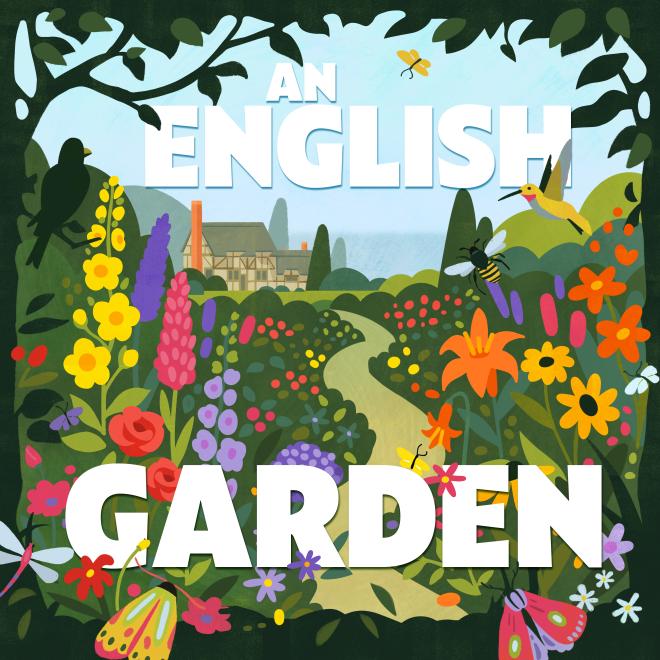
On May 8-10, the Folger Shakespeare Library’s award-winning early music ensemble-in-residence, The Folger Consort, will be performing their final concert of this season, An English Garden, Elizabethan Music and Poetry Celebrating Spring. The concert will feature viols and lute for instrumental dances and also accompanying soprano Emily Noël for songs on garden and woodland themes from the great flowering of English music during the reign of Queen Elizabeth I (the Elizabethan era). Paired and interspersed with the music will also be readings of the same period’s great works of poetry, also on horticultural themes, from the likes of Philip Sidney, Edmund Spenser, and (of course) William Shakespeare.
The Folger Consort’s Co-Artistic Director, Robert Eisenstein, and this program’s curator, Mary Springfels, shared their expertise with me in a Q&A on the history and context of the music and literature of this concert, which promises to be as enticing to the senses as the perfect English Tudor garden.
Matthew Dayton: The theme of this concert, An English Garden, is still a quintessential part of English culture in the modern world, and it seems the Brits’ love for gardening was already a hallmark of their identity back in Elizabethan times. How far back does this hallmark go in English history? Are there any ways the Elizabethans thought (and sang) about gardens that are very different from the ways we and modern Britons enjoy garden-related themes and activities?
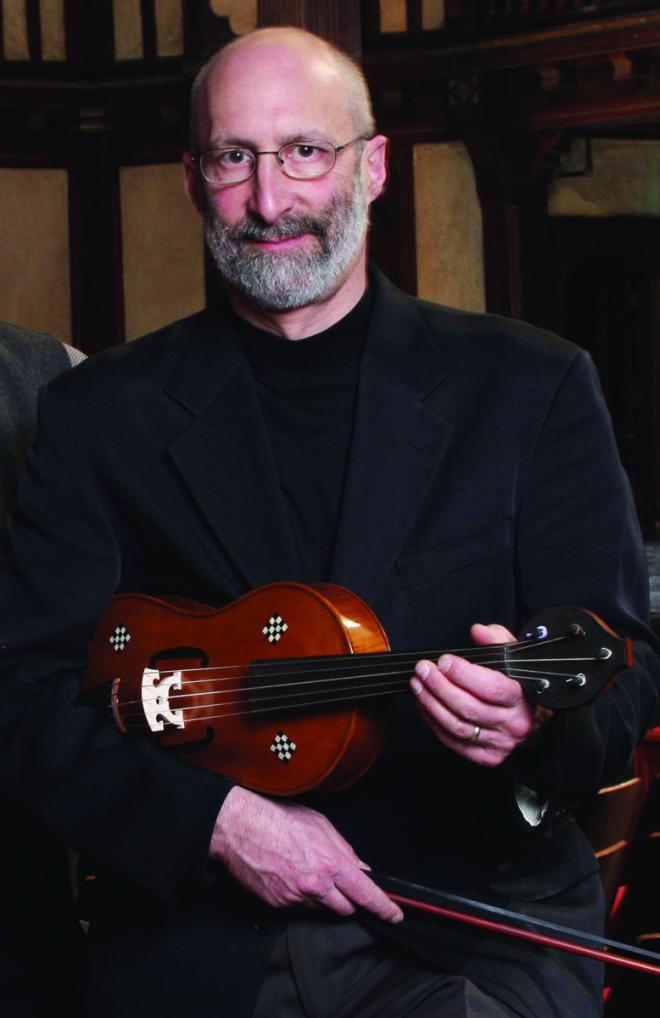
Robert Eisenstein: Although garden history is certainly not my field, I love gardens and always visit English ones, including some of the surviving Tudor gardens and reconstructions when I’m there. My understanding is that prior to this period gardens in England were more practical affairs providing herbs and produce and not thought of as landscapes. That’s certainly true for the real country folk in Elizabethan England, who lived lives nothing like the idealized and very literate shepherds and shepherdesses populating the Arcadian woods and gardens of poets like Spenser and Sydney. Influenced by Italian and French ideas, the Tudors increasingly designed gardens as sort of extensions of the attached house, with formal ‘rooms’. For the nobility, gardens, like music in many ways, could serve as an expression of the wealth, taste and power of the owners. But then and now gardens are just great places to enjoy and socialize! The first piece on our program, a popular ballad, starts with the line “All in a garden green two lovers sat at ease”.
MD: What would have been the original context for composing and performing the songs in this concert in the Elizabethan court? Who were the primary audience for this music, and what sorts of venues and occasions would they have been performed in?
RE: It varies. As I mentioned, we open our program with a popular ballad (which we’ve arranged for our instruments), a tune just about everyone would have known. For this program, we have four viols and lute to accompany songs. These instruments were widely enjoyed by cultured people. When the weather didn’t allow the nobility to enjoy their outdoor garden ‘rooms’ or go hunting, they might sit down to play some consorts and consort songs on their viols. Although there are a few ‘performance’ pieces on our program that were performed in court entertainments, most of the music is not concert music at all but intended purely for the performers and perhaps a few friends to enjoy.
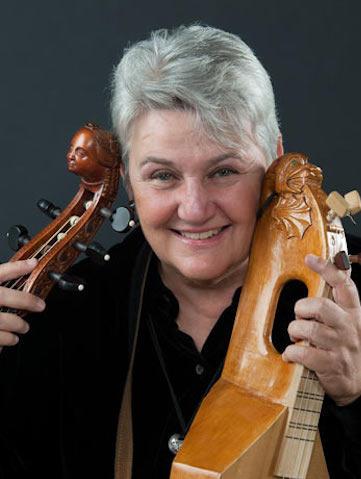
Mary Springfels: To give you a sense of the lavishness of a royal arrival we’ll turn to Elizabeth’s entry into Elvetham in 1591. It was celebrated with a consort song, Eliza is the fairest queen, which was sung and played by a “Fairy Queen,” who greeted her, and then, with her maids, sang and danced a song with the music of “an exquisite consort…” Robert Laneham, a wealthy mercer, wrote a lengthy letter to a friend, describing in detail the layout and magical qualities of the Kenilworth gardens, as well as the entertainments devised for Her Majesty. Laneham’s letter was in print by 1580, and was widely read by the likes of William Shakespeare, who alluded to this remarkable scene in A Midsummer Night’s Dream:
Oberon (to Puck):
Thou rememb’restSince once I sat upon a promontory
And heard a mermaid on a dolphin’s back,
Uttering such dulcet and harmonious breath,
That the rude sea grew civil at her song
And certain stars shot madly from their spheres
To hear the sea-maid’s music.
—A Midsummer Night’s Dream, 2.1.153-159
MD: Among the composers on the program, Byrd and Dowland will be very familiar names to fans of Renaissance vocal and lute music; could you tell us a bit about some of the now-lesser-known composers (Holborne, Johnson, and Cutting)?
RE: Well, Anthony Holborne was a lutenist and published his Pavans, Galliards, and Almains for Viols, Violins and other Musicall Wind Instruments in 1599. He was undoubtedly looking for maximum sales when he specified all possible instruments in the title. These pieces are, however, wonderfully crafted dance music. Edward Johnson, along with his more famous colleague the madrigalist John Wilbye was employed by the aristocratic Kitson family. Both composers knew John Dowland and helped correct the proofs of Dowland’s Second Book of Songs. Francis Cutting, another lutenist employed by a noble family, was one of the earliest composers for lute we know about. We have about fifty of his compositions for lute, including a very fine setting of Greensleeves, and they are consistently very good pieces. I’d also like to mention Hugh Ashton, whose lovely masque on a haunting ground bass we are performing. Ashton, in addition to composing was a successful politician, serving as mayor of Leicester and then as a Member of Parliament.
MD: In addition to garden and woodland themed musical selections, the program will also feature an actor reading selections of Elizabethan poetry on those same themes. How would you describe the ways Elizabethan-era artists (writers, musicians, composers) thought about the relationship between poetry and music?
RE: Music and poetry are inseparable. They are both muses in classical mythology, and as one Italian contemporary said, of the two Poetry was born first so she should take precedence. This humanistic impulse is behind the Italian madrigal and was beginning to influence English music at the time. The great English poets of the time, especially Shakespeare, knew music well. I always like to point out the end of Merchant of Venice, in which Lorenzo in a few short lines explains to Jessica the medieval concept of music of the spheres and a little later beautifully describes the power of music to move the emotions- the battle cry of the new music of his time that we now call the baroque.
The Folger Consort will perform An English Garden in the Folger Shakespeare Library’s Elizabethan-style theatre on Friday, May 8th, at 8pm, Saturday, May 9th at 2pm and 8pm, and Sunday, May 10th at 8pm. More information at www.folger.edu.
PBS PASSPORT
Stream tens of thousands of hours of your PBS and local favorites with WETA+ and PBS Passport whenever and wherever you want. Catch up on a single episode or binge-watch full seasons before they air on TV.