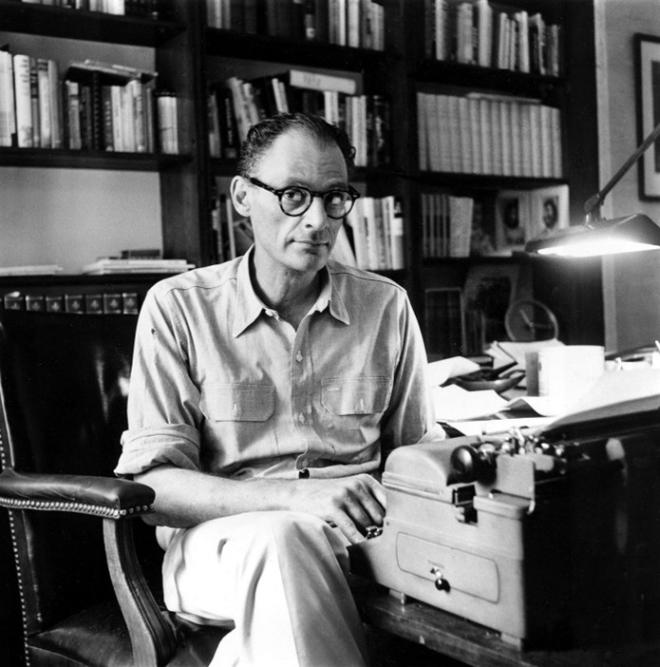
In preparing for this interview I read Arthur Miller's The Crucible for the first time. I already knew it was about the Salem Witch Trials and that it was an allegory for the 1950s Red Scare that affected Miller and so many of his generation, but I somehow made it through six decades without reading or seeing either the play or the operatic version of it by Robert Ward that will be produced by the Washington National Opera this month. I also read about Miller's process in writing the play. I never had an English teacher tell me what I’m supposed to think about it, so all I have is my own reactions, and to me it seems to be just as much as about Miller himself as it is about the historical events of either the 1950s or the 1690s. Shortly before he began work on the play in 1951 Miller cheated on his first wife with Marilyn Monroe, who became his second wife in 1956. It doesn't seem coincidental that he introduced an ahistorical plot point about adultery into a play that was otherwise based on real people and events he meticulously researched by going to Salem and reading through records of the trial of 1692; some lines from the trial transcripts show up verbatim as lines in the play (as well as in Bernard Stambler's libretto for the opera, which was created and produced with Miller’s approval; it won the Pulitzer Prize for Music in 1962). But I don't think that introducing disturbing elements of his own life dilutes the power of the message Miller intended to convey; indeed, by making the flawed but ultimately noble John Proctor an avatar for himself he raises the stakes and breathes deeply human life into this history, as well as creating motivations for characters whose true intentions for their mysterious and still shocking actions will never be known.
No amount of clever marketing or lavish donor galas can ever make up for making someone hold their breath and then whisper “Wow.”
- Ryan McKinny
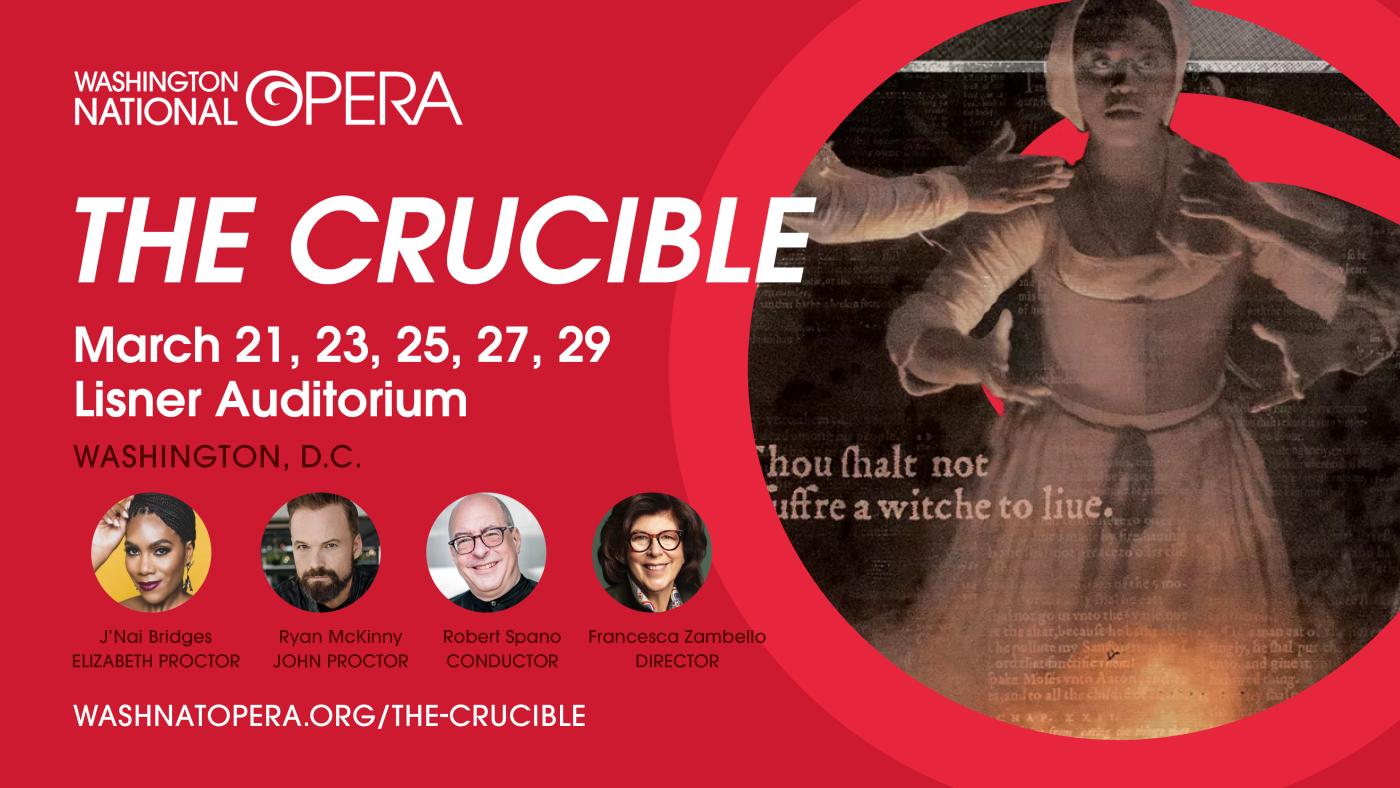
In the upcoming WNO production the role of John Proctor will be sung by Ryan McKinny, a powerful and versatile bass-baritone who has been called "one of the finest singers of his generation." McKinny last appeared with the WNO in the title role of Mozart's Don Giovanni in March 2020 (the run was cut short due to COVID, which also scuttled a planned 2021 WNO production of John Adams' Nixon in China in which McKinny was supposed to play the titular president.) His other roles in recent years give an idea of his range: John the Baptist in Strauss's Salome (Houston Grand Opera), Amfortas in Wagner's Parsifal (Bayreuth), Billy Bigelow in Rodgers and Hammerstein's Carousel (Glimmerglass), the title role of Mozart's Le nozze di Figaro (Metropolitan Opera, Seattle Opera, WNO in 2016). But if McKinny can be said to have a signature role, it's probably Joseph de Rocher in Jake Heggie's Dead Man Walking, which he has sung at the Met (including their HD broadcast), the Lyric Opera of Chicago, and in the 25th anniversary performances of the opera in San Francisco last fall. In 2023 he, Heggie, the real-life Sister Helen Prejean (whose story, about counseling the condemned prisoner de Rocher through his execution, is what the opera is about), and members of the Met cast - including Joyce DiDonato, who sang the role of Sister Helen - took the production to Sing Sing Correctional Facility, where they worked with a chorus of inmates on an abridged version of the opera they performed at the prison. It occurred to me that there was a connection between that opera and The Crucible, which is also about the experience of people condemned to die. McKinny graciously answered my rambling questions via email.
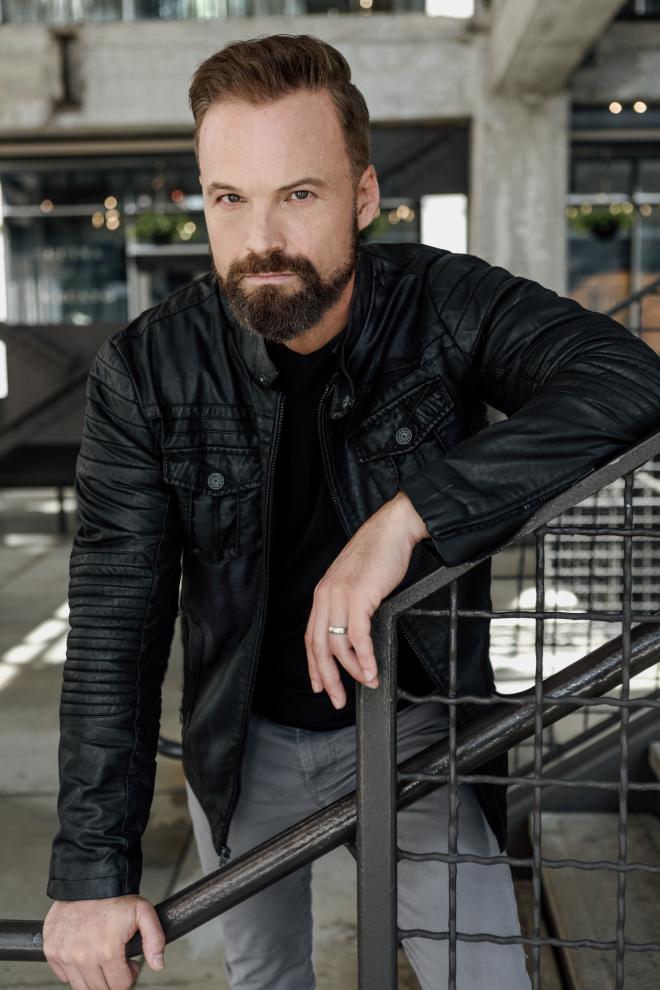
Ryan McKinny: It’s the job of audiences (and critics) to judge the characters as they wish. But my job as an actor is to justify everything from my character's perspective. To do that I start with the text and try to learn everything I can about what my character is feeling and thinking – so I’m not focused on whether he is right or wrong, bad or good, from the perspective of the audience. My job is to find the humanity in the character I am playing. When reading the play and the libretto, I noticed that Miller purposefully keeps details away from the audience. We actually don’t know whether John and Abigail had a physical affair or just an emotional one. And to me, one of the main points of the work is that truth can be subjective. Believing something is true is often more powerful than it actually being true. And no one John encounters is interested in the actual truth – just their perception of it. To me, a flawed man eventually choosing to do the right thing is more powerful than a hero. We need imperfect people to choose to do the right thing in the world, now more than ever. That is what makes this piece so relevant.
JJ: Robert Ward’s music feels like the early 20th century of Puccini, Verdi, Strauss and Berg filtered through the mid-century American aesthetic of Gershwin, Copland, Barber and Richard Rodgers. I imagine this must be challenging as a singer, because at times it’s like you have to stylistically flip from Tosca to Oklahoma! in the same phrase. And Miller’s language has its own music going on with its very specific dialect and archaisms - and the articulation of those very weighty words has to be immaculate. How has this score been challenging for you?
RM: This is one of the most fun and most difficult roles I’ve ever sung. The stylistic shifts are tricky, but more than that, it’s just big, loud, and high. Huge heart on your sleeve stuff. Which makes Proctor a little more sympathetic I think than he is in the play.
We then shifted from talking about the opera to talking about McKinny himself, who is as fascinating as any fictional character. He continues to take on new roles and expand his repertoire and career in new directions. Earlier this year in Houston he sang Lieutenant Hortsmeyer in Kevin Puts' Silent Night (which he directed at Wolf Trap in 2024 - more on that in a minute), and after The Crucible is over he's off to do Bartók’s Bluebeard’s Castle in Omaha and Cologne. In July he'll be in Ohio for a production of Bizet's Carmen, in which he sings the toreador Escamillo.
JJ: Has your method of learning new material changed over the years? Is it getting easier or harder? Are you actively seeking out new roles to play or do they come to you? Will singing Escamillo in Cincinnati in July feel like a vacation in comparison?
RM: Escamillo will definitely feel like a vacation! In some ways it takes more effort these days to learn new roles, but it’s helpful that I know myself and my brain a lot better than I did when I was starting out. I tend to be someone who learns through physicality, so I know a role when it is in my body. If I am visualizing the music on the page, that means I’m not there yet. I need to feel the kinetic energy of the vocal line, the color of the harmony, and the shape of the words in my mouth to feel like I “know” a role.
JJ: Two weeks ago I interviewed Denyce Graves, who recently retired from performing and is now concentrating on stage directing. I’ve been doing this a long time and that’s the first time I’ve encountered an opera singer who was also a director. But now there are two! I made Ms. Graves laugh when I asked her if her turn to directing had anything to do with the decades she spent being directed by other people, and suggested that she wants to direct singers the way she wishes she were directed with the approach to opera she wishes they had. Is that also what motivated you to assume that role? And how does filmmaking fit into this?
RM: My interest in directing comes from my love of film and my artistic partnership with my wife, Tonya McKinny. She and I made nearly a dozen operatic films (starting right when Covid hit) and we have long been wanting to use film on stage in a way that actually works with the music. I really loved our production of Silent Night at Wolf Trap and I’m very excited for our upcoming Tosca. I love getting to create something in a way that can’t happen as a singer. It’s a very different muscle.
JJ: Tell us about your work with Search for Common Ground.
RM: The idea of “common ground” can be difficult for people these days, and for good reason. It’s often used by politicians to paper over the way they capitulate to oppressive actions. But true common ground, the way Search for Common Ground means it, isn’t about compromise. It’s about seeing where your humanity overlaps with others and how collaboration can open unexpected doors. I believe this type of work is the only way through this mess we are in. Search has had so much success in so many countries over the years, and they are building bigger programs in the US now. Like so many people right now, I often feel hopeless in the face of the enormous problems humanity is facing. The work Search does is a light in a sea of darkness and it gives me hope.
JJ: In addition to your work with the WNO, you've also made a permanent mark on music in the nation’s capital by being the bass soloist on the recording of Beethoven's Ninth Symphony by the National Symphony Orchestra with Gianandrea Noseda. It's one of the non-operatic works you've sung the most often, and you'll be doing it again this summer in Aspen. Do you assume a role when singing the work, imagining yourself as Beethoven or Schiller? What does that piece mean to you? What does it mean to plead for an end to violent sounds, or to sing “Alle Menschen werden Brüder” in the United States in 2026?
RM: To be honest, I try to stand there as myself, just a regular person trying to send a message to a room full of strangers: don’t give up hope, set down your hate, we are in this together, and we are more alike than we are different. Beethoven and Schiller were just human beings, like everyone in the audience, and so is every child that’s being bombed, and so is everyone sending the bombs. History takes a long time, and I believe there is still hope for humanity.
JJ: The Metropolitan Opera is having an existential crisis, and the Vienna State Opera is dealing with severe cutbacks, two examples of many that suggest that opera itself in endangered, but all I can think is that opera has been in a constant, steady state of development for over 400 years, from Monteverdi to Heggie. There are very few human endeavors that can say that. It has been remarkably resilient, outlasting many major cultural upheavals. Your career, which seems to look as much to the future as to the past, is one testament to that. How do you feel about the state of opera today and where it can go from here? Can it survive without New York and Vienna?
RM: Singing is as basic a human activity as breathing. Music isn’t going anywhere. The sky has been falling in the opera world since before I knew what opera was. If we make art that means something to people, we will be fine. I was amused by every opera company falling all over themselves to get angry with Timothée Chalamet for saying no one cares about opera. The best response to that sentiment, or to the trouble at the Met and in Vienna, is simple: make art that’s meaningful. No amount of clever marketing or lavish donor galas can ever make up for making someone hold their breath and then whisper “Wow.”
PBS PASSPORT
Stream tens of thousands of hours of your PBS and local favorites with WETA+ and PBS Passport whenever and wherever you want. Catch up on a single episode or binge-watch full seasons before they air on TV.