I had the honor and privilege of interviewing Marin Alsop, who will be conducting Washington National Opera’s production of West Side Story. She has a deep connection to this work. Leonard Bernstein was her mentor and friend, and she has conducted this piece before in a groundbreaking production in conjunction with Carnegie Hall back in 2016. I produced part of this interview as a brief audio piece, which you can listen to here, but I wanted to share more of what she shared with me.
James Jacobs: I’ll never forget that afternoon on October 14, 1990, when I was quickly passing through a hotel lobby and there was a tv on and I caught the words “The composer of West Side Story was 72”. I was devastated, not only because that meant Bernstein had died, but because I knew that he had spent the second half of his life trying to prevent that sentence from being his obituary. And ever since then it seems even more sad that he died when he did, because I think he might have felt vindicated had he seen how the things he was criticized for during his life are now fully embraced. I hear Bernstein in so much music by today’s young composers. They speak out against injustice like he did. They’re stylistically eclectic like he was. And his conducting holds up as well. His teaching. Like Mahler he could have said “My time will come.” But I’m saying all this as a fan, a mere observer, while you had a front row seat to all of this.
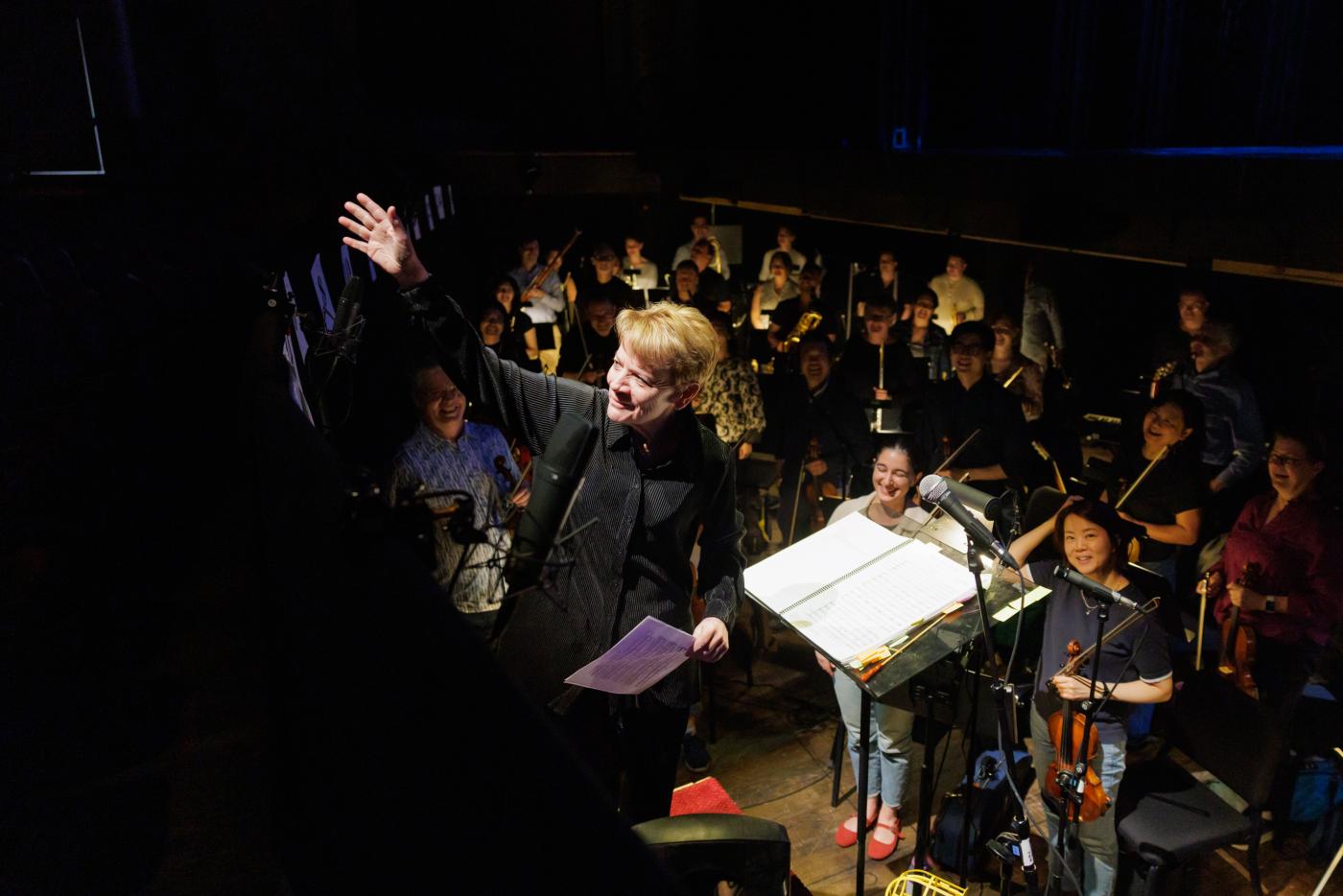
Marin Alsop: I know exactly that date…I think that during his career, while he was alive, there was a lot less tolerance or understanding of his kind of talent. I’m not sure we can even comprehend it today because it was so formidable and so wide ranging and so eclectic and so embracing and people couldn’t really accept that one human being could have that much talent in so many different areas. There’s historically been a sort of a little bit thumbing your nose at anything that isn’t “highbrow” and of course musical theater is considered a little less than highbrow, so the fact that Bernstein had his first huge compositional success with West Side Story was fodder for people who buy into that concept that musical theater is less than symphonic music, which it’s not! I mean, this is one of the great pieces of all time, ever written. The compositional skill used in writing and composing this piece is synonymous with Beethoven’s approach, out of a very small cellular amount of material Bernstein built this huge, huge story, and he’s also referencing Shakespeare, he’s also referencing political events of the time; here’s so many layers to this piece, I think it defies being categorized.
Yes, he wanted to be known for his Mahler, and for his “serious” compositions. I think today he would be thrilled to see how beloved West Side Story is, alongside his three symphonies which are absolutely majestic.
Public opinion and public prejudices have evolved. People are much more able to consider music that transcends boundaries. We see so many incredible jazz musicians these days who play classical music or vice versa. There are a lot fewer boundaries between genres of music today then there were when Lenny wrote West Side Story.
It’s so relevant today. As I listen to the dialogue, I’m struck by the visceral reaction to “the others.” We see this as a cyclical repetition that we’re living through today. The question of immigration and who belongs and who’s part of the street…it’s really interesting.
There’s a moment when Doc says…I can’t remember the line [“When do you kids stop? You make this world lousy!”-ed.] and one of the young men says, “That’s how we found it.” And I think about my kids and the young people today….yup, thanks a lot.
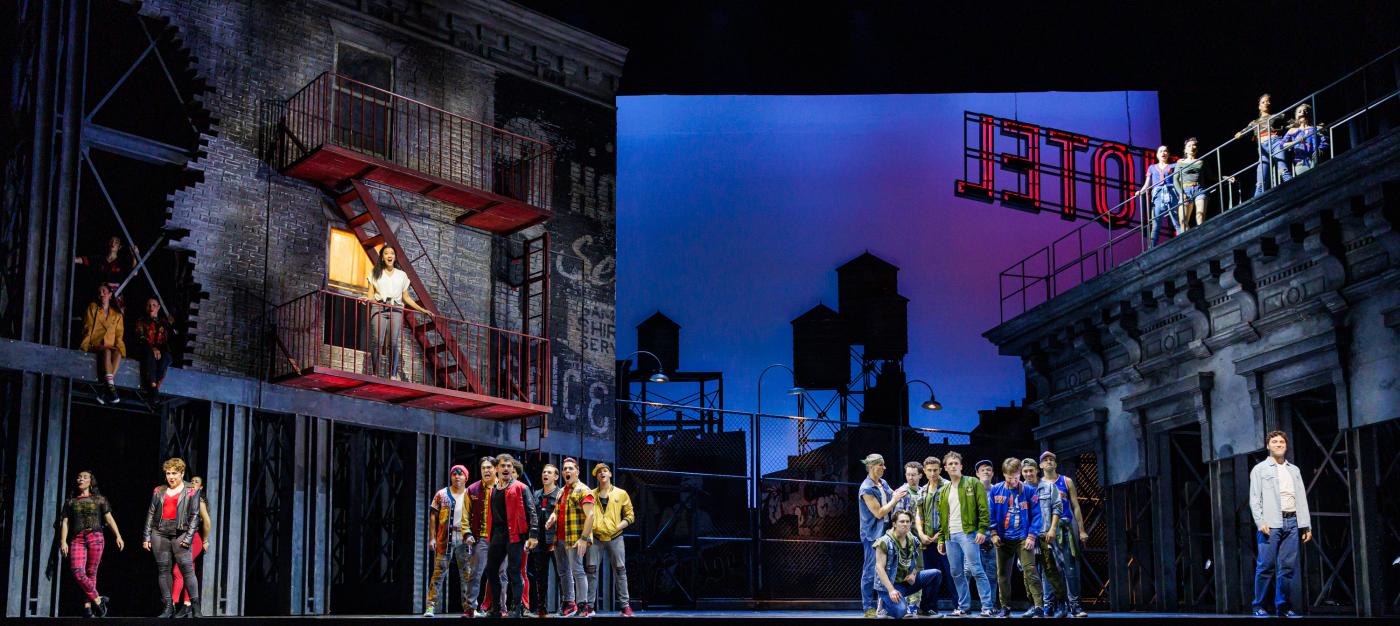
I have a personal history with Jerry Robbins [who directed and choreographed the original production of West Side Story] because my dad was manager of the New York City Ballet for 30 years, and my mother played cello in that orchestra for 50 years, so I grew up around Mr. B, George Balanchine and Jerry Robbins, who was very active and doing lots of choreographing in those days. I was terrified of him, but he was such a unique human being.
[Bernstein] was really my role model as a citizen of the world. He had very, very strong political beliefs, very strong beliefs about society, about culture, but in some ways he was always non-partisan. He stood up for what he believed, he stood up and he was counted. I think that he believed from the depth of his being that music has the power to unite us. I’ll never forget that tour he did in the Soviet Union, where he spoke to audiences there about how more prevalent are our similarities than our dissimilarities. It was quite a revolutionary thing to do but that’s what he believed. Couldn’t we use someone like that today….Bernstein took the lead in speaking out and advocating for people who didn’t have a voice that was being heard.
I think when you come to West Side Story not only will you be wowed by the cast, the dancing is incredible, and the staging is stunning, the set is great. You’re going to leave feeling changed. It’s not a happy kind of piece (you know, Romeo and Juliet) but it’s a piece that is a real reminder about how destructive hatred can be, particularly hatred without foundation, just perceived hatred. I think we have to be advocates for openness and acceptance. This is just such a moving production. I hope everyone will come and I don’t want anybody to miss it. If everybody comes to West Side Story, I think their days will be much better.