The University of North Carolina School of the Arts Symphony Orchestra will perform at Washington National Cathedral on April 14th. Conducted by James Allbritten, the program will consist of two symphonies: Symphony no. 4 by Gustav Mahler, preceded by Symphony no. 5 by UNCSA alumnus Malek Jandali.
Born to Syrian parents in Germany, Jandali was raised in Homs, Syria. Growing up he commuted every week to Damascus, two hours each way, to take piano lessons. After winning a national competition, in 1995, at the age of 19, he won a scholarship to study at UNCSA, where he earned his Master’s degree. He continues to make the United States his home, dividing his time between New York and Atlanta, but enjoys an international reputation as a composer, performer, lecturer, political activist and advocate for music education. I recently had the pleasure of interviewing him via e-mail. The way he responded was so eloquent that it makes my questions superfluous, but I’ll include the first one that got the conversation going.
JJ: I listened to your Symphony no. 5, which I very much enjoyed, and one of the things that struck me while listening to it is that there's still something new to say within the same symphonic structure utilizing the same type of orchestra composers used 150 years ago. What is it about the symphony orchestra and the symphonic form that makes them so durable and adaptable to a wide variety of styles, and what draws you to work in this medium?
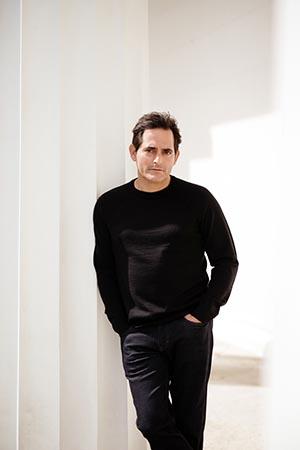
MJ: Mahler once said that a symphony must be like the world—it must contain everything. That vision deeply shapes my work. In my Symphony No. 5, I bring ancient maqams and complex rhythmic traditions into dialogue with the orchestra—not as ornament, but as living, breathing languages that expand its expressive world.
The symphony remains powerful because it offers something rare: time and space for deep listening, reflection, and unity. It reminds us that it is always better to be together, in a symphony for peace. In Symphony No. 4, Gustav Mahler shows not the chaos of the world, but its purest dream, a vision of peace through the eyes of a child, where music is everywhere.
The symphony orchestra endures as a living palette of sound, capable of expressing the full range of human experience across cultures and time. Its strength lies in its diversity and its ability to adapt without losing identity. The symphonic form itself is not rigid, but a journey of transformation—an evolving space for ideas to unfold, as expanded so profoundly since Ludwig van Beethoven.
My own journey began when I came from Syria to UNCSA on a full scholarship, performing works like Piano Concerto No. 1 (Tchaikovsky) alongside Mozart sonatas and Bach’s preludes and fugues. My teacher, Victor Bunin from the Tchaikovsky Conservatory, recommended I study with Eric Larsen at UNCSA. Through the study of theory, form, harmony, and orchestration, I discovered the deeper magic of music and the genius behind the great composers. That experience transformed me from a classical pianist into a composer. Today, as an American composer, I draw on a unique musical language shaped by the rhythms and modal traditions of my homeland, Syria, the birthplace of the alphabet and some of the earliest systems of music notation.
Yet this heritage carries profound pain. My city was nearly destroyed by the brutality of the Assad dictatorship, barrel bombs that targeted not only lives, but culture, music, and truth itself. It was there that American journalist Marie Colvin was killed while courageously bearing witness, one of many voices silenced, alongside countless civilians and children.
This loss is not only personal; it is cultural and human. It is why I believe music must continue to speak, to remember, to resist erasure, and to affirm the dignity of truth and beauty.
In this, I feel a deep connection to Pablo Casals, who saw no distinction between being a musician and advocating for human rights. Like him, I have performed at the United Nations, as well as at Carnegie Hall and the Vienna Konzerthaus, engaging leaders and audiences to listen to the “Voice of the Syrian Children,” the title of my world tour during the Syrian revolution.
Through my symphonic works and the mission of Pianos for Peace, I seek to transform music into a force for connection, healing, and dialogue. A symphony can carry memory and identity; a piano in a public space can dissolve barriers and create moments of shared humanity.
I am a musician on a mission to spread peace in our world, and I embrace young piano talents through my international youth piano competition, with the hope of making their musical journey a little easier and smoother.
Music unites people. What an honor it is to have my Symphony for Peace performed alongside Mahler’s symphony at the Washington National Cathedral—an opportunity to bring audiences together and share a message of hope, beauty, and peace in our world today.
In harmony,
Malek Jandali
PBS PASSPORT
Stream tens of thousands of hours of your PBS and local favorites with WETA+ and PBS Passport whenever and wherever you want. Catch up on a single episode or binge-watch full seasons before they air on TV.