This weekend on WETA Classical’s Opera Matinee, we have the rare opportunity to hear a production of Richard Wagner’s Rienzi from the Bayreuth Festival in Germany. I say “rare” because this early Wagner opera had never been presented inside the Bayreuth Festspielhaus (Festival Theatre) until this summer, when it opened the festival’s 150th-anniversary season. I also say “rare” with a glimmer of hope that this will be the only time Rienzi appears in the festival’s official lineup.
That said, you’re in for a fine performance on Saturday. Nathalie Stutzmann conducts, with acclaimed Wagnerian tenor Andreas Schager in the title role.
However, the fact remains that Wagner wished Rienzi and his other apprentice operas not to be presented at the Festspielhaus. It was a wish that his descendants respected until now. From my standpoint as an audience member and frequent attendee, I think it should have continued to be honored.
Rienzi remained popular in Europe well after Wagner’s death. Still, it is French-style grand opera, a long way from Wagner’s mature style and his revolutionary concept of music and drama. It was for his later works that Wagner designed the Festspielhaus, with its iconic sunken, covered orchestra pit. That feature, so important in creating a unique balance between a massive Wagnerian orchestra and the singers, placed the much smaller Rienzi orchestra at a disadvantage. At least, that was my experience in the audience back in August. On Saturday’s broadcast, we can all listen for how grand-opera orchestration fares in a pit designed for something else.
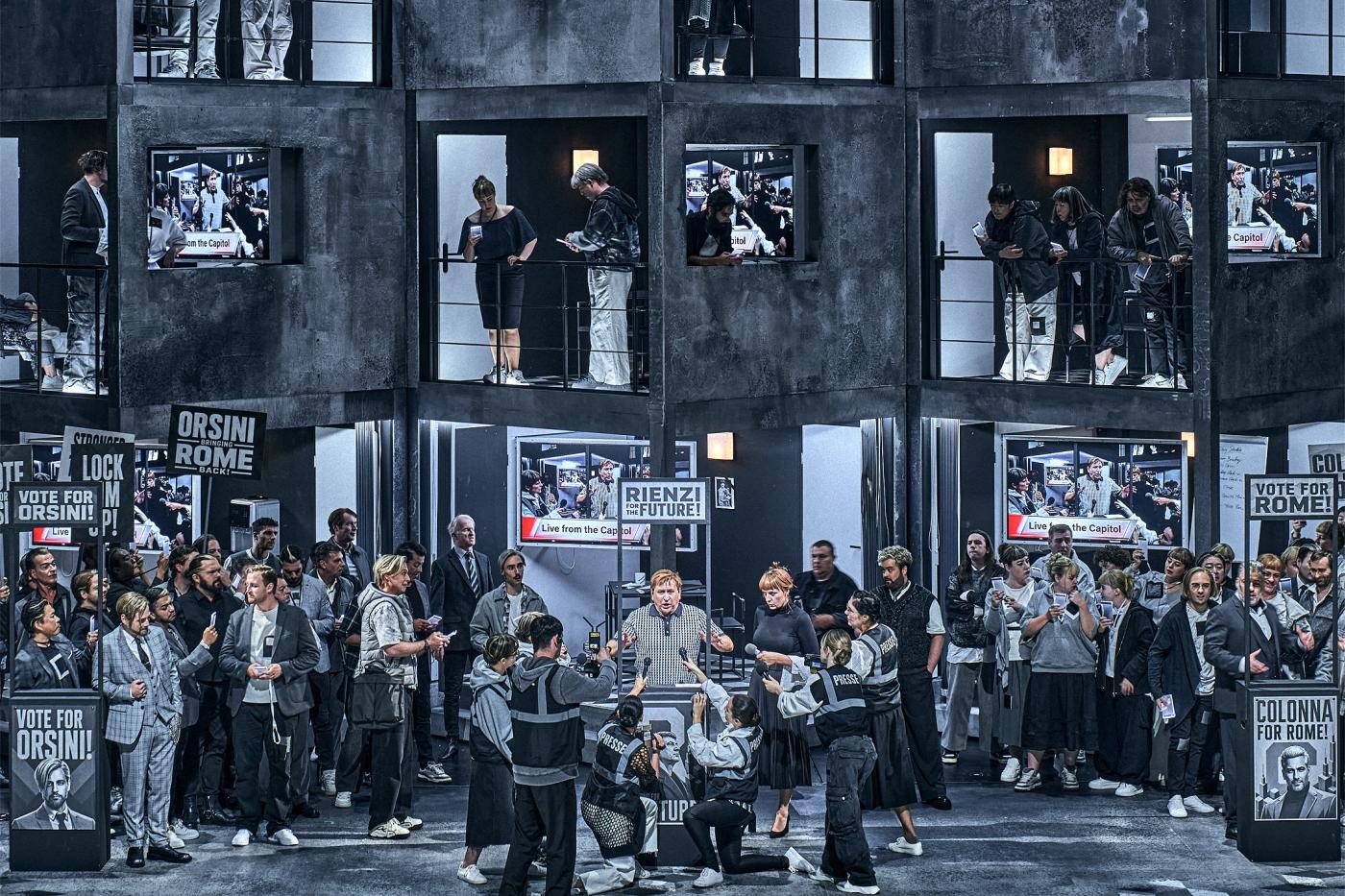
Beyond these quibbles, I came away feeling that the care and resources went to the wrong anniversary. Rienzi, a work Wagner kept out of the house, received an elaborate, fully staged production. The Ring, the work the Festspielhaus was built for, received a concept in which the singers mostly stood and sang while AI and video screens did the rest.
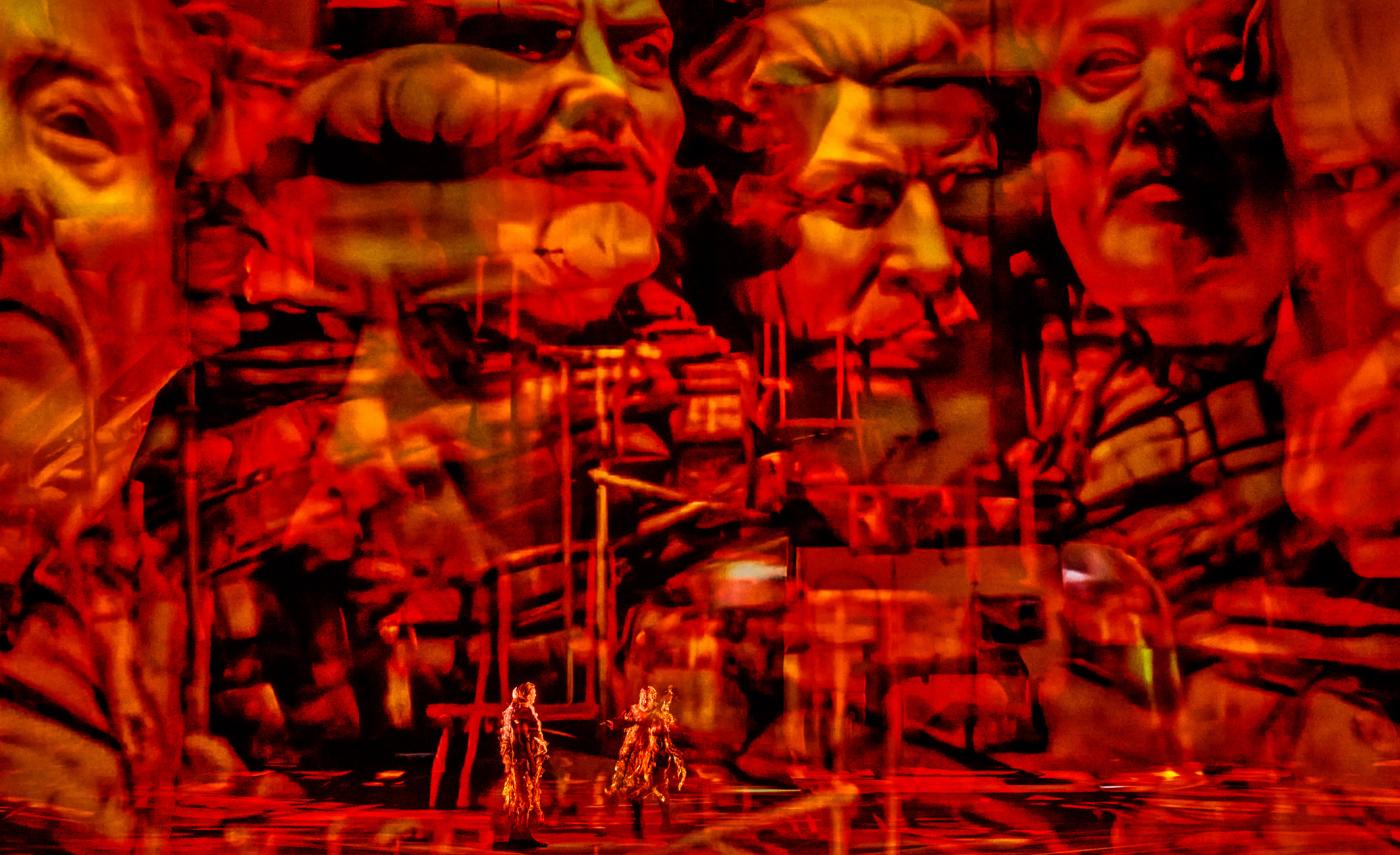
One often leaves a Bayreuth production puzzling over staging choices. Yes, a new production of the Ring was presented this summer, but the AI-generated staging was beyond disappointing; it was distracting and undramatic. The concept was to feed images from earlier Bayreuth productions and 150 years of Ring reception history into an AI system and let it generate the visuals during each performance. The creators have said it was an experiment, not a stage-directed drama, and it looked like one.

Aside from projections of the original 1876 staging at the beginning of each act, the images rarely connected to the words or music, and the singers were given scant opportunities to act. In fact, during long stretches of the performances the singers, standing in a “park-and-bark” stance in uniform, shimmering costumes, disappeared into the video projections. For many of us, it is to experience the artistry of the musicians that we travel to Bayreuth and sit in the un-air-conditioned Festspielhaus (this year during an unrelenting heat wave). Minimizing the visual presence of the singers on the stage felt like disrespect for their all-important roles.
Since AI was at the center of this project, I asked Claude, an AI assistant made by Anthropic, for its view. It cautioned that it hadn’t seen the staging, but put the problem less in the technology than in the framing: an experiment presented as the anniversary Ring, to an audience expecting a staging. My own takeaway: the question isn’t whether AI can stage an opera. It’s whether such an experiment should be the anniversary Ring.
Visual disappointments aside, this summer’s Ring was musically excellent, with Christian Thielemann’s conducting and Michael Volle’s Wotan/Wanderer at its center. I have found the musical artistry at Bayreuth a wonderfully consistent reason to return, even if some of the stagings are less than satisfying.
Unfortunately, the Ring wasn’t available to us for broadcast, but I hope you enjoy the rare presentation of Rienzi on November 14th at 1:00 p.m. on WETA Classical. It’s a great opportunity to hear an excellent cast and some hints of the mature Wagner to come.
PBS PASSPORT
Stream tens of thousands of hours of your PBS and local favorites with WETA+ and PBS Passport whenever and wherever you want. Catch up on a single episode or binge-watch full seasons before they air on TV.