Playlist
| Name | Download |
|---|---|
| Playlist for America 250 Episode 1 |
In 1725, four Native American chiefs from the Mitchigamea tribe as well as one of their daughters went to Paris on a trip sponsored by French settlers in Illinois. They met with Louis XV and gave a performance of ceremonial dances that was attended by France’s leading composer of the time, Jean-Philippe Rameau. While we sadly lack any direct information about what that tribal music actually sounded like, the nearest we can get is the piece Rameau wrote for the harpsichord when he got home that night, inspired by what he saw. We can surmise that it was based on a dance celebrating the peace pipe, because that’s what he named it when he orchestrated it for inclusion in his opera Les Indes Galantes a decade later, but its original name he gave it is rightly considered offensive today, Les Sauvages. It should be noted, however, that its meaning was intended to be ironic even at the time. This was when the trope of the Noble Savage began to get traction, as Europeans romanticized the agrarian indigenous lifestyle in contrast to the increasing brutality of the supposedly “civilized” world. These were among the first stirrings of the Enlightenment and the zeal for justice and basic human rights that led to revolutions on both sides of the Atlantic.
Of course, by 1725 there was nothing primitive about North America. The combination of Indigenous communities with colonial settlements from various European countries was no agrarian paradise, but an already highly developed continent laying the infrastructure for the three countries that inhabit it today. It was actually New Spain (what we call Mexico today) that was the most advanced at this point in every way including music. In the early 18th century the “Mexican Baroque” style still contained remnants of the Renaissance and Spanish folk music seamlessly nestled among up-to-date notions of part writing, structure and counterpoint.
While few people east of the Mississippi Valley knew this music, there was a similar mix of styles in the first examples of classical music of the thirteen colonies.
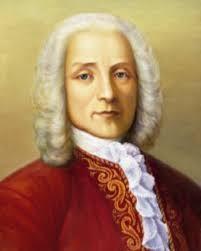
Charles Theodore Pachelbel (the son of Johann Pachelbel of Canon fame) was born in Germany in 1690 and, after spending some time in London, moved to Boston, MA by 1732. He soon moved to Newport, Rhode Island, where he became the first organist of Trinity Church (which still exists as an active church on Queen Anne Square) after helping install its organ, which was paid for by its famous Reverend George Berkeley. In 1735 he moved to New York, and in January and March of 1736 Pachelbel gave the first advertised concerts in New York City, at another place that still exists, Fraunces Tavern (then called Robert Todd’s tavern) on the corner of Pearl and Broad Streets in Lower Manhattan. For these concerts Pachelbel played harpsichord and was joined by some local musicians. He then moved to Charleston, South Carolina, which must have happened quickly because in February of the following year he married a local woman there. Later that same year (1737) he organized Charleston’s first public concert, and three years later he became the organist at St. Philip’s, the same church in which he got married. The first piece he wrote for this position was a brief Magnificat, which would have been considered rather old-fashioned had he still been in Europe but, with its call-and-response antiphonal choirs, was a very impressive work for South Carolina in 1740.
A year before his death in 1750 Pachelbel started a singing school, a uniquely American musical tradition he brought to the South from New England. Their purpose was to teach parishioners how to read music well enough to sing hymns in four-part harmony during church services. (It also was quietly revolutionary in social terms, since it was one of the first church-sanctioned activities that men and women could participate in together. Many of the early colonists met their spouses in singing school.) They learned to sight-read through solfege, or “sol-fa” as they called it, and to further aid in learning the note heads were printed in different shapes corresponding to the syllables of the scale (do, re, mi etc.) This turned out to be an effective way of accommodating the different ways people have of learning, and the shape-note tradition continues in the South to this day, where they still sing from The Sacred Harp, the hymnal that pioneered the shape-note learning method.
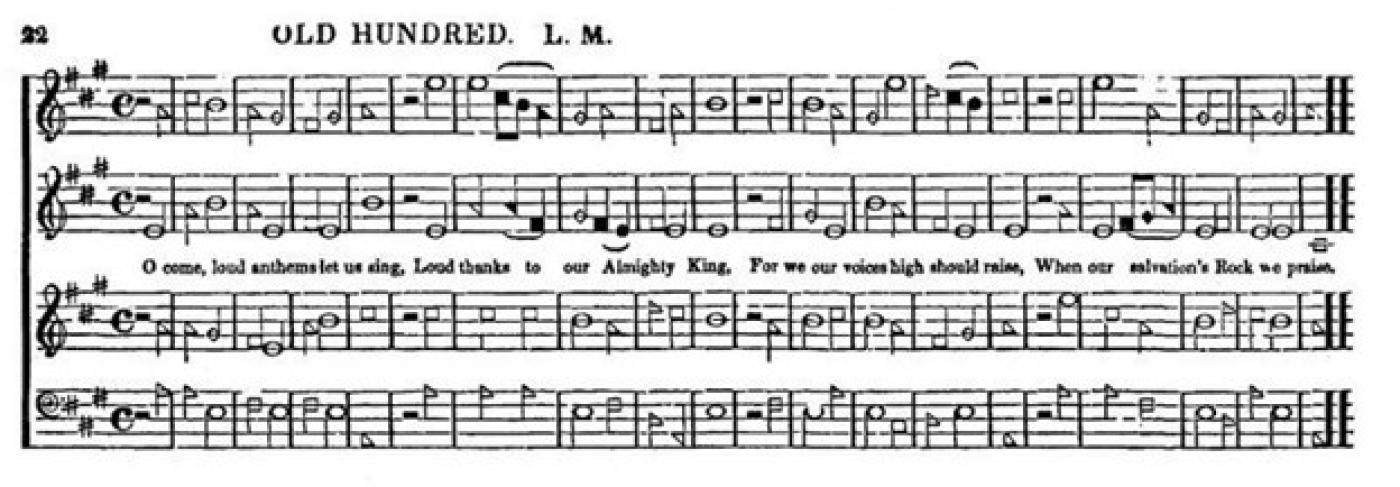
One of the first notable singing school masters was William Billings, perhaps the first notable American-born composer. His life began and ended in poverty and difficult circumstances, and he had physical challenges, but for about two decades he had a thriving career as a professional choirmaster, composer and author of pedagogical texts that formed the basis of the singing school curriculum. His tunes were sung in churches, in taverns, and even adapted for fife and drum played on the battlefields. He literally composed the soundtrack for the American Revolution.
PBS PASSPORT
Stream tens of thousands of hours of your PBS and local favorites with WETA+ and PBS Passport whenever and wherever you want. Catch up on a single episode or binge-watch full seasons before they air on TV.