Playlist
| Name | Download |
|---|---|
| Playlist for America 250 Episode 4 |
Gottlieb Graupner
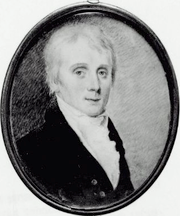
So much of the story of American music - not to mention the story of America itself- is the story of individuals who were passionate and driven and a bit eccentric. One such man was Gottlieb Graupner. He was born in Germany in 1767, and like his father he started out as a professional oboe player (though before we get too far along in this story I should point out that he was apparently no relation to the Baroque composer Christoph Graupner, just in case that was weighing on your mind). Gottlieb Graupner moved to London in his 20s where he played in the historic Salomon orchestra that premiered Joseph Haydn's last twelve symphonies under Haydn's own direction. Shortly after the premiere of Haydn's final symphony, no. 104, in May 1795, Graupner, perhaps thinking that nothing could top that in a European orchestra career, made the leap across the Atlantic to Charleston, South Carolina, which at this point was perhaps the musical capital of the brand-new United States. However, he soon met a couple of people (including the woman he would marry) who convinced him that Boston was poised to take over that mantle and they should all move there. They made that move in 1798 and Graupner immediately got to work and never looked back, staying in Boston for 38 years until his death at age 68. First, he got a job playing for the Federal Street Theater, where he really spread his wings, playing a variety of instruments, arranging American folk songs and dance tunes, and even doing a bit of acting. But he didn't forget that his true currency in America was his being the oboist from Europe who worked with Haydn. In 1801 he founded the first music conservatory in the United States, got into the music publishing business and opened a music store. It should be noted that these various enterprises came and went as Graupner's partnerships dissolved and new ones were formed; ironically, his first attempt at a music academy ended when his partner moved from Boston to Charleston, thinking that was where the future lay. As you can imagine, the culture of this young country was very much in flux and the ground kept shifting. But in 1810 he had established himself enough to create the Boston Philharmonic Society, which, on April 17, 1810. gave the first performance of Beethoven's Eroica Symphony outside of Europe. This is what earned Graupner the moniker “The Father of American Orchestral Music." But in 1815, he helped found an institution that not only proved durable, but is still in business today as America's oldest continually operating performing arts organization, the Handel and Haydn Society.
John Knowles Paine
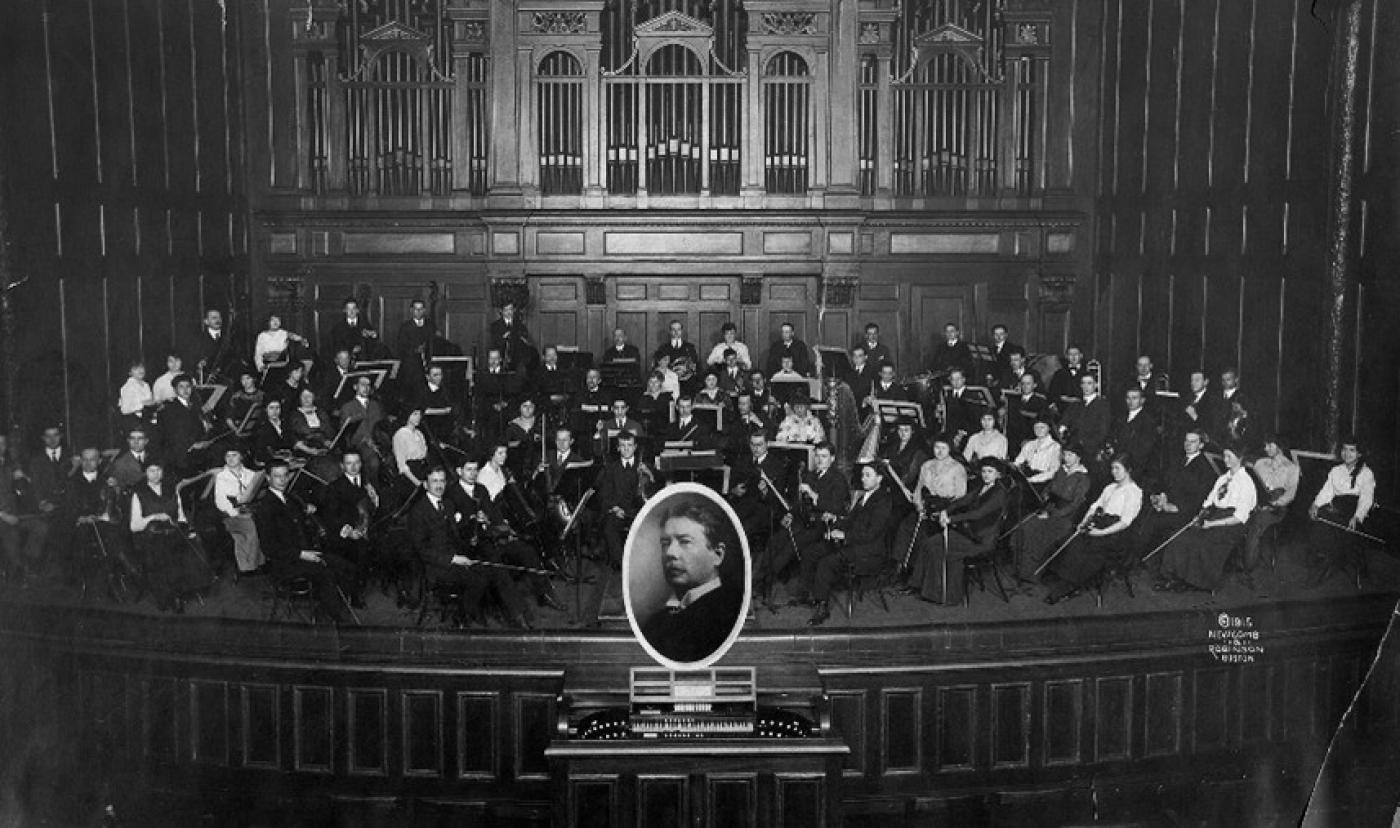
The Handel and Haydn Society, or h and h as it has been nicknamed from its inception, began as a large community chorus, its mission statement being "to promote the love of good music and a better performance of it". It made good on its name in 1818, when it presented the American premiere of Handel's Messiah, and 1819, when it presented the American premiere of Haydn's Creation. Several of its members pooled their resources to come up with the money to commission an English oratorio from Beethoven, but at the time he was working on Missa Solemnis and the Ninth Symphony as well as several outstanding commissions for piano sonatas and string quartets, and by the time he had a chance to seriously consider the Boston proposal it was in his final months before his death. H & H soon got into the rhythm of cycling through a handful of works by its namesake composers that it repeated often while gradually expanding its repertoire, increasing the size of the choir, professionalizing its orchestra, and performing for occasions such as the deaths of presidents, commemorations of anniversaries, and benefit concerts. It also started publishing music under its aegis, including a hymnal by Lowell Mason and the first American edition of Handel's Messiah. In 1852 it performed the opening concert of Boston Music Hall, which quickly established itself as one of the country's major music venues and would eventually become the first home of the Boston Symphony Orchestra. It was in that hall in 1874, when H and H was nearly sixty years old, when it finally performed a work by an American composer: the oratorio St. Peter by John Knowles Paine.
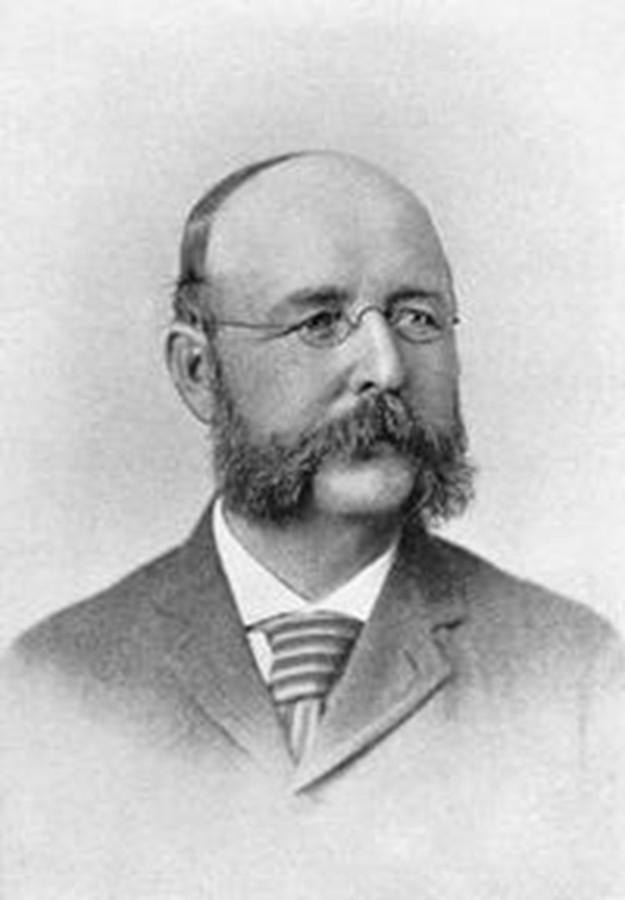
Paine was the first American-born composer to make a name for himself in the realm of symphonic music, and he was the eldest of a group of composers that have come to be called "The Boston Six". Paine grew up in Maine, the nephew of a professional organist and the grandson of an organ builder. Paine decided to carry on that family tradition and become an organist. When he was eighteen he gave a series of organ recitals to raise money to go to Europe, where he spent three years studying organ and composition in Berlin while also giving recitals throughout the continent, becoming one of the first American musicians to establish an international reputation. He returned to the states when he was 22 and settled in Boston, where he joined the faculty of Harvard, becoming America's first professor of music! Harvard also named him their first University Organist. He worked at Harvard for 43 years. Eight years after his death in 1906 construction was completed on campus of the John Knowles Paine Concert Hall, which is still in active use.
Arthur Foote
The second eldest of the Boston Six was Arthur Foote, who like Paine was an organist, and they had Harvard in common, since Foote was a Harvard graduate, the first American composer who was also educated entirely in America. For 32 years Foote was the organist for the First Church in Boston, a Unitarian Universalist Church that is still active. As a composer he's best known for his chamber music.
George Whitefield Chadwick
Before we continue with the Boston Six, we need to discuss the New England Conservatory of Music. I mentioned earlier that Gottlieb Graupner established America's first music conservatory in Boston in 1801, but it was only in business for two years, and his subsequent attempts fizzled as well. It took another half century for Boston to establish a solid cultural infrastructure that could support professional music institutions - remember that the Handel and Haydn Society was still mostly an amateur group at this point - and even in the 1850s the leaders of Boston's musical establishment were wary of taking on long-term projects because the tensions that would lead to the Civil War were making them wonder how long the United States was going to last, which is why they initially rejected the proposal for the conservatory by the then 19-year-old Eben Tourjée in 1853. 13 years later, after the Civil War had come and gone and Tourjée proved his competence by establishing three music schools in Rhode Island, he tried again, and this time his proposal was met with enthusiasm. In 1867 The New England Conservatory was born in seven rented rooms above the Boston Music Hall. The Conservatory was an instant success. A year and a half after it opened there were over 1200 students, expanding from 7 to 25 rooms, and had established a joint degree program with Boston University, (Later that affiliation would switch to Tufts University, and today it's exclusively with Harvard) When it opened it accepted both degree-seeking students and those the called "special students" who just wanted to take lessons and classes of their choosing, and it was as a special student that an 18-year-old high school dropout named George Whitefield Chadwick enrolled in the conservatory to study organ, piano and music theory. Despite his lack of any official diplomas or degrees he managed to get himself to Germany for three years to complete his studies, and when he returned to Boston in 1880 at age 26 he established himself as a teacher, conductor, and composer. His reputation and place within Boston's musical establishment steadily rose, and when he was 42 he was appointed director of the New England Conservatory. Not a bad trajectory for someone who had to drop out of school at age 17 to help out his father's insurance business! He turned out to be a transformational leader for the Conservatory, establishing a more standardized and rigorous curriculum and, ironically, turning it into the kind of place that would no longer have accepted his 18-year-old self as a student. He was also a transformational composer, one of the first Americans who looked beyond the standard German influences and experimented with new ideas in form and orchestration.
Edward MacDowell
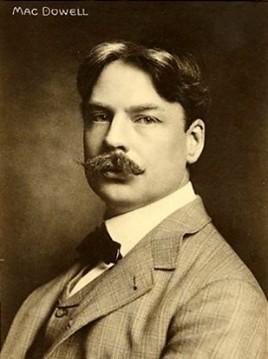
Continuing chronologically by birth through the Boston Six, the fourth and perhaps best known of these composers is Edward MacDowell. One could reasonably ask why MacDowell is included in this group, since he was born in New York, died in New York, spent eleven years in Europe (where he greatly impressed Franz Liszt and Clara Schumann), and lived for only eight years in Boston. Part of this has to do with what he did in those eight years, which happened to coincide with the peak of his career, and the fruitful relationships he established in that time with the Boston musical establishment. It also helped that, even after moving back to New York to accept a position at Columbia University, he maintained his ties to the New England area by purchasing a summer residence in New Hampshire that, shortly after his death in 1908, was transformed into the MacDowell Colony, which has supported many artists through the years with its residency and workshop programs. But perhaps the main reason he's in the Boston Six is that he shares a similar aesthetic and outlook towards an idea of an American musical voice.
Horatio Parker
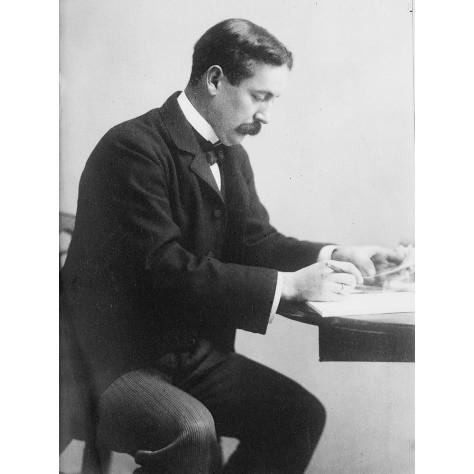
The fifth composer of the Boston Six is Horatio Parker, who actually studied with his fellow Boston Six member George Chadwick, and like Chadwick, Foote and Paine, Parker was an organist. He spent his formative years living and studying in Boston and its environs; then he studied in Germany for three years; then he spent two years teaching on Long Island; then five years playing organ for Trinity Church in New York; then he spent seven years playing for Trinity Church in Boston while commuting to New Haven to teach at Yale where one of his pupils was Charles Ives; and he spent his final fifteen years as Yale's Dean of Music. Somehow, he found time to be a prolific and successful composer as well. His oratorio Hora Novissima was the first major American composition to be widely performed and find acclaim in Europe, both of his operas won lucrative prizes and one of them was performed by the Metropolitan Opera, and he also made lasting contributions to the hymnal repertoire.
Amy Beach
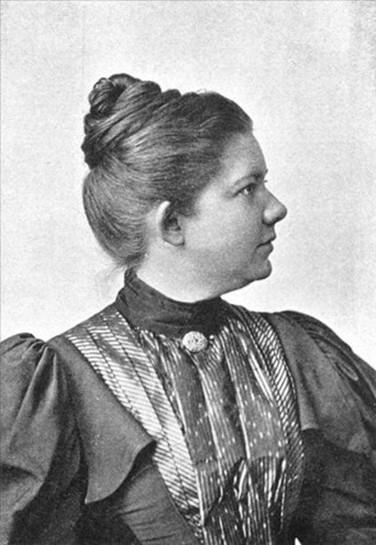
We now come to the last but certainly not least of the Boston Six: Amy Beach. She was one of only two of the group to not receive any European training, though she did spend a few years in Germany in her 40s after her husband died. Beach was born Amy Marcy Cheney in New Hampshire in 1867 and was soon determined to be a child prodigy, already showing her ability to know a song from a single hearing and sing perfectly in tune before she turned two. She taught herself to read music at age three, started to compose at age four, began performing at age seven, and played her first concerto with orchestra at age sixteen, in Boston Music Hall. Shortly after making her debut with the Boston Symphony at age 18, she got married to a surgeon 24 years older than her, who did encourage her to compose but made her promise before marrying her that she could only perform twice a year, and then only for charity benefits under the name "Mrs. H H A Beach". But she always maintained that it was a good marriage, and he didn't impede her success as a composer, which included triumphs such as the performance of her Mass in E flat by the Handel and Haydn society, her Gaelic Symphony performed by the Boston Symphony, and her appearance with that same orchestra for the premiere of her piano concerto. She received great acclaim from the press and her musical contemporaries for those works, and they were also well received when performed in Germany. It was also around this time that the Boston Six was started to be acknowledged as a group. It was Chadwick who articulated their attitude as a group when he wrote this in a letter to Beach: "I always feel a thrill of pride myself whenever I hear a fine work by any of us, and as such you will have to be counted in, whether you like it or not – you're one of the boys." It sounds like he thought of her as his kid sister.
John Philip Sousa
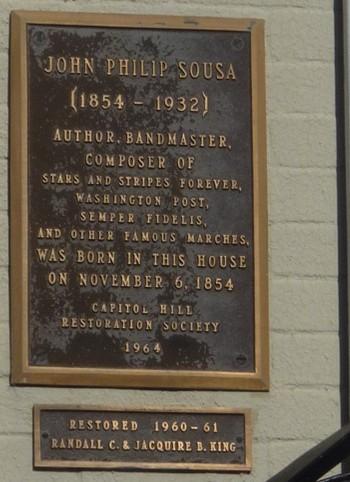
Let’s consider one more passionate, eccentric visionary American composer born in the 19th century. In fact, he was born on November 6, 1854 right here in Washington DC on Capitol Hill on G Street Southeast just west of 7th street southeast. His father was Spanish, his mother was German, and by the time he was ten he could play any brass instrument you put in his hand as well as violin, flute, and piano, and on top of that he could sing well and had perfect pitch. He had a rough relationship with his father and when he was thirteen he was planning to run away and join a circus band, but his father was a step ahead of him and enrolled him as an apprentice for the Marine Corps Band, where he was forced to stay until his 21st birthday. When he left he played in theater orchestras where he learned to conduct, and when he was 26 he returned to the Marine Corps band, this time as its conductor. Eight years later, he would write what would become the official march of the Marine Corps, and its name reflected not only its motto, but its composer's own dedication to this band: Always Faithful. John Philip Sousa wrote the Semper Fidelis march in 1888.
PBS PASSPORT
Stream tens of thousands of hours of your PBS and local favorites with WETA+ and PBS Passport whenever and wherever you want. Catch up on a single episode or binge-watch full seasons before they air on TV.