The beginning of November marks the start of a three-opera series from the 2025 Richard Wagner Festival in Bayreuth, Germany, in our Saturday Opera Matinee program. Yes, three this year, not just the usual one: Die Meistersinger von Nürnberg (Nov 1), Parsifal (Nov 8), and Lohengrin (Nov 15). It’s a particularly good year to present these operas to our audience since the performances were truly outstanding this summer. One can quibble about the merits of some of the visual elements -- you’ll find examples of the stagings below -- but I think you’ll find the audio to be quite wonderful in all three operas.

Die Meistersinger was this year’s new production, and it was a bright, light-hearted, and uplifting romp from start to finish. The standout musically was American tenor Michael Spyres as Walther. Listen for the iterations of his prize song in the third act – quite stunning. And in the important role of Beckmesser, German baritone Michael Nagy was hilarious as he strummed his lute and sang his ridiculous lyrics. Everything on stage was larger than life and full of color, a perfect match for the music and text. To prepare for Saturday’s five-hour extravaganza, I can highly recommend “A Listening Guide to Wagner’s Die Meistersinger,” an enlightening discussion between WETA Classical’s Linda Carducci and opera scholar Saul Lilienstein.
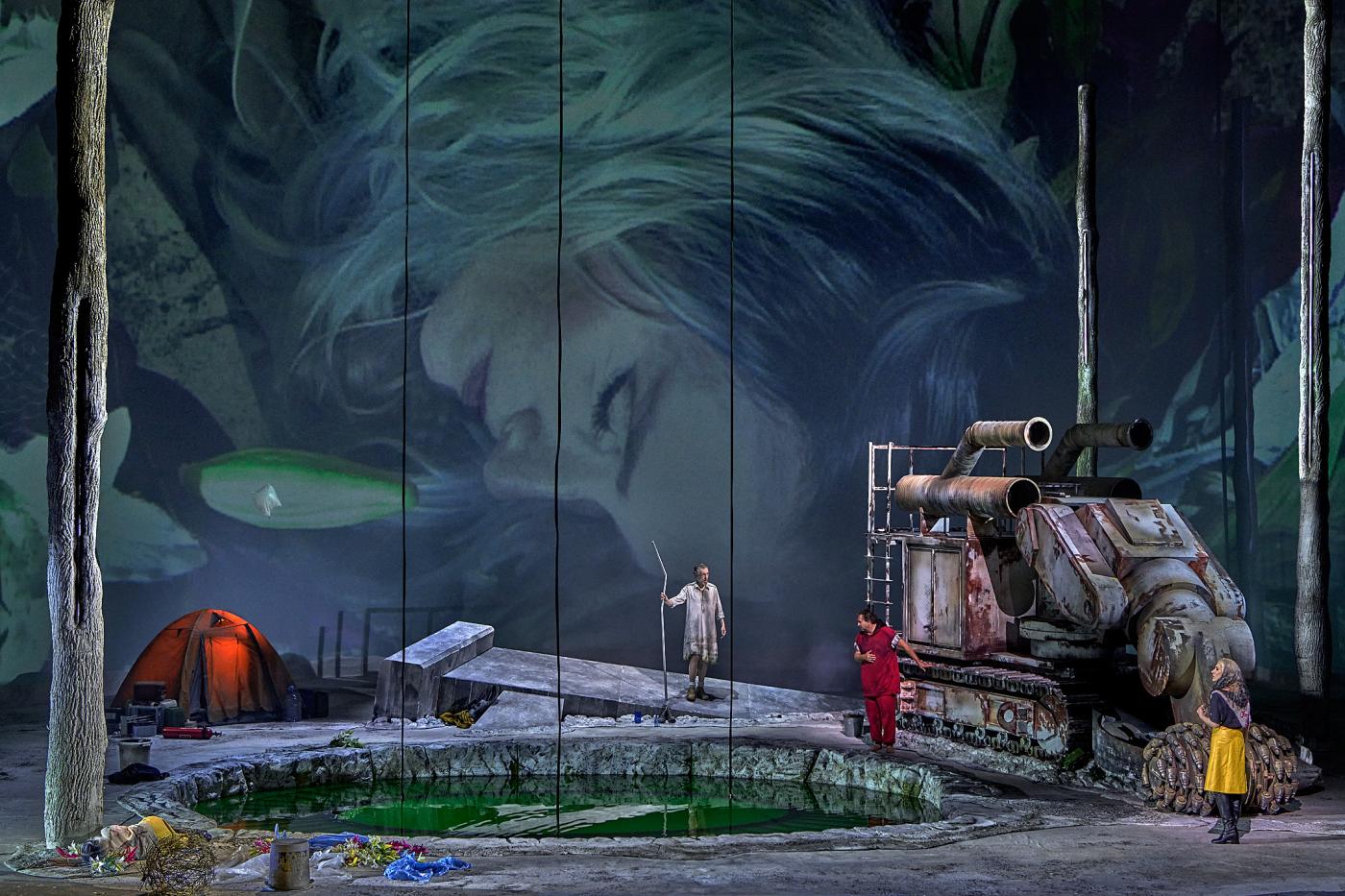
Parsifal returned with this year with its focus on suffering – the characters and, in some cases, the audience. My comments from last year’s production mentioned the physical effects of the graphic video projections in the first act. Thanks to the cooler weather early in the festival, no one fainted this year. Hearing Parsifal in the Festival Theater is a special experience. Because of the design of the orchestra pit, the conductor can let his musicians play out without worrying about overwhelming the singers or the audience. As you’re listening to the broadcast, you can imagine the orchestral sounds -- sometimes ethereal, sometimes aggressive, often frightening – emanating from some wonderful, unseen world.
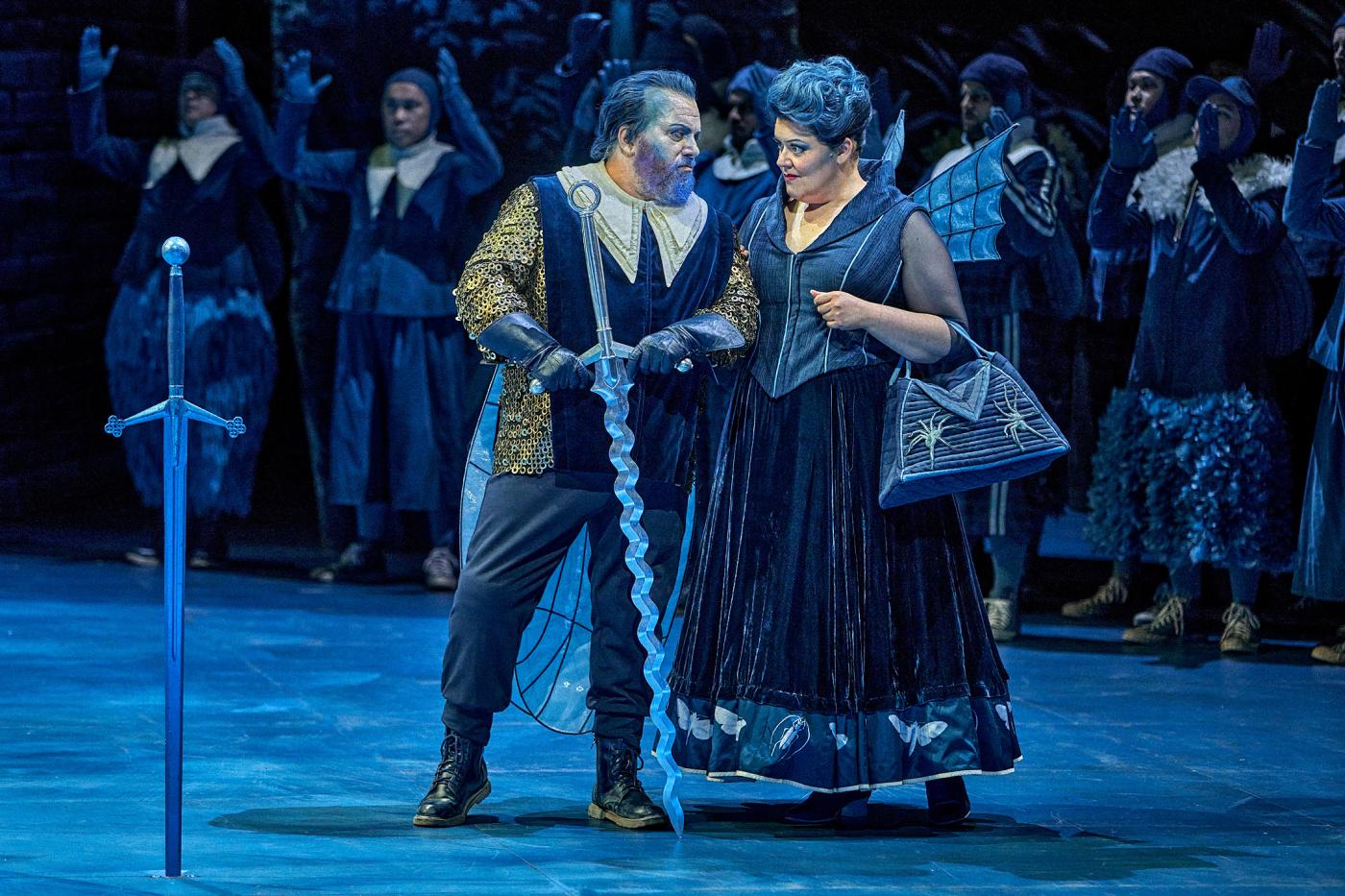
Lohengrin is a fitting companion piece to Parsifal. You probably won’t notice this in the audio alone, but this production presented the dark side of the knight Lohengrin and the misunderstood side of the sorceress Ortrud. Electricity was also a key element – you can search for reviews that will explain the director’s concept. As with many of these alternative interpretations, much of the concept can be supported by Wagner’s libretto, but not all. The standout of this performance, though, is Christian Thielemann’s conducting. He is such a master of Wagner’s music, especially in that house.
Looking ahead, the 2026 Bayreuth Festival marks the 150th anniversary of the Festival Theater’s opening. To celebrate, they will present a production of the Ring that is informed by AI, conducted by Christian Thielemann. As the Festival notes:
Audiences are presented with an experiment of visionary ambition: a mise-en-scène that not only stages Richard Wagner’s music drama, but foregrounds its reception history. This is achieved through a visual stratum that is in constant flux—expanding, recomposing, contradicting itself. For the first time in the history of the Festival, artificial intelligence will appear on stage—not as a character, but as a generative visual force.
The other notable aspect of next summer is the rare inclusion of Wagner’s early opera, Rienzi, conducted by Nathalie Stutzmann. Wagner enthusiasts curious about the concepts behind these productions can check back here for updates as the 2026 Festival approaches.
PBS PASSPORT
Stream tens of thousands of hours of your PBS and local favorites with WETA+ and PBS Passport whenever and wherever you want. Catch up on a single episode or binge-watch full seasons before they air on TV.